Loading...
Done
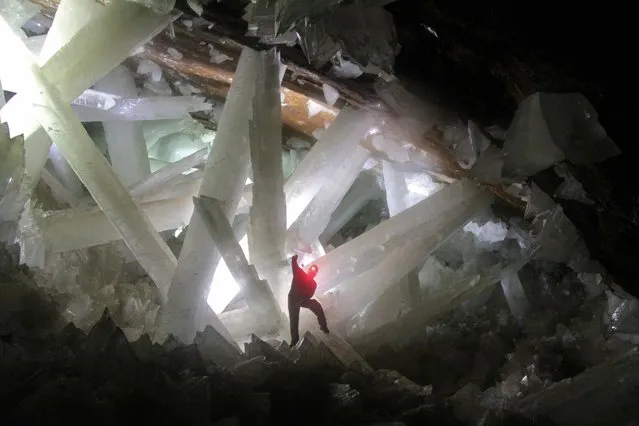
Giant Crystal Cave in Naica, Mexico

Cave of the Crystals or Giant Crystal Cave is a cave connected to the Naica Mine 300 metres (980 ft) below the surface in Naica, Chihuahua, Mexico. The main chamber contains giant selenite crystals (gypsum, CaSO4·2 H2O), some of the largest natural crystals ever found. The cave's largest crystal found to date is 12 m (39 ft) in length, 4 m (13 ft) in diameter and 55 tons in weight. The cave is extremely hot with air temperatures reaching up to 58 °C (136 °F) with 90 to 99 percent humidity. The cave is relatively unexplored due to these factors. Without proper protection people can only endure approximately ten minutes of exposure at a time.
Details
20 May 2014 07:56:00
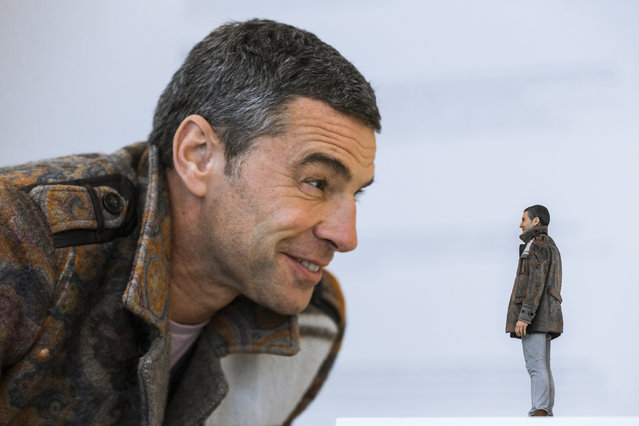
Customer Andreas Kroker looks at a 3D-printed figure of himself at the Twinkind 3D printing studio in Berlin, December 13, 2013. (Photo by Thomas Peter/Reuters)

Customer Andreas Kroker looks at a 3D-printed figure of himself at the Twinkind 3D printing studio in Berlin, December 13, 2013. A 3D-printed likeness is produced by taking a 360 degree photographic scan of a person, which is then rendered into a 3D digital model and retouched to meet the requirements for printing. The printing machine uses this digital model to produce a high-resolution solid figure. Twinkind co-founder Timo Schaedel said, people often come to the session well-groomed, with fresh hair-cuts and their best clothes, “just as they used to do in the past, when they had their portrait taken in a photo studio”. (Photo by Thomas Peter/Reuters)
Details
17 Jul 2014 11:22:00
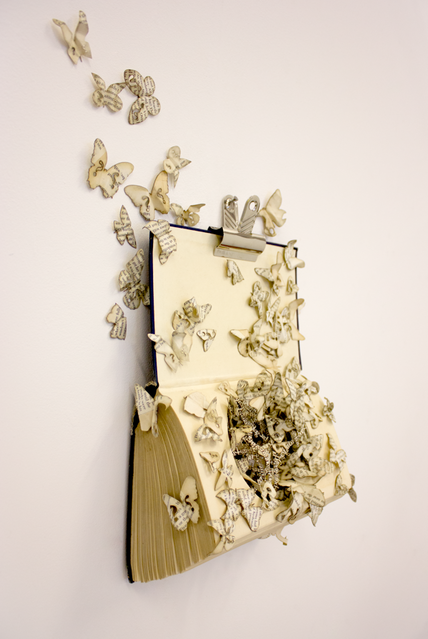
Plagued by Doubt By Thomas Wightman

Thoughts. They fly through the broad expenses of our mind, floating gracefully in midair, going into the clouds, and then reemerging once again. Some are quick and furtive, others are grand and majestic. We reflect upon them as they enter our minds, and once they leave, they are usually gone for good. However, some thoughts are different. These thoughts resemble a flock of angry birds or a swarm of hungry moths that invade your mind, slowly eating away at your sanity, strength, and desire to live. Such thoughts often plague that minds of people with Obsessive Compulsive disorder. They completely occupy their time; constantly there; ever-present. With his book sculpture, Thomas Wightman was able to accurately convey the way these thoughts consume the mind, slowly building a nest within it, resisting all attempts to drive them away.

Thomas Wightman


See Also: Derailing My Train of Thought
Details
19 Mar 2015 09:11:00
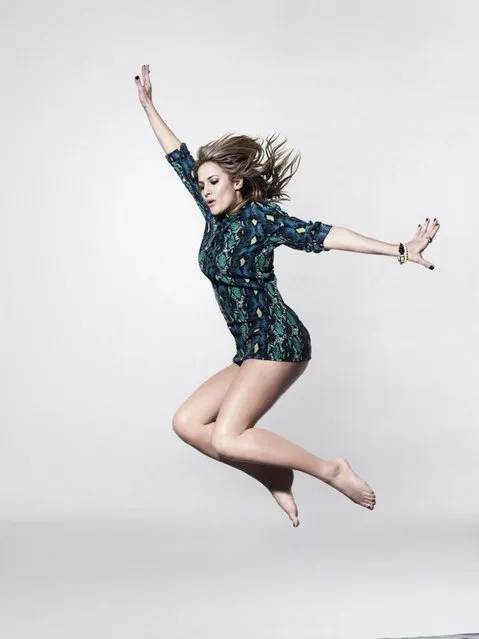
Undated handout photo issued by Oxfam of Caroline Flack who took part in a photo shoot with top photographer Rankin for Oxfam's Lift Lives for Good campaign. (Photo by Rankin/PA Wire)

Celebrities including singer Nicole Scherzinger and actor Simon Pegg have been snapped by top photographer Rankin for an Oxfam campaign. All in all, a dozen well-known faces have been captured in various poses to highlight the charity's Lift Lives for Good campaign. The fundraising drive, launched at the start of the year, aims to shine a light on the work done by the charity to help poor people around the world. Photo: Undated handout photo issued by Oxfam of Caroline Flack who took part in a photo shoot with top photographer Rankin for Oxfam's Lift Lives for Good campaign. (Photo by Rankin/PA Wire)
Details
11 Mar 2014 08:49:00
Takeoka Chisaka, Hiroshima, Japan. “One morning in August 1945, I was walking home from the night shift at a factory in Hiroshima. As I reached my door, there was a huge explosion. When I came to, my head was bleeding and I had been blasted 30m away”. (Photo and caption by Sasha Maslov)

Takeoka Chisaka, Hiroshima, Japan. “One morning in August 1945, I was walking home from the night shift at a factory in Hiroshima. As I reached my door, there was a huge explosion. When I came to, my head was bleeding and I had been blasted 30m away. The atomic bomb had detonated. When I found my mother, her eyes were badly burned. A doctor said they had to come out, but he didn’t have the proper tools so used a knife instead. It was hellish. I became a peace-worker after the war. In the 1960s, at a meeting at the UN, I met one of the people who created the atomic bomb. He apologised”. (Photo and caption by Sasha Maslov)
Details
11 May 2015 11:56:00
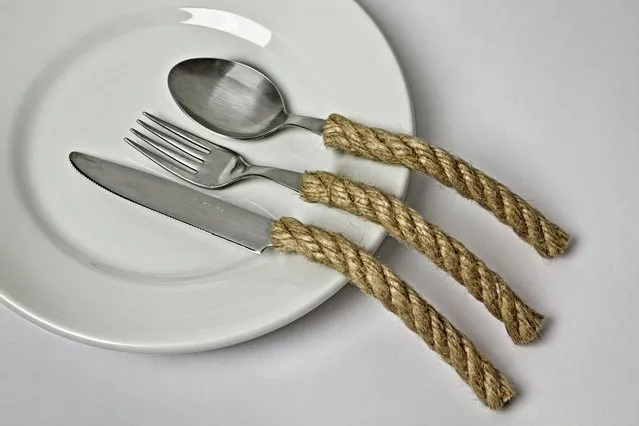
Cuttlery with rope handles. (Photo by Giuseppe Colarusso/Caters News)

An artist has created series of wacky images turning everyday items into hilarious and all but impossible to use objects. Giuseppe Colarusso, 49, fashioned the unique work to make people question the functionality of the likes of cutlery, garden tools and office equipment. The set of playful pictures, entitled “Improbabilita”, makes some items impossible to use, others improbable and some given a completely new function altogether. From a dice with no spots, to a ping pong paddle with a hole in it, the items have all been given a quirky twist. Photo: Cuttlery with rope handles. (Photo by Giuseppe Colarusso/Caters News)
Details
27 Jun 2013 07:37:00
A stunning monsoon sunset coupled with intense lightning creating an amazing scene on August 26, 2017. (Photo by Mike Olbinski/Caters News Agency)

While most people head for cover at the first sign of a storm, this man runs straight toward it. Storm chaser and father of three Mike Olbinski is addicted to photographing extreme weather and regularly takes on tornadoes and supercell thunderstorms in a bid to capture extraordinary images. The photographer, from Phoenix, often travels hundreds of miles a day to reach the eye of a storm. He first became hooked on the unusual hobby almost a decade ago, following the birth of his daughter. Here: A stunning monsoon sunset coupled with intense lightning creating an amazing scene on August 26, 2017. (Photo by Mike Olbinski/Caters News Agency)
Details
06 Dec 2017 07:24:00
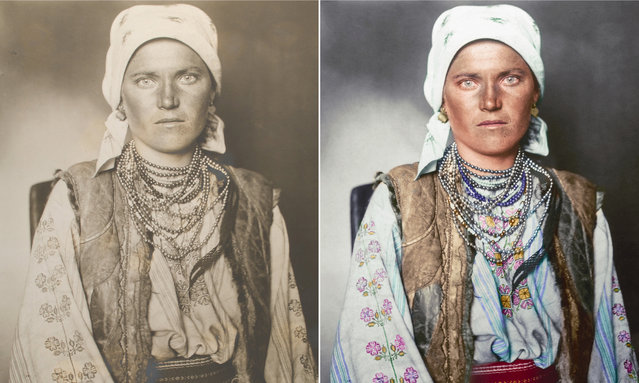
A Ruthenian woman circa 1906 from the region historically inhabiting the kingdom of the Rus, incorporating parts of modern-day Slavic speaking countries. Her outfit consists of a shirt and underskirt made from linen embroidered with traditional floral-based patterns. (Photo by Augustus Francis Sherman/New York Public Library/The Guardian)

Many of the 12 million people who entered the US through New York’s Ellis Island wore traditional dress from their homelands. Here: A Ruthenian woman circa 1906 from the region historically inhabiting the kingdom of the Rus, incorporating parts of modern-day Slavic speaking countries. Her outfit consists of a shirt and underskirt made from linen embroidered with traditional floral-based patterns. (Photo by Augustus Francis Sherman/New York Public Library/The Guardian)
Details
03 Oct 2016 09:15:00