Loading...
Done
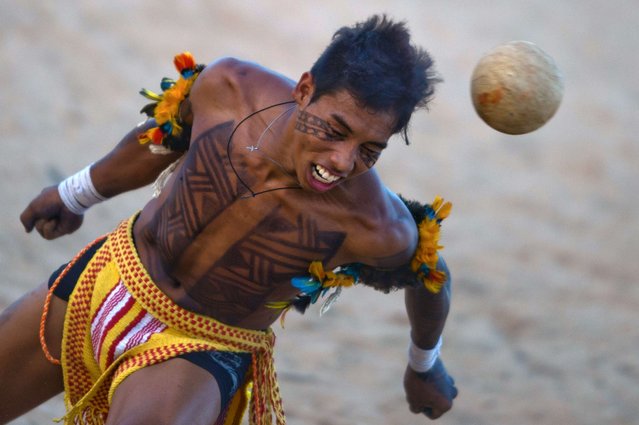
Brazilian natives of the Pareci tribe play head football with a hand-made ball for a demonstration, during the first day of the International Games of Indigenous Peoples, in Cuiaba, state of Mato Grosso, on November 10, 2013. 1500 natives from 49 Brazilian ethnic groups and from another 17 countries are gathering in Cuiaba until November 16 to compete in some 30 athletic disciplines, many of their own. (Photo by Christophe Simon/AFP Photo)

Brazilian natives of the Pareci tribe play head football with a hand-made ball for a demonstration, during the first day of the International Games of Indigenous Peoples, in Cuiaba, state of Mato Grosso, on November 10, 2013. 1500 natives from 49 Brazilian ethnic groups and from another 17 countries are gathering in Cuiaba until November 16 to compete in some 30 athletic disciplines, many of their own. (Photo by Christophe Simon/AFP Photo)
Details
13 Nov 2013 11:50:00
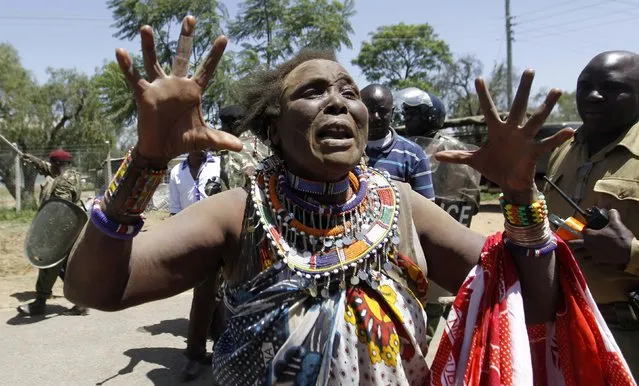
A woman cries after riot police dispersed demonstrators during protests to oust Narok county Governor Samuel Tunai in Narok, Kenya, January 26, 2015. At least seven people were injured on Monday in clashes between Kenyan police and protesters from the Maasai ethnic group. (Photo by Thomas Mukoya/Reuters)

A woman cries after riot police dispersed demonstrators during protests to oust Narok county Governor Samuel Tunai in Narok, Kenya, January 26, 2015. At least seven people were injured on Monday in clashes between Kenyan police and protesters from the Maasai ethnic group who accuse a local governor of corrupt handling of tourism funds from the Maasai Mara game reserve, the Kenya Red Cross said. (Photo by Thomas Mukoya/Reuters)
Details
27 Jan 2015 11:58:00
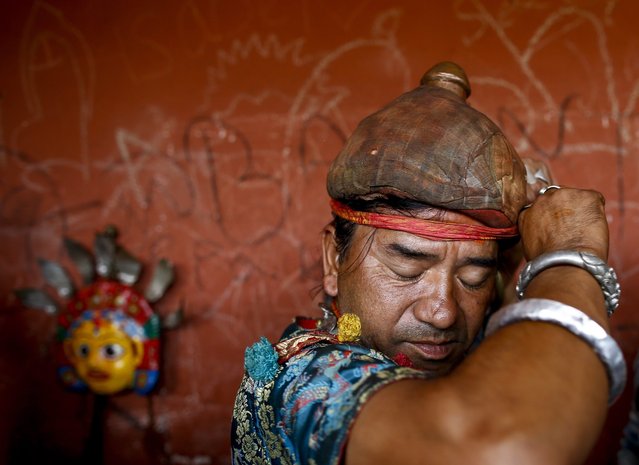
A Nepalese devotee prepares for a religious mask performance during the Seekaali Festival in Khokna village, near Kathmandu, Nepal, 07 October 2016. During the 300-year-old Seekali festival, elderly ethnic Newari devotees wear masks of 14 various goddesses including Lord Ganesha, Lord Shiva, Lord Laxmi, Lord Brahma and Lord Bishnu. The Khokna people celebrate the Seekaali festival as an alternative of the Dashain festival which is biggest festival of Nepalese Hindus that celebrates the victory of the gods over demons. (Photo by Narendra Shrestha/EPA)

A Nepalese devotee prepares for a religious mask performance during the Seekaali Festival in Khokna village, near Kathmandu, Nepal, 07 October 2016. During the 300-year-old Seekali festival, elderly ethnic Newari devotees wear masks of 14 various goddesses including Lord Ganesha, Lord Shiva, Lord Laxmi, Lord Brahma and Lord Bishnu. The Khokna people celebrate the Seekaali festival as an alternative of the Dashain festival which is biggest festival of Nepalese Hindus that celebrates the victory of the gods over demons. (Photo by Narendra Shrestha/EPA)
Details
09 Oct 2016 07:14:00


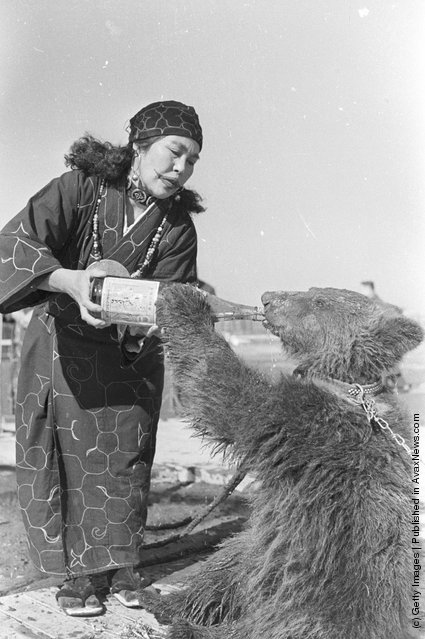
“The Ainu (アイヌ?), also called Aynu, Aino (アイノ), and in historical texts Ezo (蝦夷), are indigenous people or groups in Japan and Russia. Historically they spoke the Ainu language and related varieties and lived in Hokkaidō, the Kuril Islands, and much of Sakhalin. Most of those who identify themselves as Ainu still live in this same region, though the exact number of living Ainu is unknown. This is due to ethnic issues in Japan resulting in those with Ainu backgrounds hiding their identities and confusion over mixed heritages. In Japan, because of intermarriage over many years with Japanese, the concept of a 'pure Ainu' ethnic group is no longer feasible. Official estimates of the population are of around 25,000, while the unofficial number is upwards of 200,000 people”. – Wkipedia

Photo: A captive bear drinking from a large bottle held by an Ainu tribeswoman. (Photo by Evans/Three Lions/Getty Images). Circa 1955
Details
24 Mar 2011 14:01:00
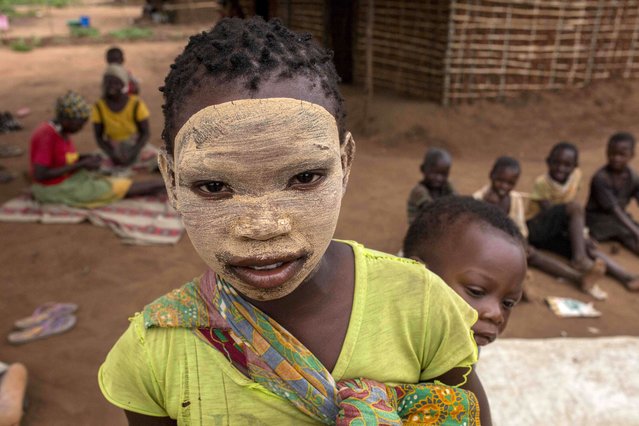
A young girl from the Makonde ethnic group wearing earth makeup on her facen, a beauty symbol, carries a baby on her back as she poses for pictures in the community of Marupa, a relocation center for internally displaced families in the Chiure district, on February 23, 2021. Thousands of families from different districts of the Cabo Delgado province who have been displaced have been located by the government in different areas of the province. (Photo by Alfredo Zuniga/AFP Photo)

A young girl from the Makonde ethnic group wearing earth makeup on her facen, a beauty symbol, carries a baby on her back as she poses for pictures in the community of Marupa, a relocation center for internally displaced families in the Chiure district, on February 23, 2021. Thousands of families from different districts of the Cabo Delgado province who have been displaced have been located by the government in different areas of the province. (Photo by Alfredo Zuniga/AFP Photo)
Details
04 Mar 2021 08:40:00
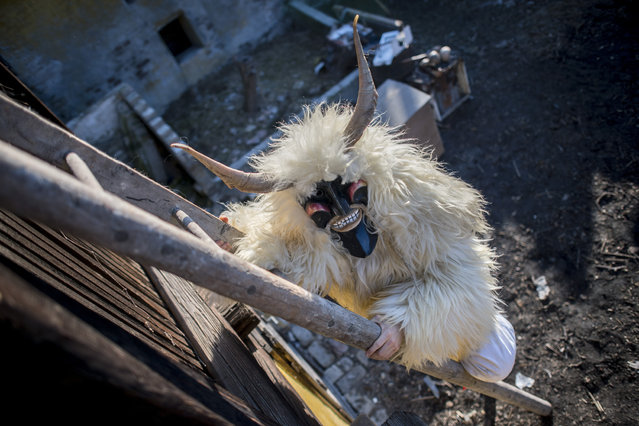
A man wears a busho mask and a costume made of sheep pelt while climbing up a ladder outside a barn in Mohacs, Hungary, 20 February 2020, on the first day of carnival. The traditional Busho carnival, which marks the end of winter, dates back to the 16th century. According to local legend, members of an ethnic South Slavic group living in Mohacs at the time dressed up in similar costumes and wore wooden masks to scare away Ottoman invaders, who mistook them for demons. (Photo by Tamas Soki/EPA/EFE)

A man wears a busho mask and a costume made of sheep pelt while climbing up a ladder outside a barn in Mohacs, Hungary, 20 February 2020, on the first day of carnival. The traditional Busho carnival, which marks the end of winter, dates back to the 16th century. According to local legend, members of an ethnic South Slavic group living in Mohacs at the time dressed up in similar costumes and wore wooden masks to scare away Ottoman invaders, who mistook them for demons. (Photo by Tamas Soki/EPA/EFE)
Details
23 Feb 2020 00:07:00
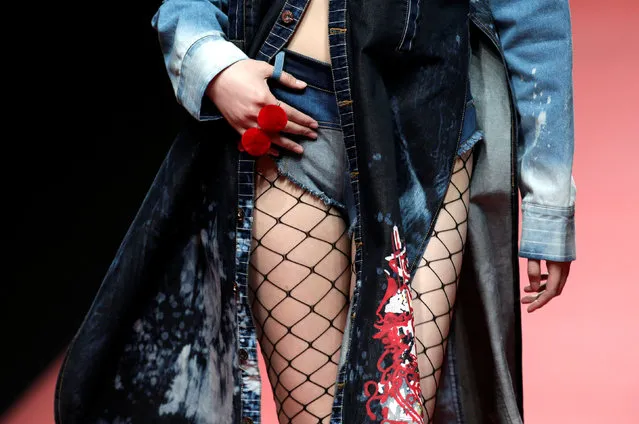
A model presents a creation by Chinese designer Chen Wen at China Fashion Week in Beijing, China March 29, 2017. (Photo by Jason Lee/Reuters)

A model presents a creation by Chinese designer Chen Wen at China Fashion Week in Beijing, China March 29, 2017. (Photo by Jason Lee/Reuters)
Details
03 Apr 2017 09:03:00
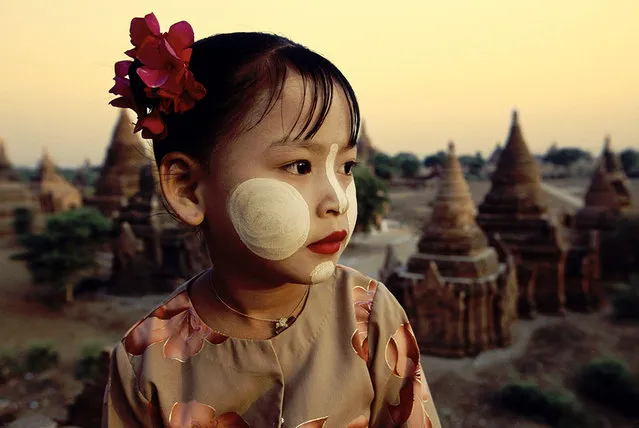
Pagan Kingdom, Myanmar

The Kingdom of Pagan (also commonly known as the Pagan Dynasty and the Pagan Empire) was the first kingdom to unify the regions that would later constitute modern-day Burma (Myanmar). Pagan's 250-year rule over the Irrawaddy valley and its periphery laid the foundation for the ascent of Burmese language and culture, the spread of Burman ethnicity in Upper Burma, and the growth of Theravada Buddhism in Burma and in mainland Southeast Asia.
Details
22 Feb 2014 15:14:00