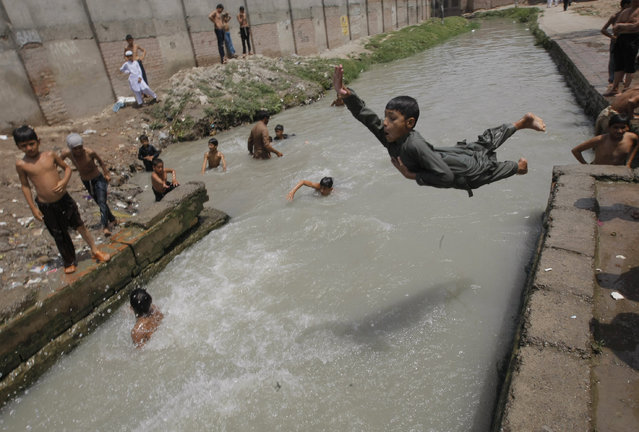
Pakistani children cool themselves off in a stream in Peshawar, Pakistan, Monday, June 29, 2015, during Muslim's fasting month of Ramadan. (Photo by Mohammad Sajjad/AP Photo)
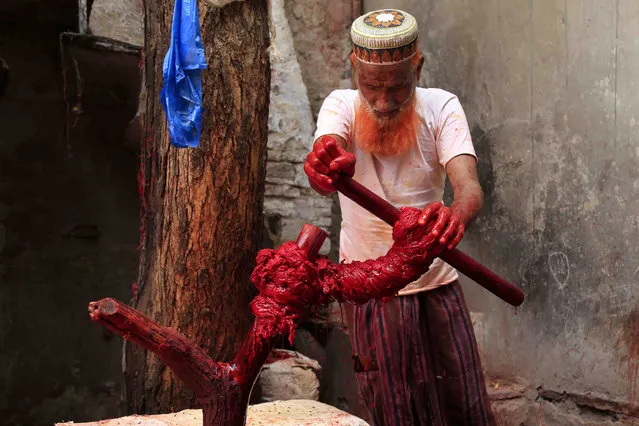
An Indian Muslim worker applies colors on Kalavas (sacred threads) in Ajmer in the Indian state of Rajasthan on May 24, 2018. (Photo by Himanshu Sharma/AFP Photo)
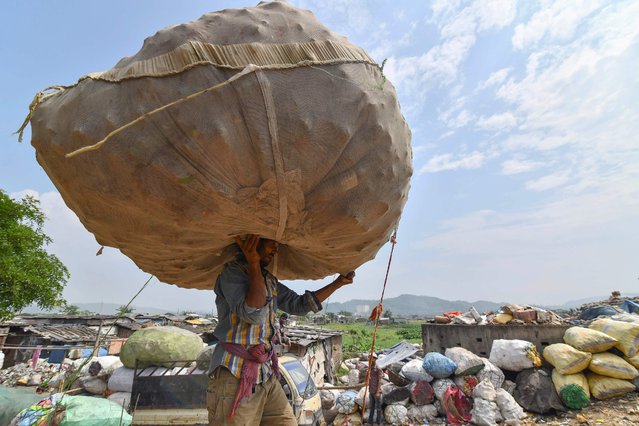
An Indian labourer carries a sack of plastic bottles on his head near one of the largest disposal sites in north-east India, ahead of the “World Environment Day” in Boragaon area of Guwahati on June 4, 2018. World Environment Day is marked annually on June 5, and aims at promoting awareness and action to protect the environment. (Photo by Biju Boro/AFP Photo)
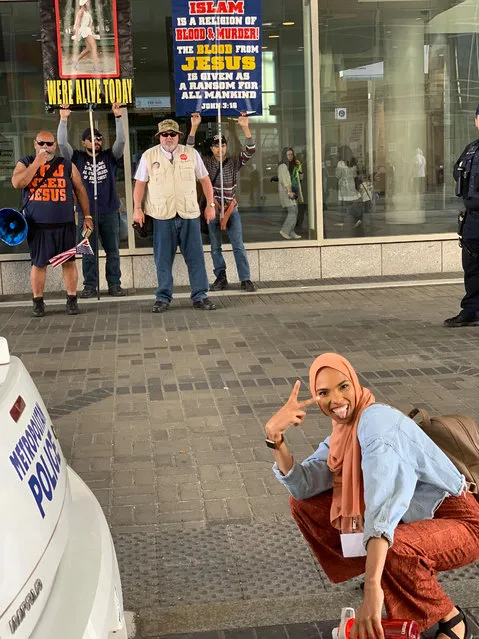
Shaymaa Ismaa’eel, a 24-year-old Muslim woman passes by a group of angry protesters at an Islamic conference in Washington, DC on April 21, 2019. In response, she crouched in front of them and flashed a peace sign. The photo, posted on Instagram, prompted an outpouring of support. (Photo by Shaymaa Ismaa'eel/Instagram)
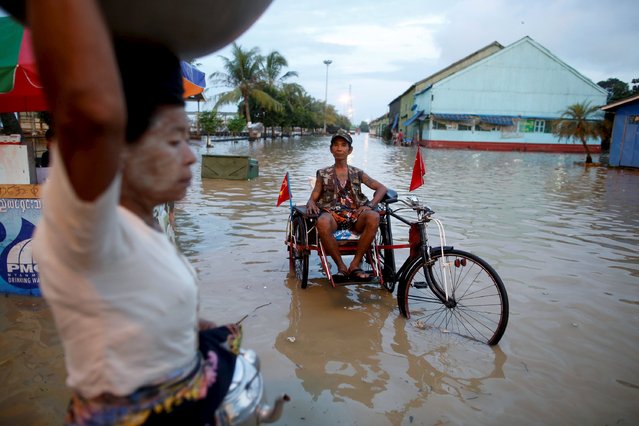
A man sits on his cart which he attached with National League for Democracy (NLD) party flags along a flooded street in Yangon September 30, 2015. Myanmar will hold a general election on November 8. (Photo by Soe Zeya Tun/Reuters)
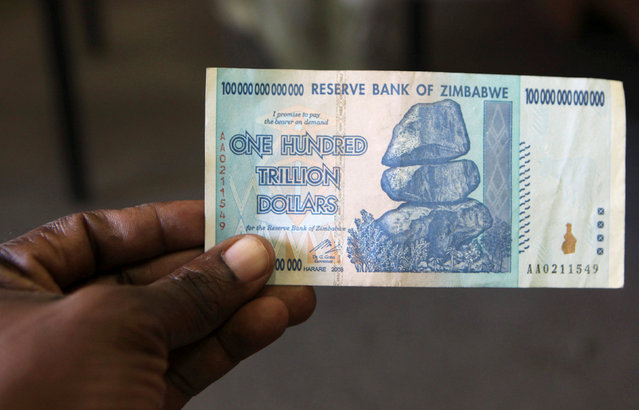
A man holds up for a picture a one hundred trillion Zimbabwean dollars note inside a shop in Harare, Zimbawe, June 12, 2015. Hyperinflation in Zimbabwe was a period of currency instability that began in the late 1990s shortly after the confiscation of private farms from landowners, towards the end of Zimbabwean involvement in the Second Congo War. During the height of inflation from 2008 to 2009, it was difficult to measure Zimbabwe's hyperinflation because the government of Zimbabwe stopped filing official inflation statistics. However, Zimbabwe's peak month of inflation is estimated at 79.6 billion percent in mid-November 2008. (Photo by Philimon Bulawayo/Reuters)