A woman reacts with Samoyed puppies as she performs yoga on International Yoga Day, in Bangkok, Thailand, on June 21, 2025. (Photo by Chalinee Thirasupa/Reuters)
A woman wearing a face mask has her hair curled by a special equipment at a beauty salon in Bangkok on July 12, 2020. (Photo by Mladen Antonov/AFP Photo)
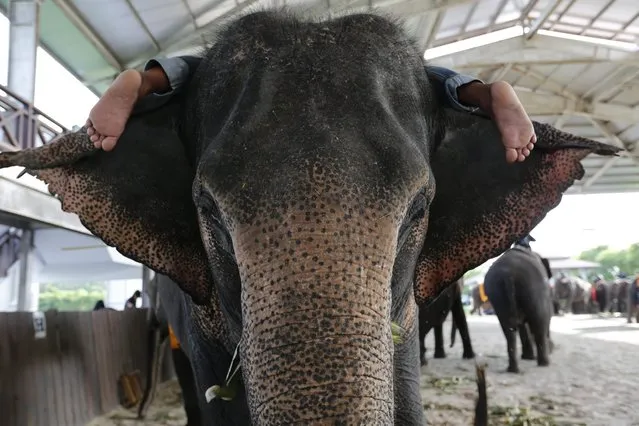
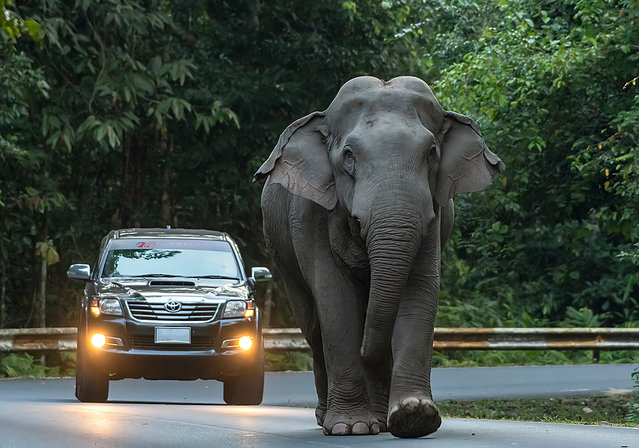
An Asian elephant called “Plai Deaw” goes for a walk on a mountain road in Nakhon Nayok, Thailand on July 11, 2022. The bull has become well known in the area for his taste for venturing out from the deep forest and emerging among cars and village homes. Thailand has an estimated 2,000 Asian elephants living in the wild but there is often conflict when they come into contact with humans on roads and in villages. A similar number of elephants are kept captive where they work in zoos and are hired out for religious festivals and weddings. (Photo by Mongkol Pitakmoo/ViralPress)
Naruemol Thonglek, right, with her daughter, waits for news of her partner, who is missing after the collapse of an under-construction high-rise building after an earthquake in Bangkok, Thailand, Monday, March, 31, 2025. (Photo by Manish Swarup/AP Photo)
Customers play with cats to find comfort at the Caturday Cat cafe after the government started opening some restaurants outside shopping malls, parks and barbershops, during the coronavirus disease (COVID-19) outbreak in Bangkok, Thailand on May 7, 2020. (Photo by Juarawee Kittisilpa/Reuters)
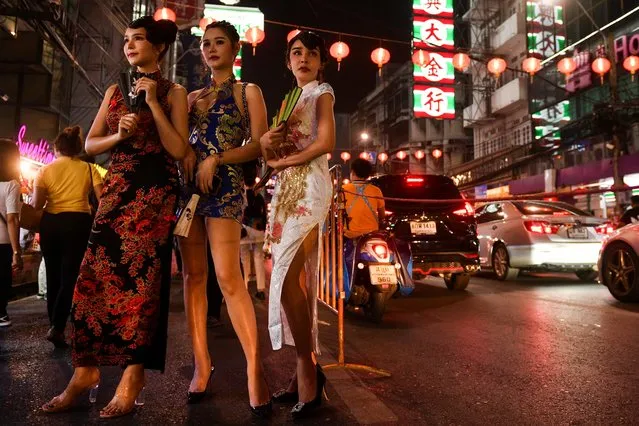
Women stand on a street ahead of the Lunar New Year celebration at the Chinatown in Bangkok, Thailand, February 10, 2021. (Photo by Chalinee Thirasupa/Reuters)
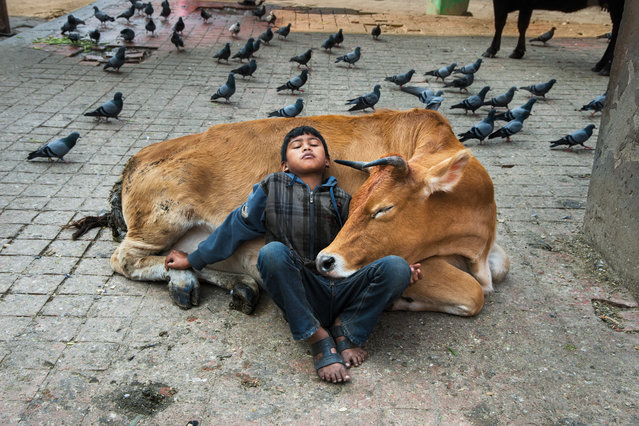
The legendary US photographer’s favourite shots of creatures and how they interact with humans feature in “Animals”, his latest book. Here: A boy rests against a cow, Kathmandu, Nepal, 2013. “Cows have been designated the national animal in Nepal. They roam freely, and are considered sacred by the 80% of Nepalis who are Hindu”. (Photo by Steve McCurry/The Guardian)
Macaque monkeys sit on a car in Hua Hin on May 29, 2020, as low tourist numbers due to the ongoing COVID-19 novel coronavirus situation have resulted in a decrease in the number of people feeding them. The monkeys in the town are going hungry as a consequence of the drop in tourism as a result of the COVID-19 coronavirus pandemic. (Photo by Jack Taylor/AFP Photo)