Loading...
Done
A glassmaker forms molten glass next to a furnace at Cespedes factory in Olocuilta, El Salvador February 8, 2017. (Photo by Jose Cabezas/Reuters)

A glassmaker forms molten glass next to a furnace at Cespedes factory in Olocuilta, El Salvador February 8, 2017. (Photo by Jose Cabezas/Reuters)
Details
10 Feb 2017 00:04:00
A tamed hawk sits on a chair next to a participant during a traditional hunting contest in Almaty, Kazakhstan December 1, 2018. (Photo by Pavel Mikheyev/Reuters)

A tamed hawk sits on a chair next to a participant during a traditional hunting contest in Almaty, Kazakhstan on December 1, 2018. (Photo by Pavel Mikheyev/Reuters)
Details
09 Dec 2018 00:03:00
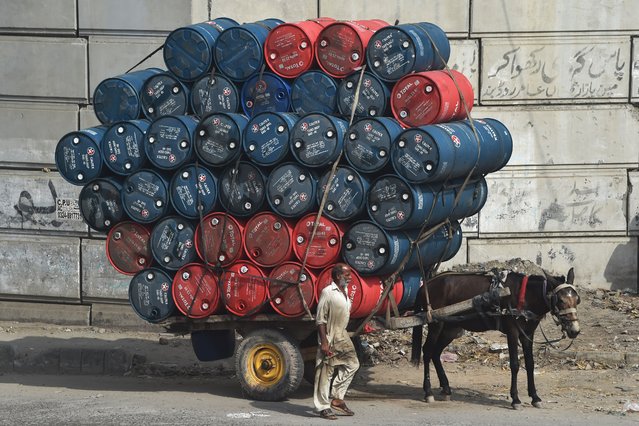
A man stands next to a horsecart laden with oil drums on a street in Lahore on September 27, 2020. (Photo by Arif Ali/AFP Photo)

A man stands next to a horsecart laden with oil drums on a street in Lahore on September 27, 2020. (Photo by Arif Ali/AFP Photo)
Details
27 Oct 2020 00:05:00
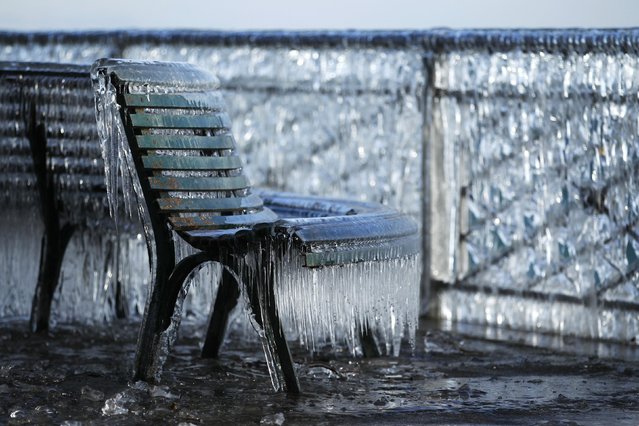
A frozen public bench is seen next to a lake side due to the heavy wind conditions in Geneva February 8, 2015. (Photo by Pierre Albouy/Reuters)

A frozen public bench is seen next to a lake side due to the heavy wind conditions in Geneva February 8, 2015. (Photo by Pierre Albouy/Reuters)
Details
19 Feb 2015 14:52:00
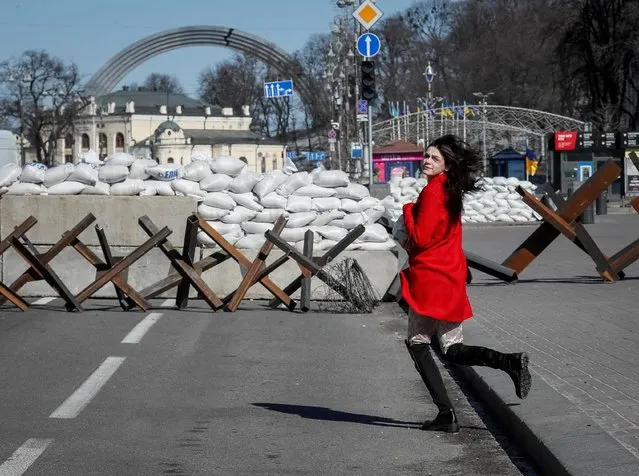
A woman runs across the street next to an anti-tank constructions in central Kyiv, Ukraine on March 10, 2022. (Photo by Gleb Garanich/Reuters)

A woman runs across the street next to an anti-tank constructions in central Kyiv, Ukraine on March 10, 2022. (Photo by Gleb Garanich/Reuters)
Details
12 Mar 2022 06:02:00
A reveller dances next to a police officer at Notting Hill Carnival in London, Britain on August 28, 2022. (Photo by Henry Nicholls/Reuters)

A reveller dances next to a police officer at Notting Hill Carnival in London, Britain on August 28, 2022. (Photo by Henry Nicholls/Reuters)

Details
11 Sep 2022 04:45:00
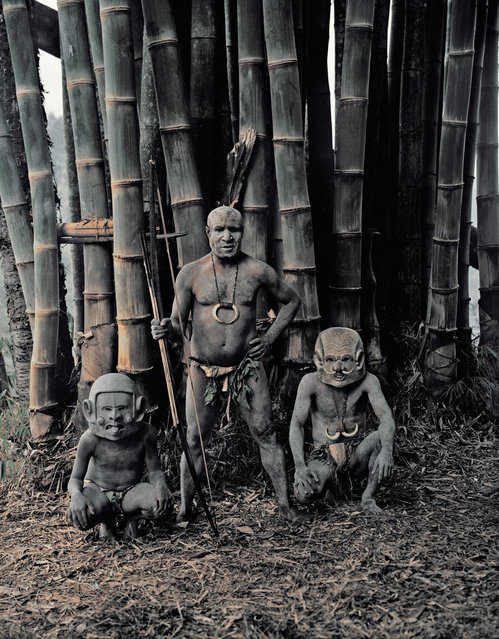
“Asaro from the Eastern Highlands”. The mudmen could not cover their faces with mud because the people of Papua New Guinea thought that the mud from the Asaro river was poisonous. So instead of covering their faces with this alleged poison, they made masks from pebbles that they heated and water from the waterfall, with unusual designs such as long or very short ears either going down to the chin or sticking up at the top, long joined eyebrows attached to the top of the ears, horns and sideways mouths. (Jimmy Nelson)

“Asaro from the Eastern Highlands”. The mudmen could not cover their faces with mud because the people of Papua New Guinea thought that the mud from the Asaro river was poisonous. So instead of covering their faces with this alleged poison, they made masks from pebbles that they heated and water from the waterfall, with unusual designs such as long or very short ears either going down to the chin or sticking up at the top, long joined eyebrows attached to the top of the ears, horns and sideways mouths. (Photo and caption by Jimmy Nelson)
Details
20 Oct 2013 08:54:00


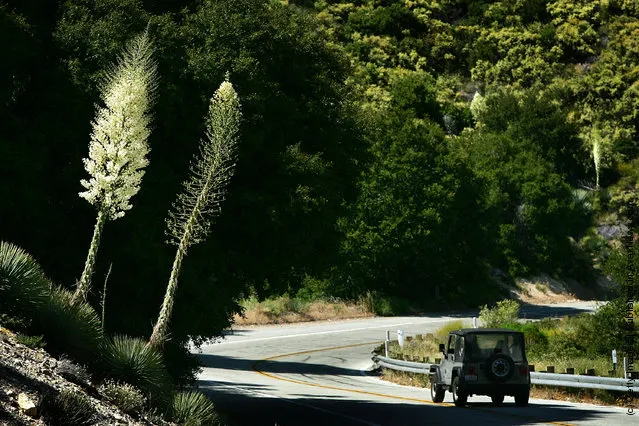
“Yucca is a genus of perennial shrubs and trees in the agave family, Agavaceae. Its 40-50 species are notable for their rosettes of evergreen, tough, sword-shaped leaves and large terminal panicles of white or whitish flowers. They are native to the hot and dry (arid) parts of North America, Central America, South America, and the Caribbean. Early reports of the species were confused with the cassava (Manihot esculenta). Consequently, Linnaeus mistakenly derived the generic name from the Carib word for the latter, yuca. It is also colloquially known in the midwest United States as “Ghosts in the graveyard”, as it is commonly found growing in rural graveyards and when in bloom the flowers appear as an apparition floating.” – Wikipedia

Photo: A yucca standing among flowers bursts forth a very large stalk of flowers as a heavy wildflower bloom on June 21, 2005 in the Angeles National Forest northwest of La Canada, California. (Photo by David McNew/Getty Images)
Details
29 Mar 2011 07:31:00