Loading...
Done
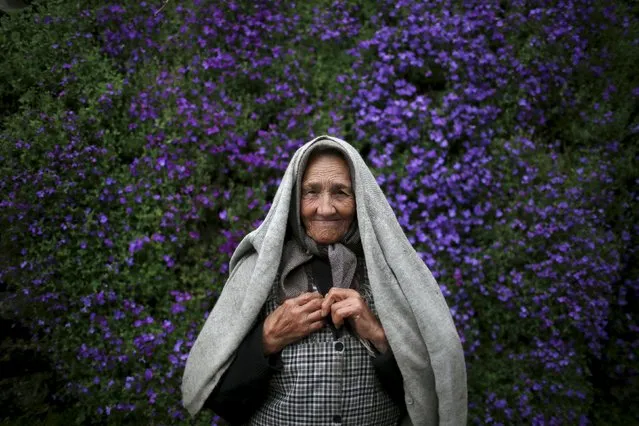
Zulmira Jesus poses for a portrait at a street in Povoa de Agracoes, near Chaves, Portugal April 19, 2016. (Photo by Rafael Marchante/Reuters)

Zulmira Jesus poses for a portrait at a street in Povoa de Agracoes, near Chaves, Portugal April 19, 2016. In the villages of Agracoes and Povoa de Agracoe, the steady drip-drip of emigration has brought down population numbers from more than 50 residents to fewer than a dozen each. These remaining villagers share the same glum acceptance that, after they have gone, their villages will die out too. It is the same desolate picture in scores of other backwater settlements in Portugal's interior, north to south. (Photo by Rafael Marchante/Reuters)
Details
29 Apr 2016 12:05:00
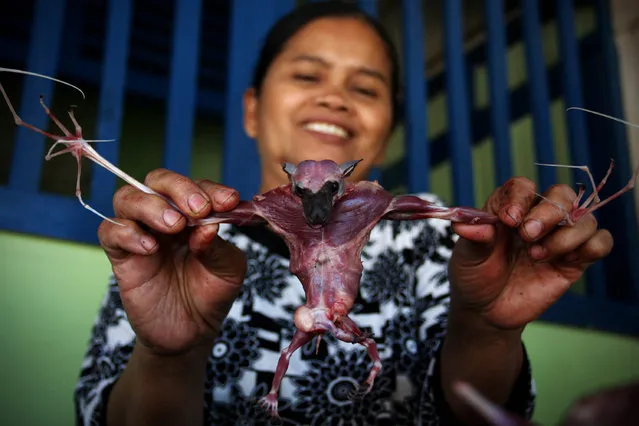
Bat seller Sukarwati shows a skinned bat on July 30, 2009 in Yogyakarta, Indonesia. Sukarwati and her family have hunted bats in the Imogiri region for generations, capturing more than 800 bats per month. The Sukarwati family believe that the meat from the bat heals asthma and respiratory problems and it is a great honour for them knowing that the meat that they provide will help ease people's health ailments

Bat seller Sukarwati shows a skinned bat on July 30, 2009 in Yogyakarta, Indonesia. Sukarwati and her family have hunted bats in the Imogiri region for generations, capturing more than 800 bats per month. The Sukarwati family believe that the meat from the bat heals asthma and respiratory problems and it is a great honour for them knowing that the meat that they provide will help ease people's health ailments. (Photo by Ulet Ifansasti)
Details
20 Sep 2012 08:57:00
Boys play basketball in the facilities of Belarus' Republican Clinic of Speleotherapy within a salt mine, as part of their treatment, near the town of Soligorsk, south of Minsk, February 19, 2015. According to the state clinic, more than 7,000 children and adults seek medical treatment for respiratory illness each year in the subsurface chambers of its facilities, located 420 metres underground between layers of potassium and stone salts in an operational salt mine. (Photo by Vasily Fedosenko/Reuters)

Boys play basketball in the facilities of Belarus' Republican Clinic of Speleotherapy within a salt mine, as part of their treatment, near the town of Soligorsk, south of Minsk, February 19, 2015. According to the state clinic, more than 7,000 children and adults seek medical treatment for respiratory illness each year in the subsurface chambers of its facilities, located 420 metres underground between layers of potassium and stone salts in an operational salt mine. (Photo by Vasily Fedosenko/Reuters)
Details
20 Feb 2015 13:17:00
A Chow Chow is seen  on the fourth and final day of Crufts dog show at the National Exhibition Centre on March 8, 2015 in Birmingham, England.  First held in 1891, Crufts is said to be the largest show of its kind in the world. The annual four-day event, features thousands of dogs, with competitors travelling from countries across the globe to take part and vie for the coveted title of 'Best in Show'. (Carl Court/Getty Images)

Crufts is among the largest dog events worldwide. It was first held more than a century ago in 1891. Since then it has grown into more than just a dog show, but an event that celebrates the role that dogs play in our everyday lives. It is unimaginable how much this show has changed since the first time it was set up by Charles Cruft. Even though this event was very different back then, Charles Cruft would surely enjoy the scope and size of the modern Crufts show. The core event of the show is of course the dog show, which celebrates the unique relationship between dogs and their owners.
Details
11 Mar 2015 18:30:00
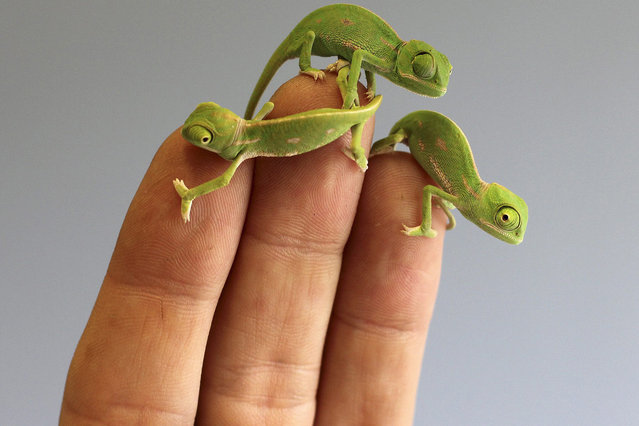
A handout image released by the Taronga Zoo shows Veiled Chameleon hatchlings at Taronga Zoo in Sydney, Australia, 11 March 2015. Taronga has welcomed more than 20 baby chameleons, with the last of three clutches of eggs hatching this week. Veiled Chameleons, or Chamaeleo calyptratus, are native to Saudi Arabia and Yemen and can live up to five years. (Photo by EPA/Taronga Zoo)

A handout image released by the Taronga Zoo shows Veiled Chameleon hatchlings at Taronga Zoo in Sydney, Australia, 11 March 2015. Taronga has welcomed more than 20 baby chameleons, with the last of three clutches of eggs hatching this week. Veiled Chameleons, or Chamaeleo calyptratus, are native to Saudi Arabia and Yemen and can live up to five years. (Photo by EPA/Taronga Zoo)
Details
21 Mar 2015 13:13:00
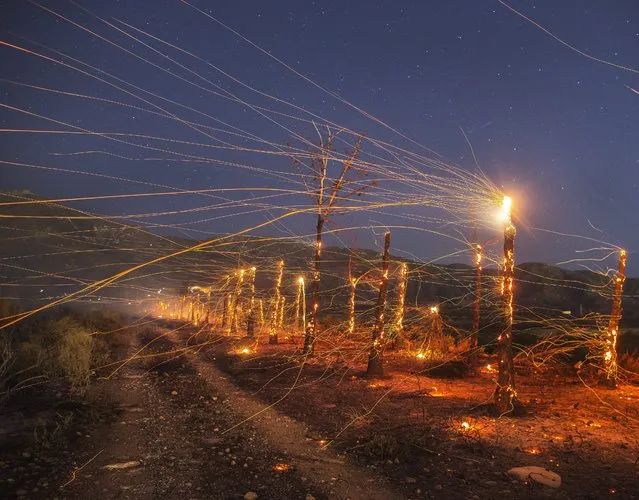
A long exposure image of embers flying off burnt out  trees following the wind driven wildfire ranging in the mountain area near Rancho Cucamonga late 30 April 2014.  Earlier in the day more than 1,500 homes were evacuated as the Etiwanda fire charred around 1,000 acres in San Barnardino National Forest. (Photo by Stuart Palley/EPA)

A long exposure image of embers flying off burnt out trees following the wind driven wildfire ranging in the mountain area near Rancho Cucamonga late 30 April 2014. Earlier in the day more than 1,500 homes were evacuated as the Etiwanda fire charred around 1,000 acres in San Barnardino National Forest. (Photo by Stuart Palley/EPA)
Details
22 Jun 2014 10:19:00
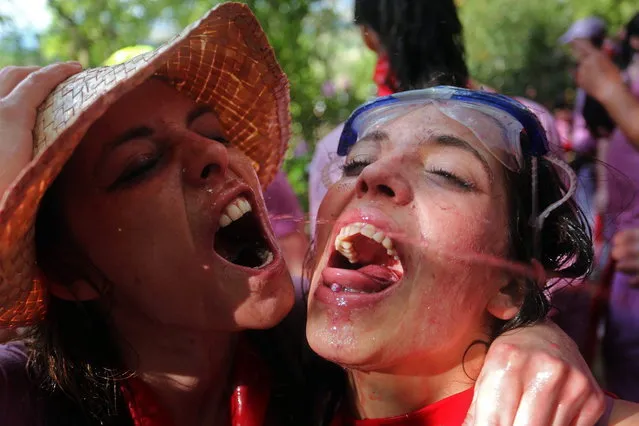
Revelers drink wine as they take part in the “Battle of Wine” (La batalla del vino de Haro), a wine fight, during the Haro Wine Festival, in Haro, in the northern province of La Rioja on June 29, 2014. More than nine thousand locals and tourists threw around 130.000 litres of wine at each other during the Haro Wine Festival, according to local media. (Photo by Cesar Manso/AFP Photo)

Revelers drink wine as they take part in the “Battle of Wine” (La batalla del vino de Haro), a wine fight, during the Haro Wine Festival, in Haro, in the northern province of La Rioja on June 29, 2014. More than nine thousand locals and tourists threw around 130.000 litres of wine at each other during the Haro Wine Festival, according to local media. (Photo by Cesar Manso/AFP Photo)
Details
30 Jun 2014 12:34:00
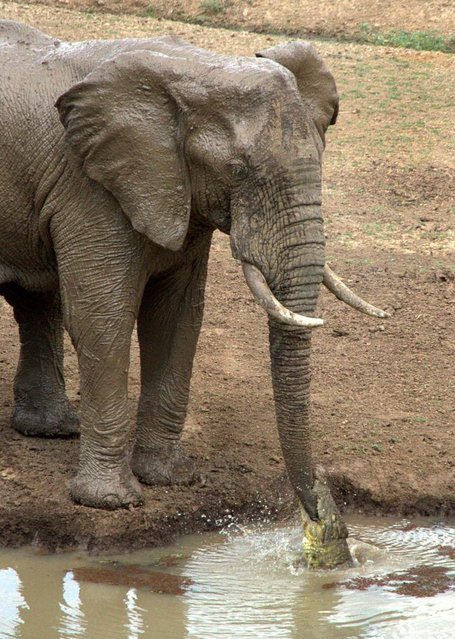
The remarkable scene was captured by amateur wildlife photographer Ian Salisbury, 62, at the South Luangwa National park in Zambia. The crocodile grabs hold of the elephant's trunk, but it soon becomes clear that he has bitten off a lot more than he can chew by grabbing the huge beast. Mr Salisbury said the elephant ‘fled rapidly into the bush’ after the attack. (Photo by Ian Salisbury/Caters News)

The remarkable scene was captured by amateur wildlife photographer Ian Salisbury, 62, at the South Luangwa National park in Zambia. The crocodile grabs hold of the elephant's trunk, but it soon becomes clear that he has bitten off a lot more than he can chew by grabbing the huge beast. Mr Salisbury said the elephant “fled rapidly into the bush” after the attack. (Photo by Ian Salisbury/Caters News)
Details
16 Nov 2013 12:55:00