Loading...
Done
Urban Elephants Roam The Streets of Bangkok

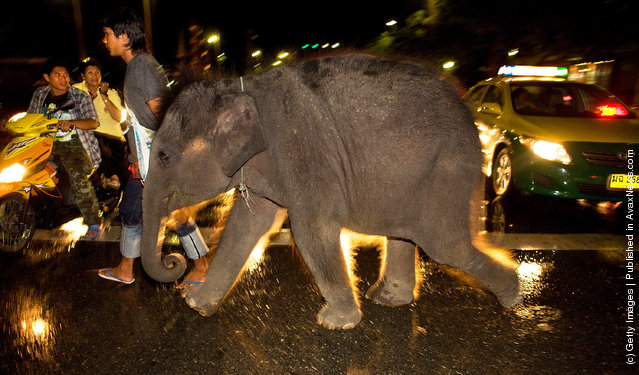
A mahout (elephant driver) walks a baby elephant across the city streets at night September 27, 2008 in Bangkok, Thailand. (Photo Paula Bronstein/Getty Images)
Details
12 Oct 2011 12:19:00
Participants run through coloured powder during the Colour Run race in Moscow, Russia on June 5, 2022. (Photo by Maxim Shemetov/Reuters)

Participants run through coloured powder during the Colour Run race in Moscow, Russia on June 5, 2022. (Photo by Maxim Shemetov/Reuters)
Details
09 Jun 2022 05:06:00
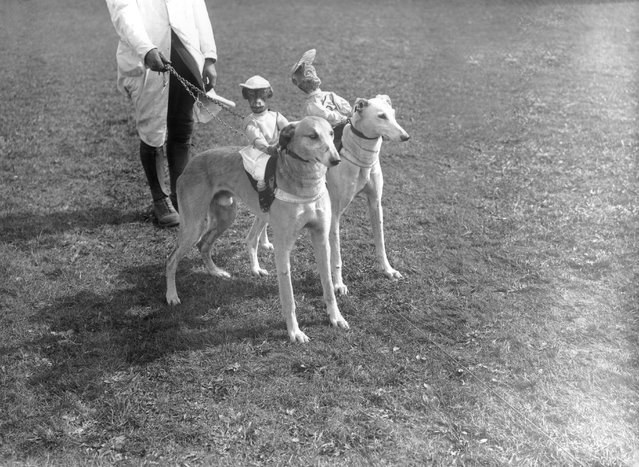
1928: Greyhounds with stuffed and sprung model monkeys strapped to their backs before a hurdle race at Wellinborough

Greyhounds with stuffed and sprung model monkeys strapped to their backs before a hurdle race at Wellinborough. (Photo by E. Bacon). 21st April 1928
Details
11 Jul 2012 09:57:00
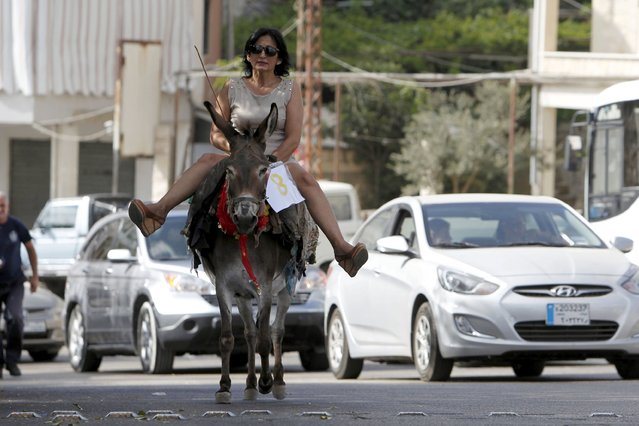
A woman rides a donkey during a donkey race in Roum village, Jizeen countryside, southern Lebanon, August 9, 2015. (Photo by Ali Hashisho/Reuters)

A woman rides a donkey during a donkey race in Roum village, Jizeen countryside, southern Lebanon, August 9, 2015. (Photo by Ali Hashisho/Reuters)
Details
10 Aug 2015 09:11:00
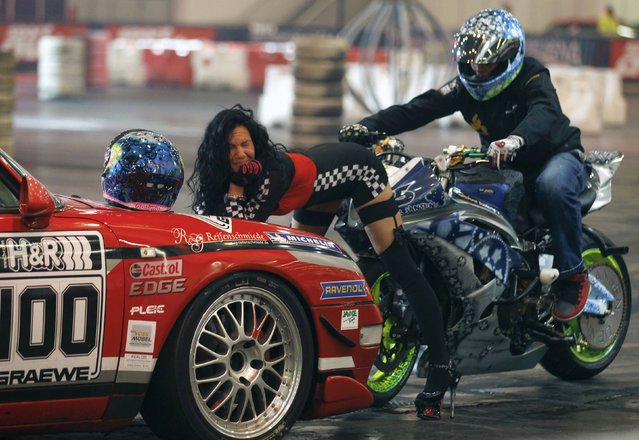
A model poses with a motorcycle and a car on a racing track at the Essen Motor Show in Essen, Germany, November 27, 2015. (Photo by Ina Fassbender/Reuters)

A model poses with a motorcycle and a car on a racing track at the Essen Motor Show in Essen, Germany, November 27, 2015. (Photo by Ina Fassbender/Reuters)
Details
29 Nov 2015 08:03:00
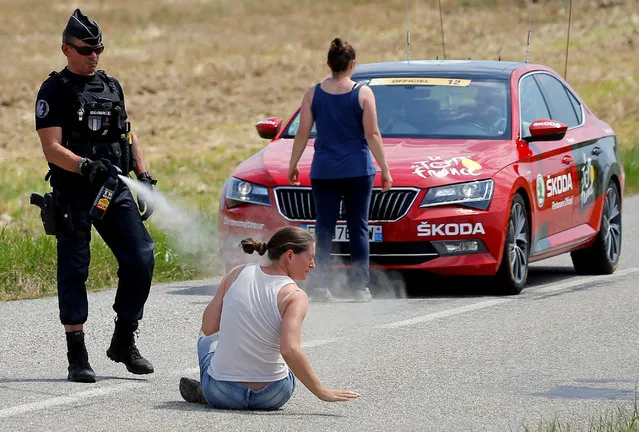
A police officer pepper sprays a protester as another protester stands in front of the race director's car during a farmers' protest who attempted to block the stage' s route, during the 16 th stage of the 105 th edition of the Tour de France cycling race, between Carcassonne and Bagneres- de- Luchon, southwestern France, on July 24, 2018. The race was halted for several minutes on July 24 after tear gas was used as protesting farmers attempted to block the route. (Photo by Stephane Mahe/Reuters)

A police officer pepper sprays a protester as another protester stands in front of the race director's car during a farmers' protest who attempted to block the stage' s route, during the 16 th stage of the 105 th edition of the Tour de France cycling race, between Carcassonne and Bagneres- de- Luchon, southwestern France, on July 24, 2018. The race was halted for several minutes on July 24 after tear gas was used as protesting farmers attempted to block the route. (Photo by Stephane Mahe/Reuters)
Details
26 Jul 2018 00:01:00
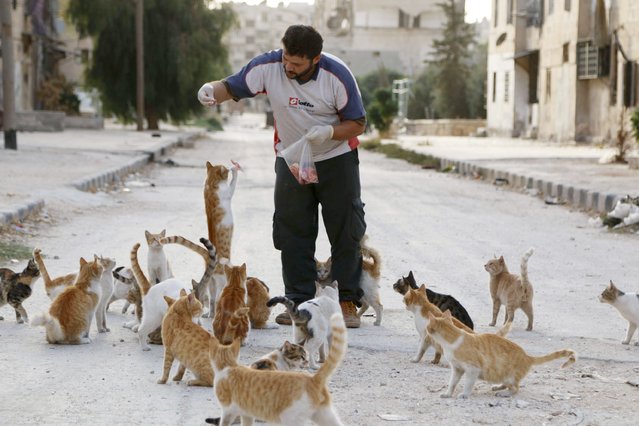
Alaa, an ambulance driver, feeds cats in Masaken Hanano in Aleppo, September 24, 2014. Alaa buys about $4 of meat everyday to feed about 150 abandoned cats in Masaken Hanano, a neigbourhood in Aleppo that has been abandoned because of shelling from forces loyal to Syria's president Bashar Al-Assad on it. Alaa said that he has been feeding and taking care of the cats for over 2 months. (Photo by Hosam Katan/Reuters)

Alaa, an ambulance driver, feeds cats in Masaken Hanano in Aleppo, September 24, 2014. Alaa buys about $4 of meat everyday to feed about 150 abandoned cats in Masaken Hanano, a neigbourhood in Aleppo that has been abandoned because of shelling from forces loyal to Syria's president Bashar Al-Assad on it. Alaa said that he has been feeding and taking care of the cats for over 2 months. (Photo by Hosam Katan/Reuters)
Details
25 Sep 2014 13:29:00
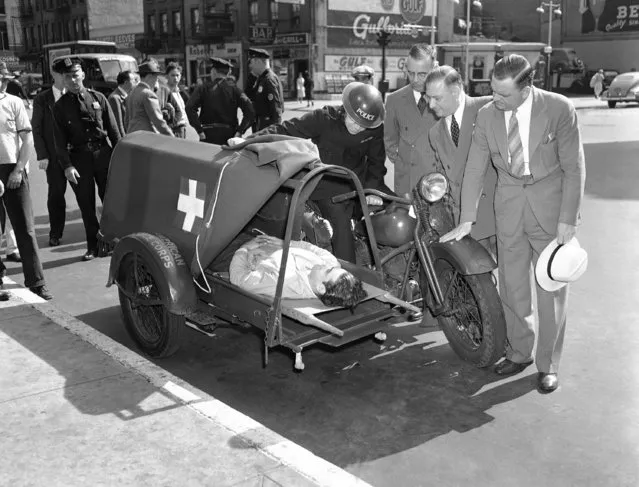
Developed for the British American Ambulance Corps, this new motorcycle ambulance is capable of speeding wounded soldiers 90 miles an hour from the front lines to field hospitals. Its springs are synchronized with the patient?s heartbeat to avoid increasing fever when traveling over various Terrain. Viewing it in New York  August 27, 1941, are left to right: constable Herbert Scott of England, driver; William E. Detlor, whose firm developed the vehicle; M. W. Stand, inspector-general of Civilian Defense, and Maj. Edward Riekert, also. (Photo by AP Photo)

Developed for the British American Ambulance Corps, this new motorcycle ambulance is capable of speeding wounded soldiers 90 miles an hour from the front lines to field hospitals. Its springs are synchronized with the patient's heartbeat to avoid increasing fever when traveling over various Terrain. Viewing it in New York August 27, 1941, are left to right: constable Herbert Scott of England, driver; William E. Detlor, whose firm developed the vehicle; M. W. Stand, inspector-general of Civilian Defense, and Maj. Edward Riekert, also. (Photo by AP Photo)

Details
28 Aug 2015 11:51:00