Loading...
Done
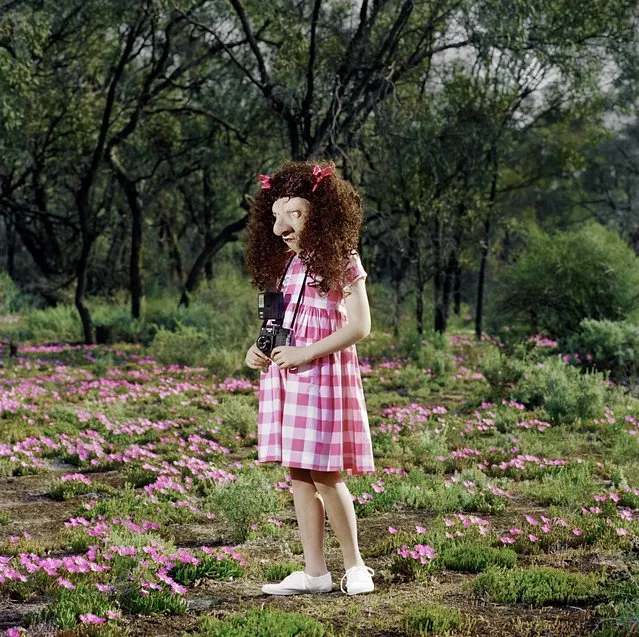
Photo by Polixeni Papapetrou

Australian artist Polixeni Papapetrou trends the line between fantasy/theatre, mythology/reality, archetype/play, male/female, child/adult and animal/human. As with all her work the series The Dreamkeepers tells a story that includes her autobiographical relationship with her children, but it also says a lot more about the condition of childhood - its place in our culture and how we react to images of children in photography.

Details
06 Aug 2012 08:09:00
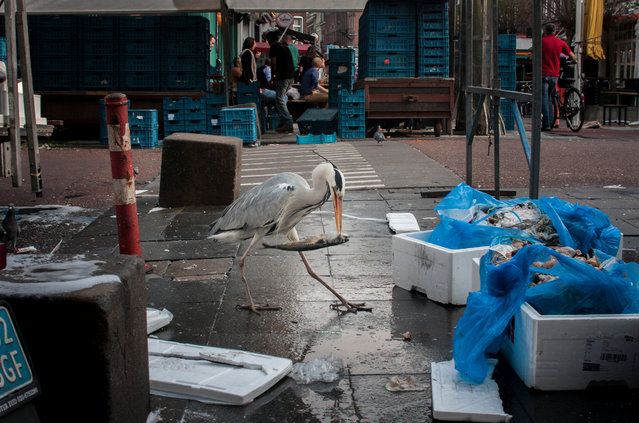
Hundreds of herons come to the city during winter to find food and shelter. (Photo by by Julie Hrudova/The Guardian)

Over the years a large population of grey herons have made an unlikely home in urban Amsterdam. Julie Hrudova documents how the birds integrate into city life. Here: Hundreds of herons come to the city during winter to find food and shelter. (Photo by by Julie Hrudova/The Guardian)
Details
07 Jun 2017 07:19:00
Tsunami Clouds: A Rush of Fog

Сool air offshore was very nearly at the saturation point, with a temperature near 20 degrees C and a dew point of about 19.5 degrees C. The air at this temperature can only hold a certain amount of water vapor, and how much it can hold depends heavily on the temperature.
Details
04 Nov 2013 11:30:00
SuperSized Heroes

“SuperSized Heroes” is an interactive website created by the Pure Blue web design agency for Desirable Body showing how famous superheroes would look if they became obese. You can feed the superheroes large quantities of chips and watch as they grow.
Details
14 Mar 2014 15:11:00
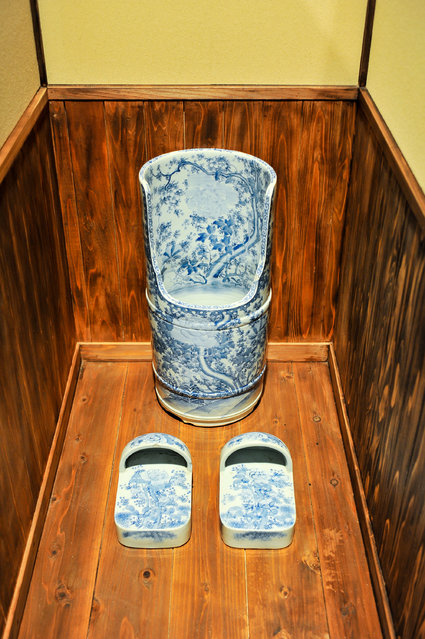
An old toilet is displayed during the “Toilet!? Human Waste and Earth's Future” exhibition at The National Museum of Emerging Science and Innovation – Miraikan on July 1, 2014 in Tokyo, Japan. The exhibition focuses on how the toilet has changed our daily lives and discovers what the most environment-friendly and ideal toilet is. (Photo by Keith Tsuji/Getty Images)

An old toilet is displayed during the “Toilet!? Human Waste and Earth's Future” exhibition at The National Museum of Emerging Science and Innovation – Miraikan on July 1, 2014 in Tokyo, Japan. The exhibition focuses on how the toilet has changed our daily lives and discovers what the most environment-friendly and ideal toilet is. (Photo by Keith Tsuji/Getty Images)
Details
03 Jul 2014 11:34:00


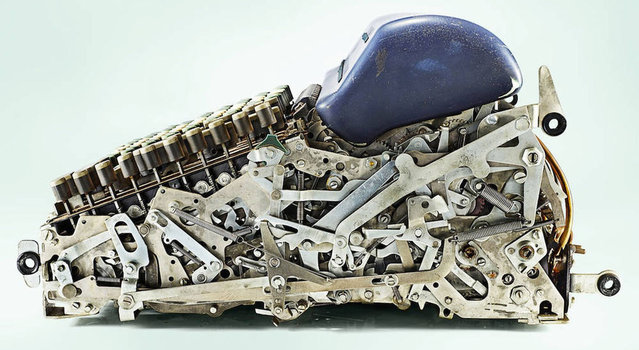
In his newest series of photos called Low Tech, Kevin Twomey artfully captures the complexity of old-style typewriters and similar machines. Despite being completely outdated, you cannot help being amazed at how complicated those “simple” devises really are. Hundreds of little parts were meticulously put together to form a machine that would perform such “basic” functions by today’s standards. Similarly, very few modern people actually think about how complicated the current technology really is. We take for granted streaming videos, GPS, and countless devises that we use every day, while in reality, these things would seem like magic to even the most prominent scientists from only half a century ago. (Photo by Kevin Twomey)
Details
21 Nov 2014 12:42:00
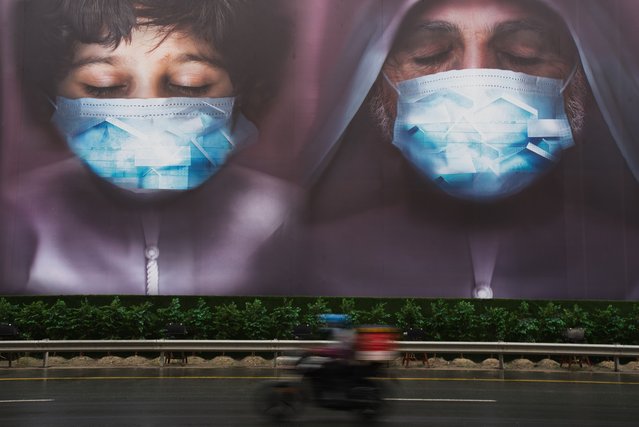
In this Wednesday, April 15, 2020 file photo, a motorcycle delivery man rides past a billboard urging people to stay home over the coronavirus pandemic in Dubai, United Arab Emirates. Wealthier Western countries are considering how to ease lockdown restrictions and start taking gradual steps toward reviving business and daily life. But many developing countries, particularly in the Middle East and Africa, can hardly afford the luxury of any misstep. (Photo by Jon Gambrell/AP Photo/File)

In this Wednesday, April 15, 2020 file photo, a motorcycle delivery man rides past a billboard urging people to stay home over the coronavirus pandemic in Dubai, United Arab Emirates. Wealthier Western countries are considering how to ease lockdown restrictions and start taking gradual steps toward reviving business and daily life. But many developing countries, particularly in the Middle East and Africa, can hardly afford the luxury of any misstep. (Photo by Jon Gambrell/AP Photo/File)
Details
18 Apr 2020 00:05:00
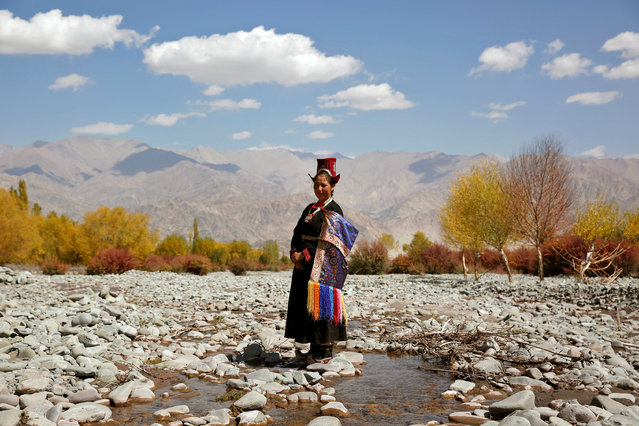
Tsewang Dolma, 33, a farmer and housewife poses for a photograph in Matho, a village nestled high in the Indian Himalayas, India September 29, 2016. When asked how living in the world's fastest growing major economy had affected life, Dolma replied: “Our culture is spoiled now. We don't wear our traditional dress”. (Photo by Cathal McNaughton/Reuters)

Tsewang Dolma, 33, a farmer and housewife poses for a photograph in Matho, a village nestled high in the Indian Himalayas, India September 29, 2016. When asked how living in the world's fastest growing major economy had affected life, Dolma replied: “Our culture is spoiled now. We don't wear our traditional dress”. (Photo by Cathal McNaughton/Reuters)
Details
13 Oct 2016 11:32:00