Loading...
Done
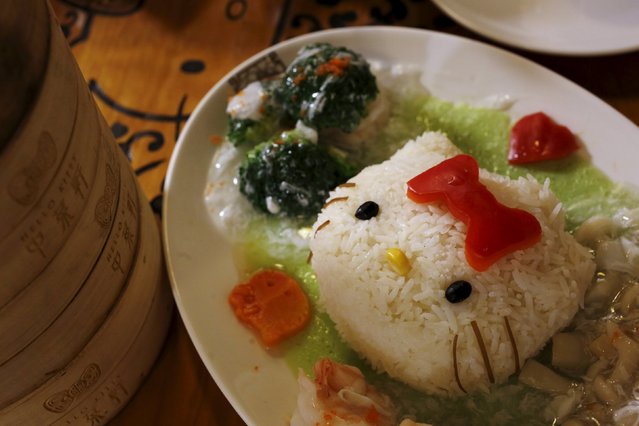
A decorated dish of rice with spinach sauce and egg white is seen at a Hello Kitty-themed Chinese restaurant in Hong Kong, China May 21, 2015. (Photo by Bobby Yip/Reuters)

A decorated dish of rice with spinach sauce and egg white is seen at a Hello Kitty-themed Chinese restaurant in Hong Kong, China May 21, 2015. The world's first Chinese-style restaurant dedicated to the Japanese cartoon has been packed out daily despite not officially opening until June 1, 2015. The eatery features some 37 dishes such as dim sum and fried rice, often served in the shape of the girl-cat. (Photo by Bobby Yip/Reuters)
Details
23 May 2015 11:55:00
Sakura and Kazuhiro, Tokyo, 2015. Kazuhiro is a tattoo artist and Sakura is a photographer. They love cooking, live with their dog and two cats and each have the date of their wedding tattooed to their ring fingers. (Photo by Mami Kiyoshi/Galerie Annie Gabrielli/The Guardian)

Japanese artist Mami Kiyoshi has spent 15 years creating vivid portraits of people surrounded by their belongings – from wine bottles and violins to the odd stray pet. Mami Kiyoshi’s ongoing series “New Reading Portraits” is, in part, a nod to the mise-en-scène found in traditional woodcut printing. Here: Sakura and Kazuhiro, Tokyo, 2015. (Photo by Mami Kiyoshi/Galerie Annie Gabrielli/The Guardian)
Details
04 Aug 2017 08:48:00
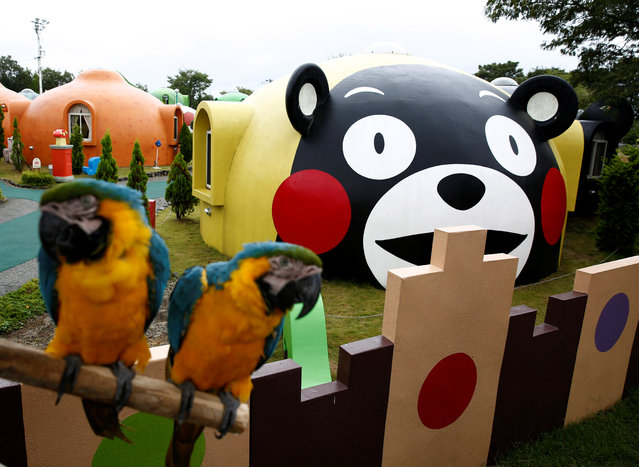
A quake-resistant dome house decorated with Japan's popular “Kumamon” bear character is pictured at the Aso Farm Land resort in Aso, Japan on November 6, 2017. (Photo by Kim Kyung-Hoon/Reuters)

A quake-resistant dome house decorated with Japan's popular “Kumamon” bear character is pictured at the Aso Farm Land resort in Aso, Japan on November 6, 2017. Cabins modelled after Japanese sweets and made from polystyrene foam withstood last year's deadly earthquakes in Kumamoto prefecture. (Photo by Kim Kyung-Hoon/Reuters)
Details
09 Nov 2017 05:18:00
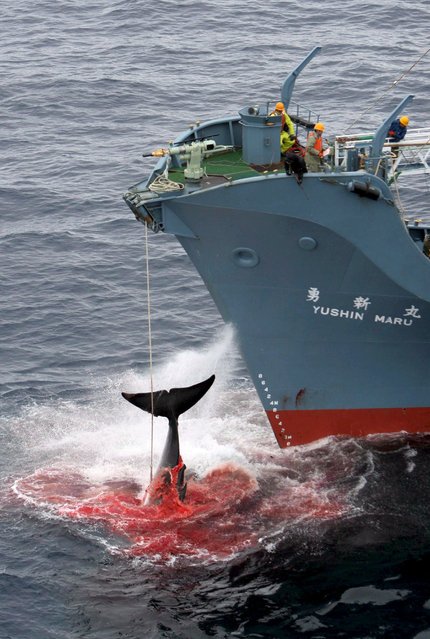
A file photograph dated 07 January 2006 and released by Greenpeace, showing the Yushin Maru, a factory ship in a Japanese whaling fleet, injuring a whale with it's first harpoon attempt. A UN court in The Hague on 31 March 2014 halted Japan's much-criticized whaling programme, ruling that it contravenes a 1986 moratorium on whale hunting. Japan must end its 'research whaling' programme, the International Court of Justice (ICJ) said. (Photo by Kate Davison/EPA)

A file photograph dated 07 January 2006 and released by Greenpeace, showing the Yushin Maru, a factory ship in a Japanese whaling fleet, injuring a whale with it's first harpoon attempt. A UN court in The Hague on 31 March 2014 halted Japan's much-criticized whaling programme, ruling that it contravenes a 1986 moratorium on whale hunting. Japan must end its 'research whaling' programme, the International Court of Justice (ICJ) said. Japan said the programme was for scientific research and permitted under international conventions. Australia had brought the case to the ICJ in 2010, charging that Japan was breaching international law by killing hundreds of whales every year for commercial purposes. Japan was “deeply disappointed” by the ruling, an unnamed government official was quoted by the Kyodo News agency as saying. But the official said Japan would stand by the ruling. (Photo by Kate Davison/EPA)
Details
01 Apr 2014 08:38:00


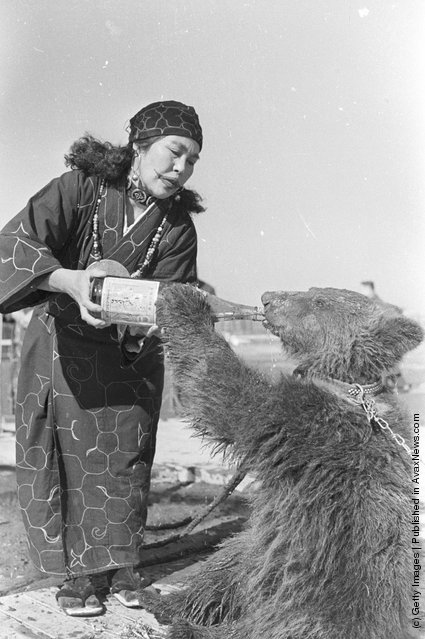
“The Ainu (アイヌ?), also called Aynu, Aino (アイノ), and in historical texts Ezo (蝦夷), are indigenous people or groups in Japan and Russia. Historically they spoke the Ainu language and related varieties and lived in Hokkaidō, the Kuril Islands, and much of Sakhalin. Most of those who identify themselves as Ainu still live in this same region, though the exact number of living Ainu is unknown. This is due to ethnic issues in Japan resulting in those with Ainu backgrounds hiding their identities and confusion over mixed heritages. In Japan, because of intermarriage over many years with Japanese, the concept of a 'pure Ainu' ethnic group is no longer feasible. Official estimates of the population are of around 25,000, while the unofficial number is upwards of 200,000 people”. – Wkipedia

Photo: A captive bear drinking from a large bottle held by an Ainu tribeswoman. (Photo by Evans/Three Lions/Getty Images). Circa 1955
Details
24 Mar 2011 14:01:00
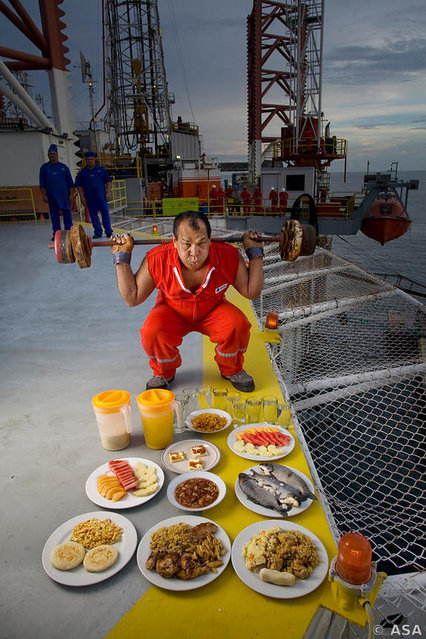
What the World Eats By Peter Menzel And Faith D'Aluisio Part 1

A stunning photographic collection featuring portraits of people from 30 countries and the food they eat in one day. In this fascinating study of people and their diets, 80 profiles are organized by the total number of calories each person puts away in a day. Featuring a Japanese sumo wrestler, a Massai herdswoman, world-renowned Spanish chef Ferran Adria, an American competitive eater, and more, these compulsively readable personal stories also include demographic particulars, including age, activity level, height, and weight. Essays from Harvard primatologist Richard Wrangham, journalist Michael Pollan, and others discuss the implications of our modern diets for our health and for the planet. This compelling blend of photography and investigative reportage expands our understanding of the complex relationships among individuals, culture, and food.
Details
23 Apr 2014 14:34:00
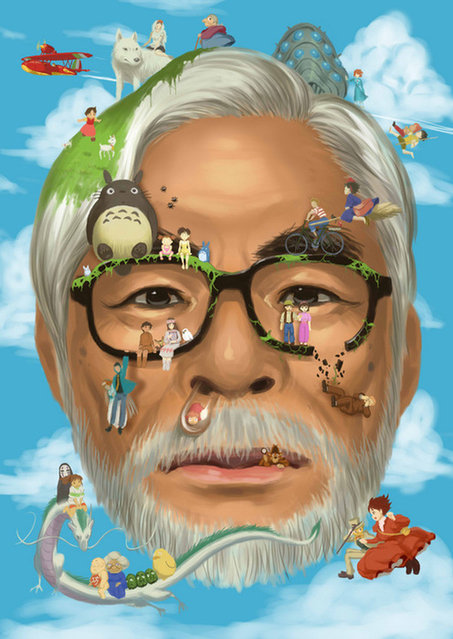
Amazing Animator Hayao Miyazaki

Hayao Miyazaki is a Japanese film director, animator, manga artist, producer, and screenwriter. Through a career that has spanned over fifty years, Miyazaki has attained international acclaim as a maker of anime feature films and, along with Isao Takahata, co-founded Studio Ghibli, a film and animation studio. The success of Miyazaki's films has invited comparisons with American animator Walt Disney, British animator Nick Park and American director Robert Zemeckis.
Details
12 Jul 2013 10:09:00
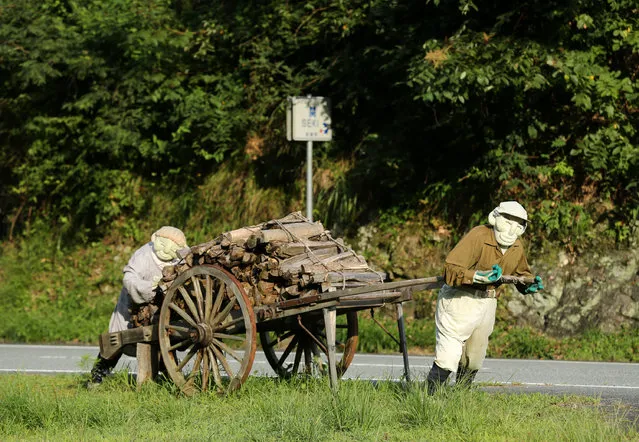
An illustration showing scarecrows pulling a firewood cart beside a road is on display at Kakashi no Sato, or the Scarecrow's Hometown on September 10, 2014 in Himeji, Japan. (Photo by Buddhika Weerasinghe/Getty Images)

An illustration showing scarecrows pulling a firewood cart beside a road is on display at Kakashi no Sato, or the Scarecrow's Hometown on September 10, 2014 in Himeji, Japan. In this district of Yasutomi in Himeji city, over 100 of scarecrows stand in farmlands and abandoned houses to illustrate the good old Japanese countryside and attract visitors. (Photo by Buddhika Weerasinghe/Getty Images)
Details
15 Sep 2014 10:37:00