Loading...
Done
A “Maya” girl sits in an altar during the traditional celebration of “Las Mayas” on the streets in Madrid, Spain Sunday, May 10, 2015. The festivity of the Maya comes from pagan rites and dates from the medieval age, appearing in ancient documents. It takes place every year in the beginning of May and celebrates the beginning of the spring. (Photo by Daniel Ochoa de Olza/AP Photo)

A “Maya” girl sits in an altar during the traditional celebration of “Las Mayas” on the streets in Madrid, Spain Sunday, May 10, 2015. The festivity of the Maya comes from pagan rites and dates from the medieval age, appearing in ancient documents. It takes place every year in the beginning of May and celebrates the beginning of the spring. Girls between 7 and 11 years old are chosen as “Maya” and should sit still, serious and quiet for a couple of hours in altars on the street decorated with flowers and plants and afterwards they walk to the church with their family where they attend a ceremony. (Photo by Daniel Ochoa de Olza/AP Photo)
Details
14 May 2015 11:12:00
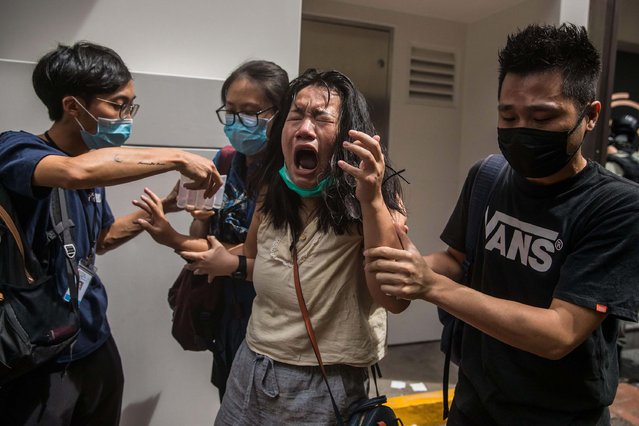
A woman reacts after she was hit with pepper spray deployed by police as they cleared a street with protesters rallying against a new national security law in Hong Kong on July 1, 2020, on the 23rd anniversary of the city's handover from Britain to China. A man found in possession of a Hong Kong independence flag became the first person to be arrested under Beijing's new national security law for the city, police said on July 1. (Photo by Dale De La Rey/AFP Photo)

A woman reacts after she was hit with pepper spray deployed by police as they cleared a street with protesters rallying against a new national security law in Hong Kong on July 1, 2020, on the 23rd anniversary of the city's handover from Britain to China. A man found in possession of a Hong Kong independence flag became the first person to be arrested under Beijing's new national security law for the city, police said on July 1. (Photo by Dale De La Rey/AFP Photo)
Details
21 Jan 2021 09:36:00
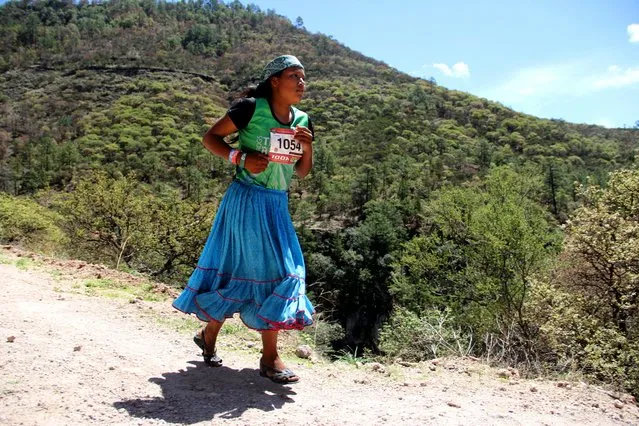
A Raramuris indigenous woman takes part in the “Ultra maraton de los Canones 2017” (Ultra marathon of the Canyons), at La Sinforosa Canyon, in Guachochi, Chihuahua state, Mexico on July 15, 2017. More than 600 participants from different countries take part in the 63 and 100 kilometers races, along the Tarahumara mountain range. (Photo by Herika Martinez/AFP Photo)

A Raramuris indigenous woman takes part in the “Ultra maraton de los Canones 2017” (Ultra marathon of the Canyons), at La Sinforosa Canyon, in Guachochi, Chihuahua state, Mexico on July 15, 2017. More than 600 participants from different countries take part in the 63 and 100 kilometers races, along the Tarahumara mountain range. (Photo by Herika Martinez/AFP Photo)
Details
17 Jul 2017 08:21:00
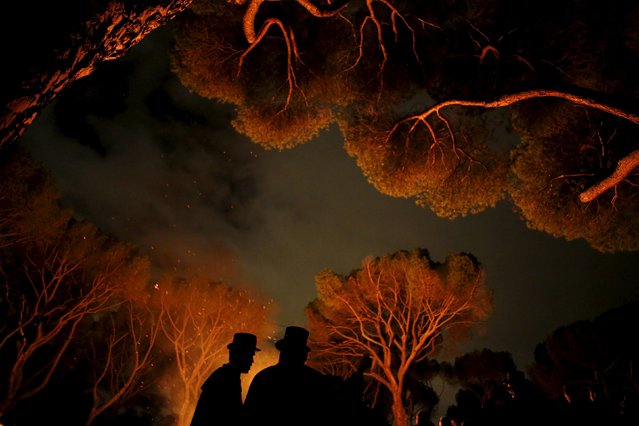
People take part in the “The Burial of the Sardine” funeral procession, which marks the end of carnival festivities, in Madrid, Spain, February 10, 2016. (Photo by Juan Medina/Reuters)

People take part in the “The Burial of the Sardine” funeral procession, which marks the end of carnival festivities, in Madrid, Spain, February 10, 2016. “Mourners” carry a coffin with a mock sardine through the streets to celebrate the countdown to Lent. Spanish painter Francisco de Goya's painting “El entierro de la sardina” (The Burial of the Sardine) was inspired by this tradition, which started in Madrid in the 18th century, around the time of Spanish King Carlos III. (Photo by Juan Medina/Reuters)
Details
11 Feb 2016 12:29:00
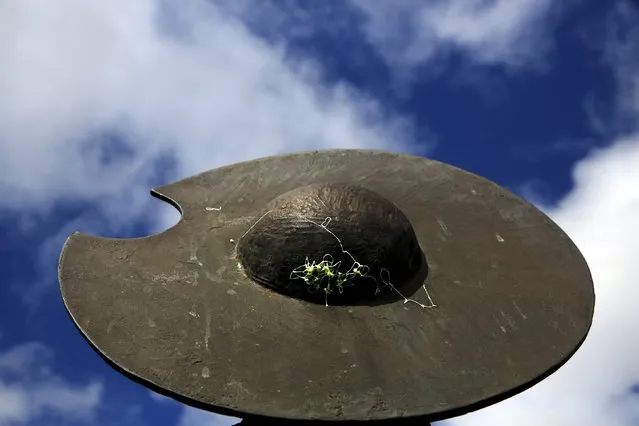
A sculpture of Don Quixote shows him wearing the basin he mistook for the enchanted helmet of the fictional Moorish king Mambrino in Alcazar de San Juan, Spain, April 5, 2016. (Photo by Susana Vera/Reuters)

A sculpture of Don Quixote shows him wearing the basin he mistook for the enchanted helmet of the fictional Moorish king Mambrino in Alcazar de San Juan, Spain, April 5, 2016. The arid central Spanish region of La Mancha is the setting for “Don Quixote”, the seventeenth-century novel by Miguel de Cervantes. Four hundred years after his death, references to the characters of Don Quixote, his loyal squire Sancho Panza and his beautiful lady Dulcinea abound in the surrounding villages from sweet treats to theatre productions involving livestock. Cervantes did not give away the name of the birthplace of Don Quixote, a middle-aged gentleman who becomes obsessed with chivalrous ideals. But many identify the village of Argamasilla de Alba as his hometown. The anniversary of Cervantes’ death is marked on the 23 April. (Photo by Susana Vera/Reuters)
Details
21 Apr 2016 12:32:00
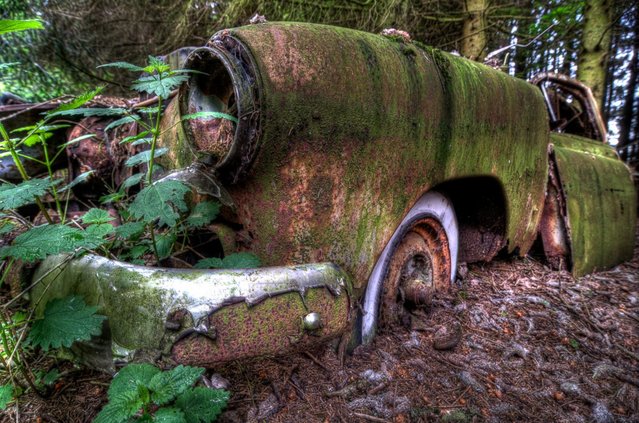
A forest near Chatillion, a small village in Belgium, used to be home to a vintage car graveyard. This “car graveyard” has since been cleaned up, but photographer Theo van Vliet had the chance to explore the forest and photograph the cars beforehand. (Photo by Theo van Vliet)

A forest near Chatillion, a small village in Belgium, used to be home to a vintage car graveyard. This “car graveyard” has since been cleaned up, but photographer Theo van Vliet had the chance to explore the forest and photograph the cars beforehand. (Photo by Theo van Vliet)
Details
16 Jul 2014 14:24:00
Claire plaiyng the piano in an abandoned Cafe in Luxembourg. (Photo by Alice van Kempen/Caters News)

Meet Claire, the 3-year-old bull terrier travels the world with Dutch photographer Alice van Kempen, 48, and poses for photographs in abandoned buildings. Van Kempen seeks out abandoned places to photograph in pursuit of her passion for urban exploring, bringing along her globetrotting pooch as her trusted companion. Here: Claire plaiyng the piano in an abandoned Cafe in Luxembourg. (Photo by Alice van Kempen/Caters News)
Details
08 Jan 2016 08:03:00
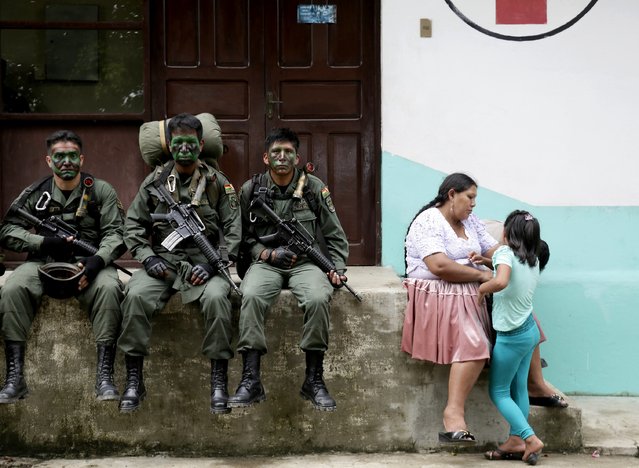
Members of the Bolivian combined forces of army and police rest at their headquarters at the end of their ceremony for the task of fighting against drugs and the eradication of coca leaves in Chimore, east of La Paz, December 10, 2014. The government of Bolivia's President Evo Morales eradicated some 11,000 hectares of illegal coca plants and confiscated nearly 192 tons of drugs in 2014, according to the local media. (Photo by David Mercado/Reuters)

Members of the Bolivian combined forces of army and police rest at their headquarters at the end of their ceremony for the task of fighting against drugs and the eradication of coca leaves in Chimore, east of La Paz, December 10, 2014. The government of Bolivia's President Evo Morales eradicated some 11,000 hectares of illegal coca plants and confiscated nearly 192 tons of drugs in 2014, according to the local media. (Photo by David Mercado/Reuters)
Details
12 Dec 2014 13:10:00