Loading...
Done


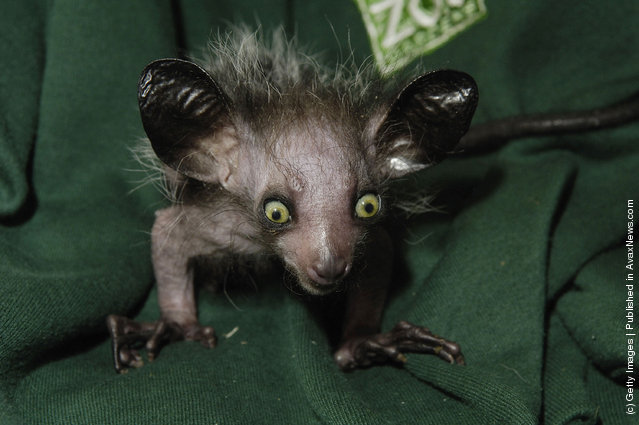
“The aye-aye (Daubentonia madagascariensis) is a lemur, a strepsirrhine primate native to Madagascar that combines rodent-like teeth and a special thin middle finger to fill the same ecological niche as a woodpecker. It is the world's largest nocturnal primate, and is characterized by its unusual method of finding food; it taps on trees to find grubs, then gnaws holes in the wood and inserts its narrow middle finger to pull the grubs out. The only other animal species known to find food in this way is the striped possum. From an ecological point of view the aye-aye fills the niche of a woodpecker as it is capable of penetrating wood to extract the invertebrates within”. – Wikipedia

Photo: In this handout image from Bristol Zoo is seen the first captive bred aye-aye in the UK named “Kintana” (meaning star in Malagasy) April 15, 2005 at Bristol Zoo Gardens, England. The zoo announced today only the second baby aye-aye to be hand-reared in the world (the first was in Jersey Zoo) and has now made his first public appearance since his birth on 11 February 2005. (Photo by Rob Cousins/Bristol Zoo via Getty Images)
Details
13 Apr 2011 13:33:00
American actress Kiernan Shipka poses with “May flowers” in Venice, Italy in the last decade of May 2022. (Photo by kiernanshipka/Instagram)

American actress Kiernan Shipka poses with “May flowers” in Venice, Italy in the last decade of May 2022. (Photo by kiernanshipka/Instagram)

Details
05 Jun 2022 04:11:00
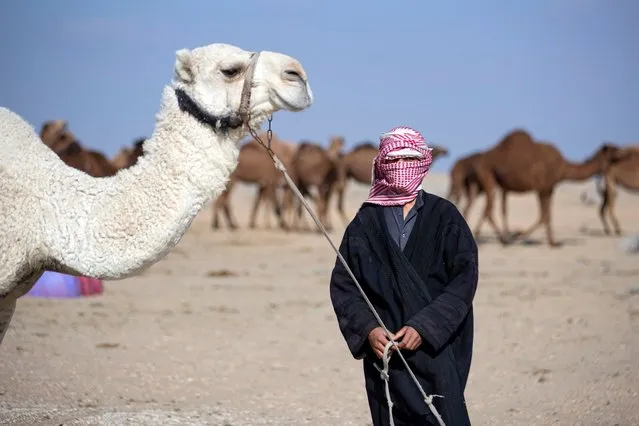
An Iraqi camel herder poses in the desert of Samawa in Iraq's southern province of al-Muthanna on January 27, 2024. (Photo by Hussein Faleh/AFP Photo)

An Iraqi camel herder poses in the desert of Samawa in Iraq's southern province of al-Muthanna on January 27, 2024. (Photo by Hussein Faleh/AFP Photo)
Details
15 Feb 2024 08:47:00
Alexander Levine crosses the Verrazzano-Narrows Bridge during the marathon in New York on November 3, 2024. (Photo by Brendan Mcdermid/Reuters)

Alexander Levine crosses the Verrazzano-Narrows Bridge during the marathon in New York on November 3, 2024. (Photo by Brendan Mcdermid/Reuters)
Details
11 Nov 2024 03:48:00
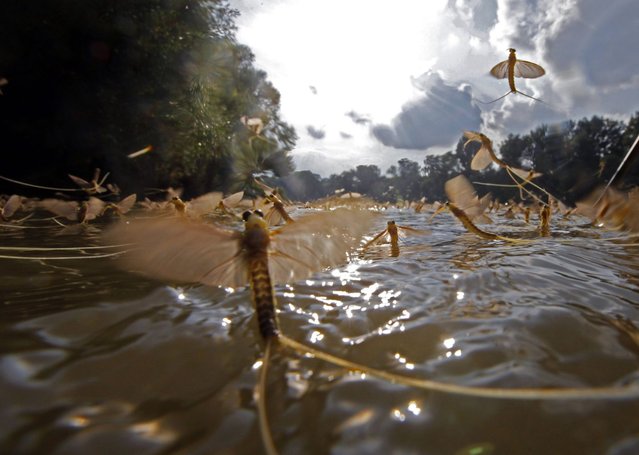
Long-tailed mayflies fly over the surface of the Tisza river southeast of Budapest. (Photo by Laszlo Balogh/Reuters)

Long-tailed mayflies (Palingenia longicauda) at Tisza river near Tiszainoka 135km (84 miles) southeast of Budapest, June 23, 2013. Millions of these short-lived mayflies engage in a frantic rush to mate and reproduce before they perish in just a few hours during “Tiszaviragzas” or Tisza blooming season from late spring to early summer every year. (Photo by Laszlo Balogh/Reuters)
Details
14 Jul 2013 11:20:00


Photos by Daniel Korjonov
Details
30 May 2012 03:43:00
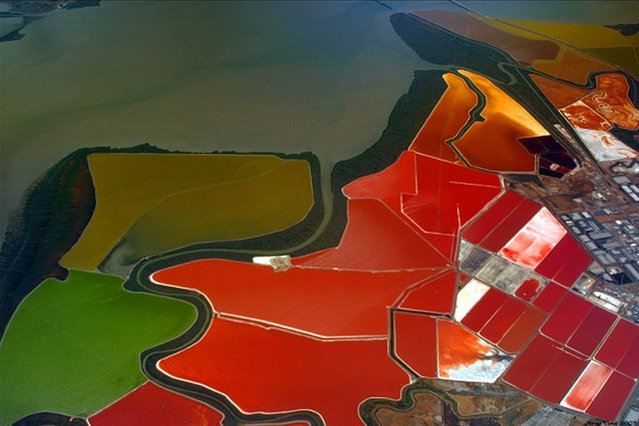
Salt ponds in San Francisco Bay

Salt evaporation ponds, also called salterns or salt pans, are shallow artificial ponds designed to produce salts from sea water or other brines. The seawater or brine is fed into large ponds and water is drawn out through natural evaporation which allows the salt to be subsequently harvested. The ponds also provide a productive resting and feeding ground for many species of waterbirds, which may include endangered species. The ponds are commonly separated by levees.
Details
11 Oct 2012 12:49:00
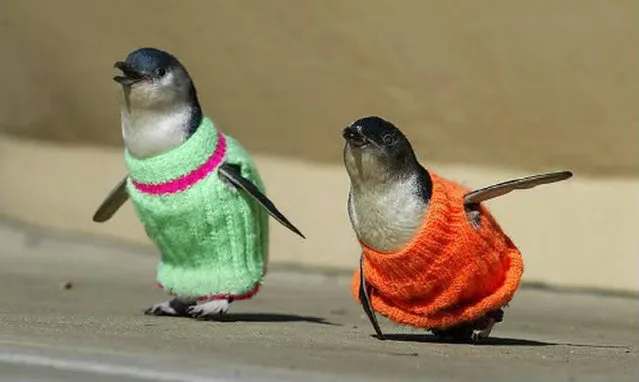
New Zealand Penguins in Need of Sweaters

Penguin sweaters, also known as penguin jumpers, are sweaters which are knitted for penguins that have been caught in oil slicks. When an oil spill affects penguins, they are dressed in knitted sweaters to stop them preening their feathers and to keep them warm, since the spilled oil destroys their natural oils. This also prevents them from poisoning themselves by ingesting the oil. The sweaters are removed and discarded as soon as the penguins can be washed. The original project has been completed, but the knitting pattern is still available on-line, as subsequent oil spills make it necessary. The extra sweaters are kept on behalf of the Wildlife Rescue Team.
Details
31 Oct 2012 13:06:00