Loading...
Done
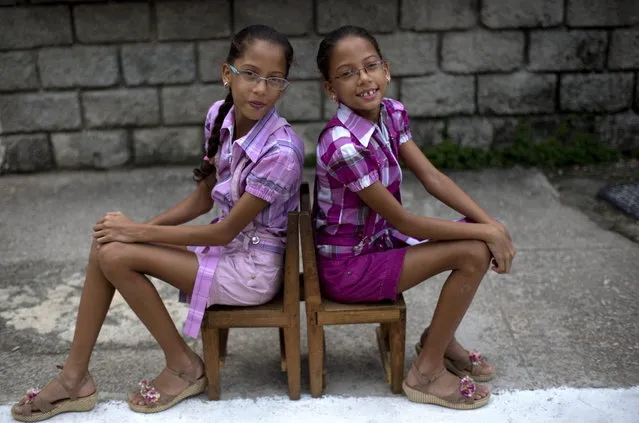
In this Sept. 29, 2013 photo, nine-year-old twin sisters Camila, left, and Carla Rodriguez pose for a portrait along their street in Havana, Cuba. 12 sets of twins live along two consecutive blocks in western Havana, ranging in age from newborns to senior citizens. “We love living on this block because we have twin friends”, said Carla. (Photo by Ramon Espinosa/AP Photo)

A street in the Cuban capital, Havana, is home to 12 sets of twins, ranging from toddlers to senior citizens. Some say it could be something in the water. Others point to a tree with mystical significance for locals. And maybe it's just chance. Photo: In this September 29, 2013 photo, nine-year-old twin sisters Camila, left, and Carla Rodriguez pose for a portrait along their street in Havana, Cuba. 12 sets of twins live along two consecutive blocks in western Havana, ranging in age from newborns to senior citizens. “We love living on this block because we have twin friends”, said Carla. (Photo by Ramon Espinosa/AP Photo)
Details
07 Oct 2013 06:44:00
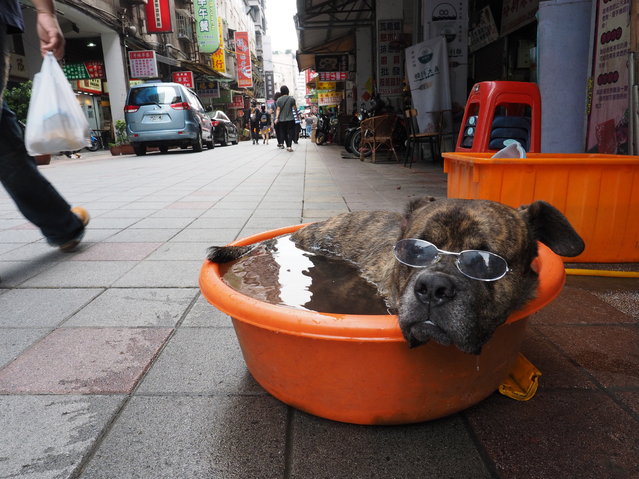
A dog sits in a plastic basin filled with water in Taipei, Taiwan, 05 May 2018. Betel nut seller Mr Luo, the dog's owner, said he puts his dog Ah Dai (Stupid Guy) in the water-filled basin whenever the weather get hot. Luo has a dozen pairs of glasses for Ah Dai, so the dog wears different glasses every day and many tourists take photos of Ah Dai. (Photo by David Chang/EPA/EFE)

A dog sits in a plastic basin filled with water in Taipei, Taiwan, 05 May 2018. Betel nut seller Mr Luo, the dog's owner, said he puts his dog Ah Dai (Stupid Guy) in the water-filled basin whenever the weather get hot. Luo has a dozen pairs of glasses for Ah Dai, so the dog wears different glasses every day and many tourists take photos of Ah Dai. (Photo by David Chang/EPA/EFE)
Details
13 May 2018 00:03:00
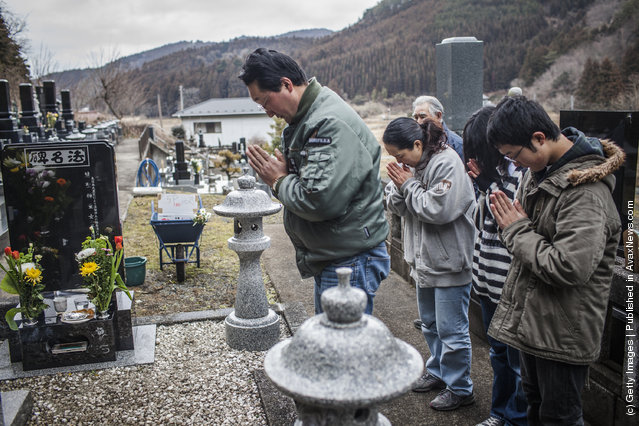
Takahiro Shito, 47, and his wife Sayomi Shito, 46, pray with their children Tomoka, 14, and Kenya 16, and their great uncle Akinori Takahashi, 76, as they pay respects to their daughter Chisato,12, buried in a nearby cemetery, victim of the Okowa Elementary School tragedy, who was killed during last year's tsunami on March 11, 2012 near Ishinomaki, Japan

Takahiro Shito, 47, and his wife Sayomi Shito, 46, pray with their children Tomoka, 14, and Kenya 16, and their great uncle Akinori Takahashi, 76, as they pay respects to their daughter Chisato,12, buried in a nearby cemetery, victim of the Okowa Elementary School tragedy, who was killed during last year's tsunami on March 11, 2012 near Ishinomaki, Japan. Teachers at the school weren't trained for tsunami evacuation and didn't to lead the children up the snow covered mountain behind the school after the tsunami warning was sounded. Out of 108 students at the school, 74 died and four remain missing; 10 of the school's 13 teachers were also killed. (Photo by Daniel Berehulak /Getty Images)
Details
11 Mar 2012 09:47:00
Spectacular images offering insight into the lives of the Huaorani people in the Ecuadorian Amazon have been revealed showing how they use traditional methods to hunt monkeys for food. The stunning pictures were taken by conservation photographer Pete Oxford from Torquay, Devon in the Ecuadorian Amazon. “The Huaorani Indians are a forest people highly in tune with their environment. Many are now totally acculturated since the 1950s by missionaries”, said Pete. “Today they face radical change to their culture to the proximity of oil exploration within their territory and the Yasuni National Park and Biosphere Reserve, they are vastly changed. Some still live very traditionally and for this shoot, through my Huaorani friend, a direct relative of those photographed he wanted to depict them as close to their original culture as possible. They still largely hunt with blow pipes and spears eating a lot of monkeys and peccaries”. The Huaorani are also known as the Waorani, Waodani or the Waos and are native Amerindians. Their lands are located between the Curaray and Napo rivers and speak the Huaorani language. Pete says that during his visit he was welcomed into the group and hopes that ancient cultures can be saved. Here: The tribe were seen celebrating after a hunter returned to camp with a wild pig. (Photo by Pete Oxford/Mediadrumworld.com)

Spectacular images offering insight into the lives of the Huaorani people in the Ecuadorian Amazon have been revealed showing how they use traditional methods to hunt monkeys for food. The stunning pictures were taken by conservation photographer Pete Oxford from Torquay, Devon in the Ecuadorian Amazon. Here: The tribe were seen celebrating after a hunter returned to camp with a wild pig. (Photo by Pete Oxford/Mediadrumworld.com)
Details
20 Jan 2017 07:58:00
In this Wednesday, January 27, 2016 photo, Jung Myoung Sook, 61, holds her puppies she rescued at a shelter in Asan, South Korea. In the country, where dogs are considered a traditional delicacy and have only recently become popular as pets, Jung's love for her canine friends is viewed by some as odd. (Photo by Lee Jin-man/AP Photo)

In this Wednesday, January 27, 2016 photo, Jung Myoung Sook, 61, holds her puppies she rescued at a shelter in Asan, South Korea. In the country, where dogs are considered a traditional delicacy and have only recently become popular as pets, Jung's love for her canine friends is viewed by some as odd. But others see her as a champion of animal rights. (Photo by Lee Jin-man/AP Photo)
Details
03 Feb 2016 13:28:00
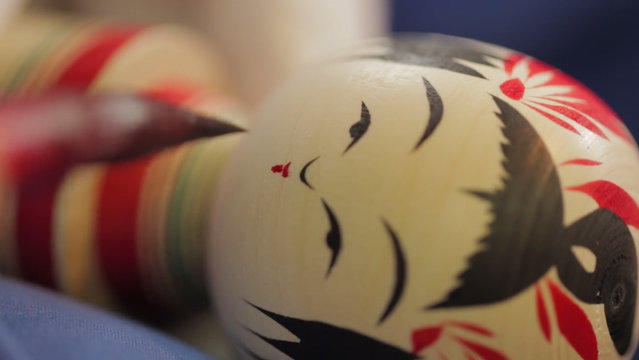
How It's Made Japanese Kokeshi Doll

Kokeshi dolls these traditional wooden figurines were said to have been originally made as souvenirs to sell to people visiting the local hot springs in Northern Japan. Although there are about 10 different styles, each doll is made with an enlarged head and cylindrical body with no arms or legs.
Details
13 Nov 2014 10:06:00
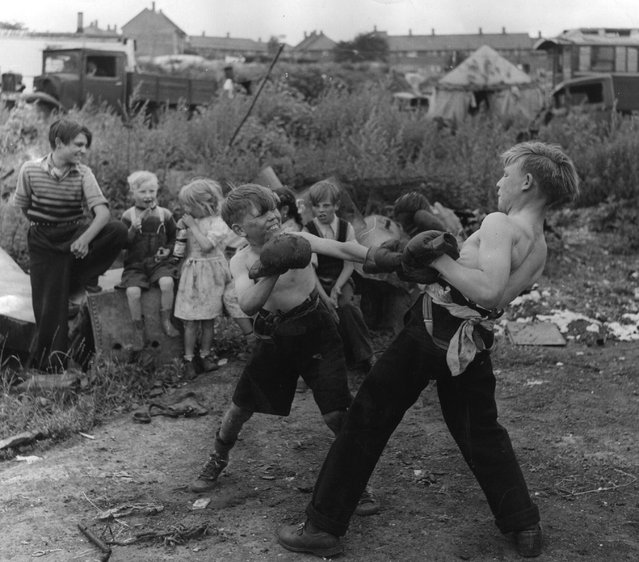
The unromantic gypsies. Children boxing in a gypsy camp in Kent, England on July 1, 1951. Like all boys these gypsy lads like to try their hand at boxing. Encouraged by their friends they fight it out on Corke's Meadow. Few Romanies now live a life of wandering romance. Most are like the three hundred squatters of Corke's Meadow, Kent, which is part of a “gypsy problem” that involves about 100,000 today. Of those about 25,000 can be rightly called gypsies, the rest are Mumpers and Posh-rats and Hobos. Corke's Meadow has both kinds. “Picture Post” cameraman Bert Hardy photographs the Corke's Meadow gypsies in their encampment. (Photo by Hulton-Deutsch Collection/Corbis via Getty Images)

The unromantic gypsies. Children boxing in a gypsy camp in Kent, England on July 1, 1951. Like all boys these gypsy lads like to try their hand at boxing. Encouraged by their friends they fight it out on Corke's Meadow. Few Romanies now live a life of wandering romance. Most are like the three hundred squatters of Corke's Meadow, Kent, which is part of a “gypsy problem” that involves about 100,000 today. Of those about 25,000 can be rightly called gypsies, the rest are Mumpers and Posh-rats and Hobos. Corke's Meadow has both kinds. “Picture Post” cameraman Bert Hardy photographs the Corke's Meadow gypsies in their encampment. (Photo by Hulton-Deutsch Collection/Corbis via Getty Images)
Details
12 Mar 2017 00:01:00
A Donald Trump impersonator with a bikini clad model stops at a hot dog vendor near Trump Tower on October 25, 2016 in New York, as part of a performance art piece by British artist Alison Jackson. The event is to promote Jackson's new show, “Private”, in New York, which features staged photographs portraying the private lives of public individuals. (Photo by Timothy A. Clary/AFP Photo)

A Donald Trump impersonator with a bikini clad model stops at a hot dog vendor near Trump Tower on October 25, 2016 in New York, as part of a performance art piece by British artist Alison Jackson. The event is to promote Jackson's new show, “Private”, in New York, which features staged photographs portraying the private lives of public individuals. (Photo by Timothy A. Clary/AFP Photo)
Details
26 Oct 2016 11:12:00