Loading...
Done
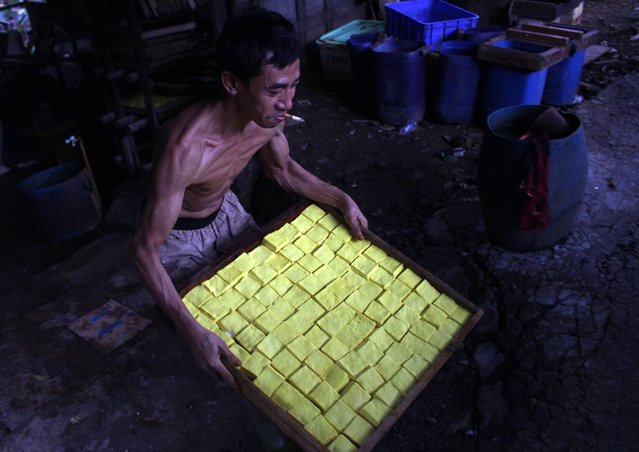
A  worker carries a tray of boiled tofu in a traditional tofu factory in Depok, Indonesia, 21 January 2015. (Photo by Adi Weda/EPA)

A worker carries a tray of boiled tofu in a traditional tofu factory in Depok, Indonesia, 21 January 2015. Tofu has been a common side dish for many Indonesian families. It is healthy, inexpensive and easy to find throughout the city. Tofu entrepreneurs in Indonesia are suffering due to the weakening of the rupiah against the US dollar and the rise in prices of imported soybeans in the international market, forcing tofu-makers to cut their production and lay off staff. (Photo by Adi Weda/EPA)
Details
27 Jan 2015 12:35:00
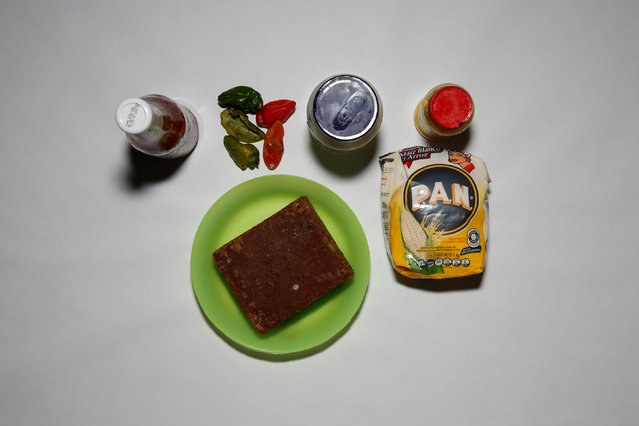
All the food available in the house of Antonia Torres and her family, is pictured at their home in Caracas, Venezuela April 22, 2016. (Photo by Carlos Garcia Rawlins/Reuters)

The combination of Venezuela's sky-rocketing prices and chronic product shortages have left many struggling to put regular food on their tables and maintain a balanced diet. According to one recent study, 87 percent of Venezuelans say their income is now insufficient to purchase their food needs. Here: All the food available in the house of Antonia Torres and her family, is pictured at their home in Caracas, Venezuela April 22, 2016. (Photo by Carlos Garcia Rawlins/Reuters)
Details
28 Apr 2016 12:30:00
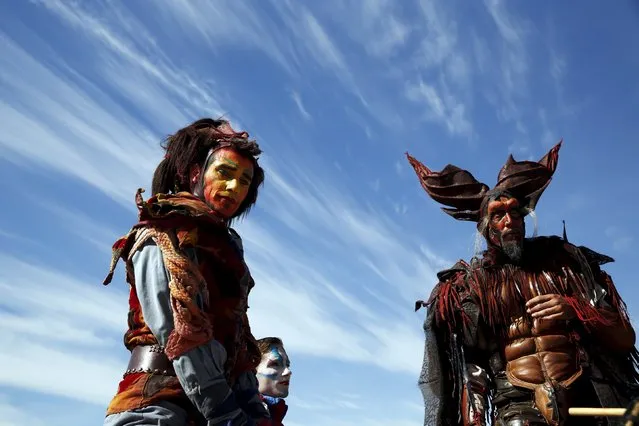
Performers take part in a parade during the annual Cervantes market (Mercado Cervantino) in the hometown of famous Spanish writer Miguel de Cervantes, Alcala de Henares, Spain, October 9, 2015. (Photo by Susana Vera/Reuters)

Performers take part in a parade during the annual Cervantes market (Mercado Cervantino) in the hometown of famous Spanish writer Miguel de Cervantes, Alcala de Henares, Spain, October 9, 2015. The Mercado Cervantino, which represents a market and fair from the 16th and 17th centuries, takes place in the city's historic centre and commemorates Miguel de Cervantes' baptism, which took place on October 9, 1547. (Photo by Susana Vera/Reuters)
Details
13 Oct 2015 08:06:00
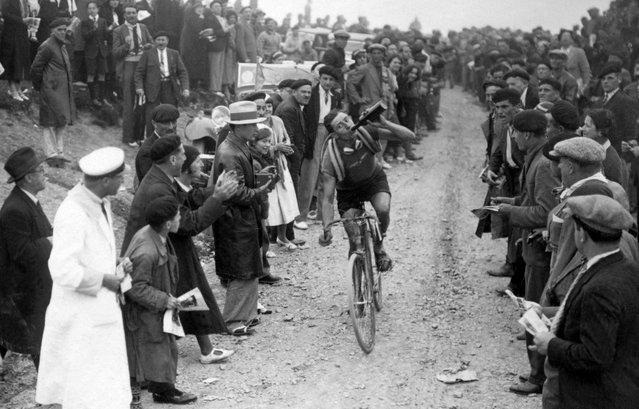
Frenchman Georges Speicher drinks as he starts riding down the Col de l'Aubisque during the 18th stage of the Tour de France between Tarbes and Pau. on July 17, 1933. Speicher finished second beaten by Spanish winner Learco Guerra to retain his overall leader's yellox jersey on his way to winning the Tour de France. (Photo by France Presse Voir/AFP Photo)

Frenchman Georges Speicher drinks as he starts riding down the Col de l'Aubisque during the 18th stage of the Tour de France between Tarbes and Pau. on July 17, 1933. Speicher finished second beaten by Spanish winner Learco Guerra to retain his overall leader's yellox jersey on his way to winning the Tour de France. (Photo by France Presse Voir/AFP Photo)
Details
18 Apr 2021 09:12:00
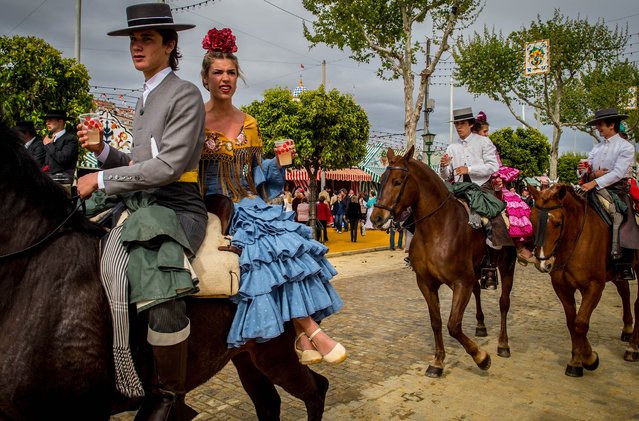
Participants in traditional dress ride on horseback as they enjoy the atmosphere at the Feria de Abril (April's Fair) on April 12, 2016 in Seville, Spain. The Feria de Abril has a history that dates back to 1857 and takes place a fortnight after Easter each year. The origin of the fair was a cattle market but the event quickly turned its goal from commerce to having fun. More than 1 million local and international participants are expected to attend the Feria de Abril. (Photo by David Ramos/Getty Images)

Participants in traditional dress ride on horseback as they enjoy the atmosphere at the Feria de Abril (April's Fair) on April 12, 2016 in Seville, Spain. The Feria de Abril has a history that dates back to 1857 and takes place a fortnight after Easter each year. The origin of the fair was a cattle market but the event quickly turned its goal from commerce to having fun. More than 1 million local and international participants are expected to attend the Feria de Abril. (Photo by David Ramos/Getty Images)
Details
14 Apr 2016 12:25:00
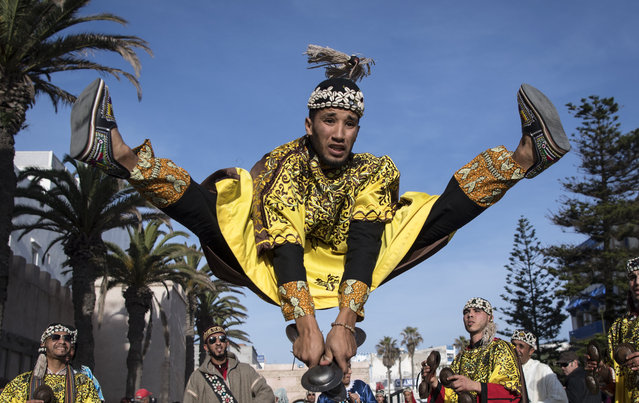
A Gnawa traditional group performs in the city of Essaouira on December 14, 2019, to celebrate the decision of adding the Gnawa culture to UNESCO's list of Intangible Cultural Heritage of Humanity. Gnawa culture, a centuries-old Moroccan practice rooted in music, African rituals and Sufi traditions, was added to UNESCO's list of Intangible Cultural Heritage of Humanity earlier in the week. Gnawa refers to a “set of musical productions, fraternal practices and therapeutic rituals where the secular mixes with the sacred”, according to the nomination submitted by Morocco. Often dressed in colourful outfits, Gnawa musicians play the guenbri, a type of lute with three strings, accompanied by steel castanets called krakebs. (Photo by Fadel Senna/AFP Photo)

A Gnawa traditional group performs in the city of Essaouira on December 14, 2019, to celebrate the decision of adding the Gnawa culture to UNESCO's list of Intangible Cultural Heritage of Humanity. Gnawa culture, a centuries-old Moroccan practice rooted in music, African rituals and Sufi traditions, was added to UNESCO's list of Intangible Cultural Heritage of Humanity earlier in the week. Gnawa refers to a “set of musical productions, fraternal practices and therapeutic rituals where the secular mixes with the sacred”, according to the nomination submitted by Morocco. Often dressed in colourful outfits, Gnawa musicians play the guenbri, a type of lute with three strings, accompanied by steel castanets called krakebs. (Photo by Fadel Senna/AFP Photo)
Details
18 Dec 2019 00:05:00
Carnival revellers take the metro in Rio de Janeiro, Brazil on February 19, 2023. Shaking the ground to the beat of their drums, Rio de Janeiro's famed carnival parades returned Sunday in a swirl of glitter, sequins and samba, the festival's first full-on edition since Covid-19 and Brazil's bitterly divisive elections. (Photo by Carl de Souza/AFP Photo)

Carnival revellers take the metro in Rio de Janeiro, Brazil on February 19, 2023. Shaking the ground to the beat of their drums, Rio de Janeiro's famed carnival parades returned Sunday in a swirl of glitter, sequins and samba, the festival's first full-on edition since Covid-19 and Brazil's bitterly divisive elections. (Photo by Carl de Souza/AFP Photo)
Details
29 Jun 2024 02:13:00
The Wildscreen festival is the world’s biggest celebration of screen-based natural history storytelling which takes place every two years in Bristol. Here: “Walrus in Midnight Sun”. Walrus feed mostly on bivalves in productive, shallow and often sandy habitats in the Arctic. This individual, though, arrived on a beach outside Tromsø, northern Norway, and found comfort on a stranded dead sperm whale. After two weeks he approached Audun, and only half a metre away he stretched his tusk forward and touched his hand gently. “This was one of the most memorable moments of my life”, Rikardsen says. He named the 500kg male Buddy. After two months, the dead whale was decomposed and Buddy suddenly disappeared. (Photo by Audun Rikardsen/Wildscreen 2016)

The Wildscreen festival is the world’s biggest celebration of screen-based natural history storytelling which takes place every two years in Bristol. Here: “Walrus in Midnight Sun”. Walrus feed mostly on bivalves in productive, shallow and often sandy habitats in the Arctic. This individual, though, arrived on a beach outside Tromsø, northern Norway, and found comfort on a stranded dead sperm whale. After two weeks he approached Audun, and only half a metre away he stretched his tusk forward and touched his hand gently. “This was one of the most memorable moments of my life”, Rikardsen says. He named the 500kg male Buddy. After two months, the dead whale was decomposed and Buddy suddenly disappeared. (Photo by Audun Rikardsen/Wildscreen 2016)
Details
07 Oct 2016 10:02:00