Loading...
Done
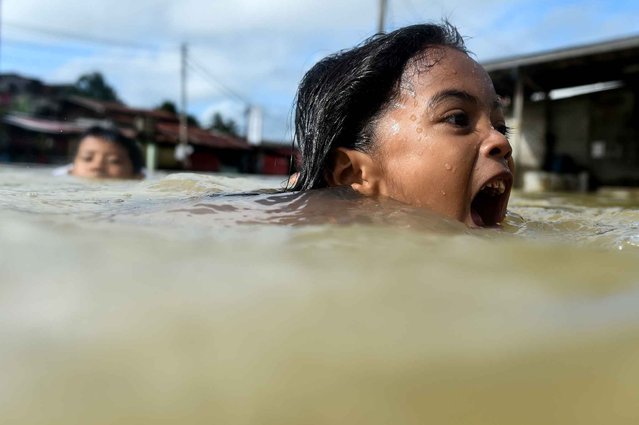
A girl swims in floodwaters in Malaysia' s northeastern town of Rantau Panjang, which borders Thailand, on January 5, 2017 Floods in two northeast Malaysian states have now forced almost 23,000 people from their homes and extra relief centres have been opened, rescue officials said on January 4. (Photo by Mohd Rasfan/AFP Photo)

A girl swims in floodwaters in Malaysia' s northeastern town of Rantau Panjang, which borders Thailand, on January 5, 2017 Floods in two northeast Malaysian states have now forced almost 23,000 people from their homes and extra relief centres have been opened, rescue officials said on January 4. (Photo by Mohd Rasfan/AFP Photo)
Details
05 Jan 2017 13:50:00
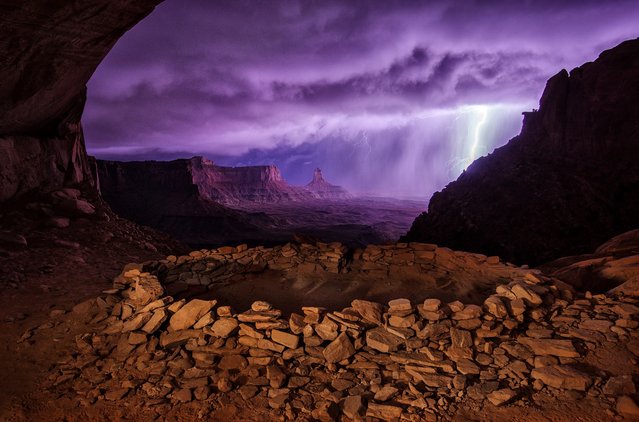
Second Place Winner: “Thunderstorm at False Kiva”. I hiked out to these ruins at night hoping to photograph them with the Milky Way, but instead a thunderstorm rolled through, creating this dramatic image. – Max Seigal. (Photo and caption by Max Seigal/National Geographic Traveler Photo Contest)

Second Place Winner: “Thunderstorm at False Kiva”. I hiked out to these ruins at night hoping to photograph them with the Milky Way, but instead a thunderstorm rolled through, creating this dramatic image. – Max Seigal. National Geographic Traveler Director of Photography Dan Westergren, one of this year's judges, shares his thoughts on the second place winner: “This photo combines two different scenes into one: the small kiva in a cliff dwelling and the grand vista of Canyonlands National Park across the valley. I really like the two different color palettes – warm inside and purple outside. This two-for-one scene was caused by the lightning storm outside the dwelling, which lit up the landscape like it was a huge electronic flash. Looking at this picture I can imagine what a wonderful sight it must have been for the ancient people who lived here. It doesn't seem too amazing now in our modern world, but might have been mind-blowing for the prehistoric residents”. Location: Utah. (Photo and caption by Max Seigal/National Geographic Traveler Photo Contest)
Details
02 Aug 2013 06:16:00
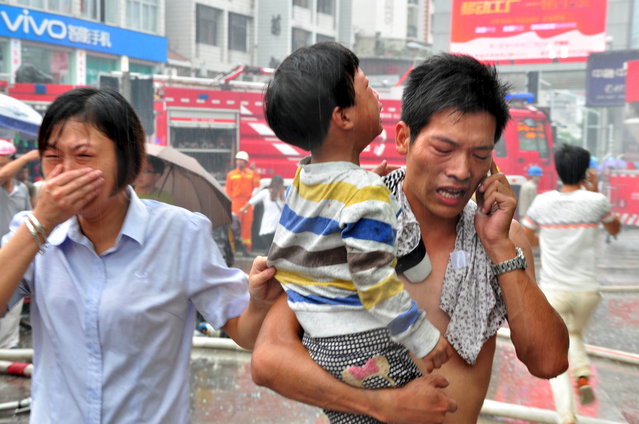
A man holds a child after rescuing him from a kindergarten affected by a fire at a commercial building, in Ningde, Fujian province, China, September 16, 2015. According to local media, more than 260 people were evacuated due to the fire, which broke out Wednesday morning. No causalities have been reported and the cause of it is still unknown. (Photo by Reuters/China Daily)

A man holds a child after rescuing him from a kindergarten affected by a fire at a commercial building, in Ningde, Fujian province, China, September 16, 2015. According to local media, more than 260 people were evacuated due to the fire, which broke out Wednesday morning. No causalities have been reported and the cause of it is still unknown. (Photo by Reuters/China Daily)
Details
17 Sep 2015 11:15:00
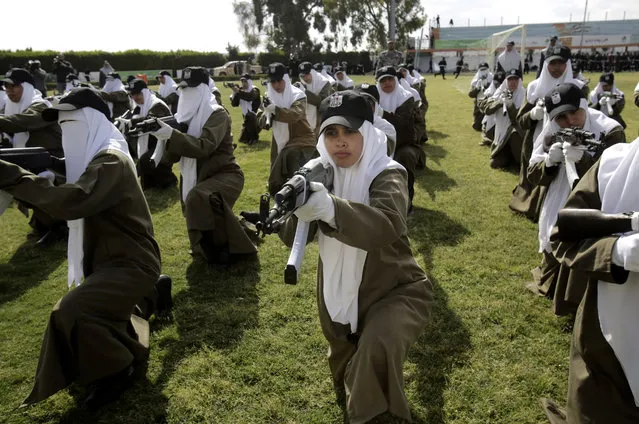
Palestinian female Hamas security officers demonstrate their skills during a graduation ceremony in the northern Gaza Strip, Wednesday, April 2, 2014. 1200 officers graduated from advanced training courses that lasted one year in Gaza police academy of Hamas. (Photo by Adel Hana/AP Photo)

Palestinian female Hamas security officers demonstrate their skills during a graduation ceremony in the northern Gaza Strip, Wednesday, April 2, 2014. 1200 officers graduated from advanced training courses that lasted one year in Gaza police academy of Hamas. (Photo by Adel Hana/AP Photo)
Details
05 Apr 2014 13:41:00
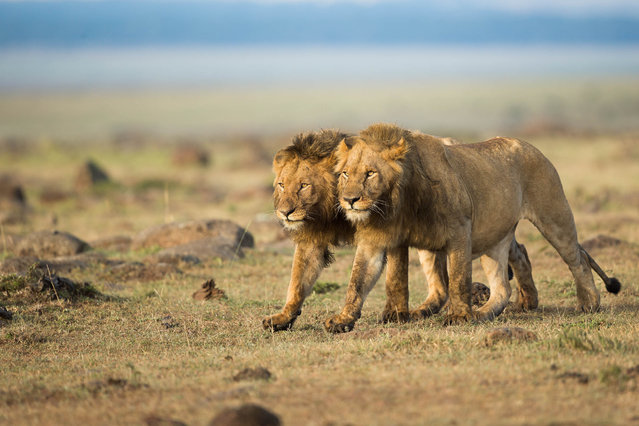
“Two Brothers”. We found about 20 lions eating a buffalo. When the male leaved the group we anticipated him to take photos. It is 8AM, light is perfect and the position too. The lion stops and looks down from the hill, another lion is coming up, it stiffens, I think that will be a fight, i'm tense, the camera is OK, the shots previously made perfect. Photo location: Masai Mara, Kenya. (Photo and caption by Massimo Mei/National Geographic Photo Contest)

“Two Brothers”. We found about 20 lions eating a buffalo. When the male leaved the group we anticipated him to take photos. It is 8AM, light is perfect and the position too. The lion stops and looks down from the hill, another lion is coming up, it stiffens, I think that will be a fight, i'm tense, the camera is OK, the shots previously made perfect. The two meet, looking directly into their eyes, they sniff, rub against their heads, the tension drops, they start walking with the same step as when they were puppies, they are two brothers. Photo location: Masai Mara, Kenya. (Photo and caption by Massimo Mei/National Geographic Photo Contest)
Details
02 Jul 2014 09:45:00
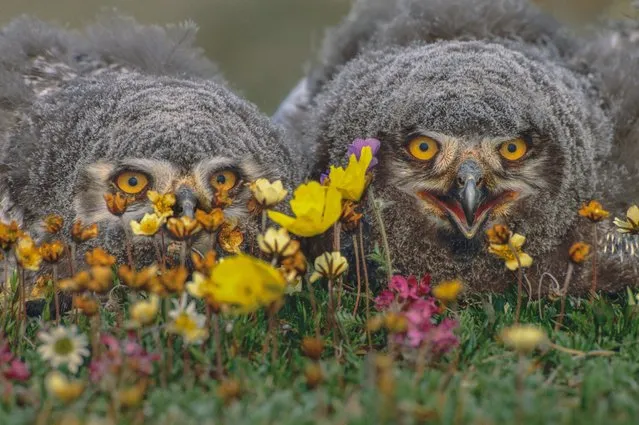
Snowy owlets (Bubo scandiacus), Arctic National Wildlife Refuge, Alaska, USA. “A pair of gray-feathered snowy owlets hunker down in the abundant flowers that flourish in the dropping-enriched soil of their nest mound”. (Photo by Art Wolfe/Art Wolfe Stock)

The photography of Art Wolfe covers the globe, capturing landscapes, wildlife, and cultures from every continent; here he talks through a selection of his favourite images. Art Wolfe is an American photographer and conservationist. His photographs have been noted by environmental advocacy groups for their “stunning” visual impact. Here: Snowy owlets (Bubo scandiacus), Arctic National Wildlife Refuge, Alaska, USA. (Photo by Art Wolfe/Art Wolfe Stock)
Details
19 Mar 2018 00:05:00
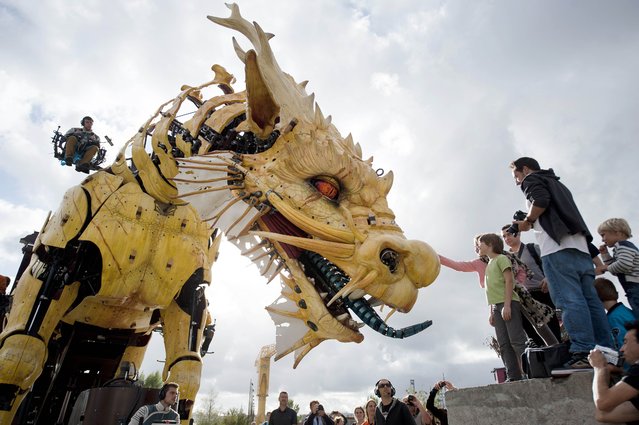
A mechanical horse-dragon made of wood and steel is presented to the public in Nantes, western France on August 26, 2014. This horse-dragon, created by the French artist Francois Delaroziere of “Les Machines de l'île” (The Machines of the Isle), is the hero of the show "Long Ma" which will be presented in Beijing on October 17, 2014 as part of the fiftieth anniversary of the relationship between France and China. (Photo by Jean-Sebastien Evrard/AFP Photo)

A mechanical horse-dragon made of wood and steel is presented to the public in Nantes, western France on August 26, 2014. This horse-dragon, created by the French artist Francois Delaroziere of “Les Machines de l'île” (The Machines of the Isle), is the hero of the show "Long Ma" which will be presented in Beijing on October 17, 2014 as part of the fiftieth anniversary of the relationship between France and China. (Photo by Jean-Sebastien Evrard/AFP Photo)
Details
30 Aug 2014 11:02:00
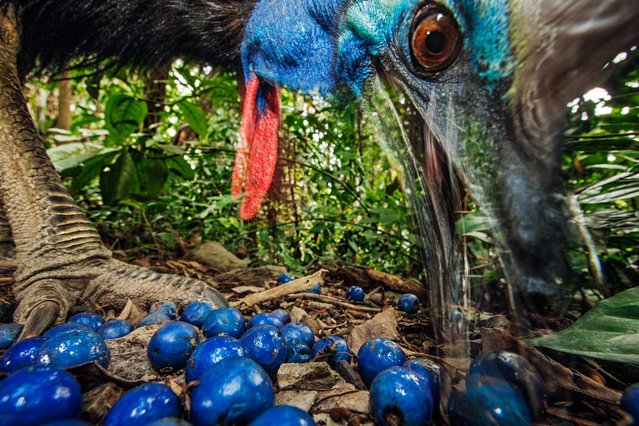
“Cassowaries are large, flightless birds related to emus and (more distantly) to ostriches, rheas, and kiwis”, writes Olivia Judson in the September issue of National Geographic magazine. (Photo by Christian Ziegler/National Geographic)

“Cassowaries are large, flightless birds related to emus and (more distantly) to ostriches, rheas, and kiwis”, writes Olivia Judson in the September issue of National Geographic magazine. How large? People-size: Adult males stand well over five foot five and top 110 pounds. Females are even taller, and can weigh more than 160 pounds. Dangerous when roused, they’re shy and peaceable when left alone. But even birds this big and tough are prey to habitat loss. The dense New Guinea and Australia rain forests where they live have dwindled. Today cassowaries might number 1,500 to 2,000. And because they help shape those same forests – by moving seeds from one place to another – “if they vanish”, Judson writes, “the structure of the forest would gradually change” too. (Photo by Christian Ziegler/National Geographic)
Details
06 Jan 2014 12:21:00