Loading...
Done
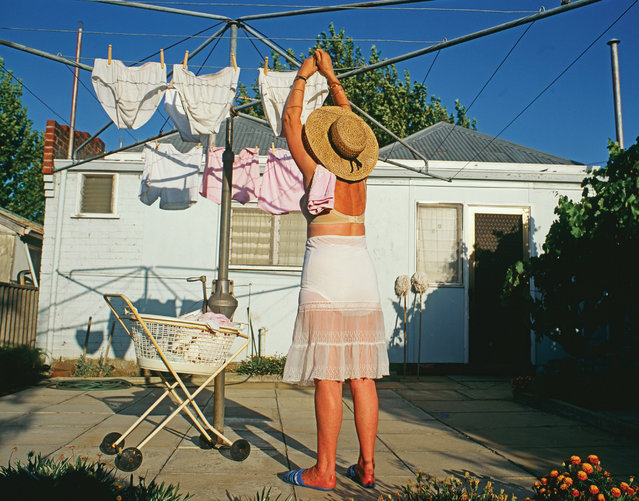
The Perth-based photographer and journalist Frances Andrijich has travelled the Western Australian coast since the early 90s, capturing clotheslines in all their glory. In her images they take the roles of play equipment, Christmas trees and, in the summer, a homemaker’s dream. Andrijich admits she is hopelessly hung up on clotheslines; her latest book celebrates them under the spotlight of the Australian sun. (Photo by Frances Andrijich)

The Perth-based photographer and journalist Frances Andrijich has travelled the Western Australian coast since the early 90s, capturing clotheslines in all their glory. In her images they take the roles of play equipment, Christmas trees and, in the summer, a homemaker’s dream. Andrijich admits she is hopelessly hung up on clotheslines; her latest book celebrates them under the spotlight of the Australian sun. Here: Vera Germanis hangs out underwear in Frances Andrijich’s grandparents’ backyard. This was the photographer’s first clothesline shot, taken in Midland Junction in 1991. (Photo by Frances Andrijich)
Details
29 Mar 2016 11:58:00
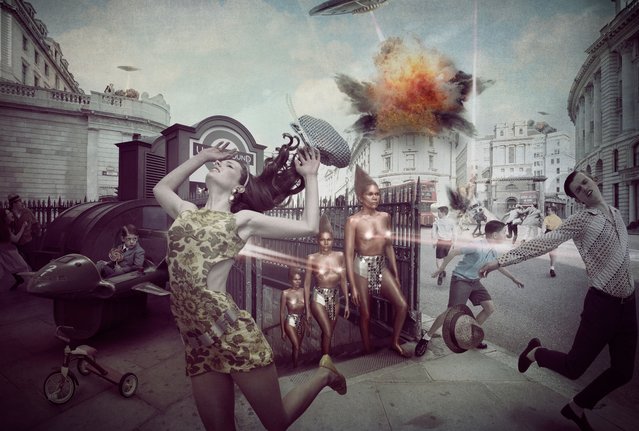
Invasion (laser girls) 2017. “I’m always thinking about my art practice, so any experience I have may spike a visual when I have an idea in mind. An example is that, when I was thinking about the Invasion series, I was inspired by Alfred Hitchcock’s movie The Birds (1963). I love Hitchcock’s other movies and have been contemplating a series based on Rear Window (1954). I also find inspiration outside the cinema in music clips and magazines”. (Photo by Michael Cook/Perimeter Books)

Invasion (laser girls) 2017. “I’m always thinking about my art practice, so any experience I have may spike a visual when I have an idea in mind. An example is that, when I was thinking about the Invasion series, I was inspired by Alfred Hitchcock’s movie The Birds (1963). I love Hitchcock’s other movies and have been contemplating a series based on Rear Window (1954). I also find inspiration outside the cinema in music clips and magazines”. (Photo by Michael Cook/Perimeter Books)
Details
09 Nov 2025 05:06:00
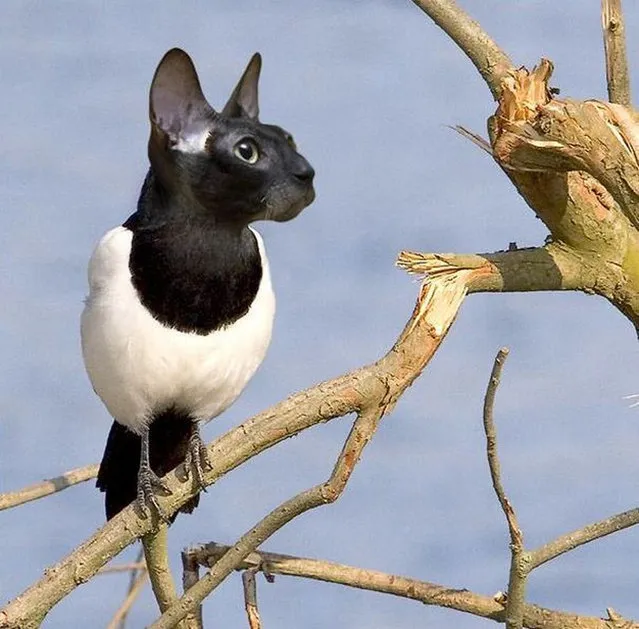
Impossible Animals By Jan Oliehoek. Part1

We’re showcasing photo-manipulation by Jan Oliehoek, a Dutch artist with a love for animals, photography and Photoshop. Oliehoek loves creating animal species that somehow never made it into our biology books, such as felines with rodent heads, lambs with the body of a squirrel, zebra rhinos and hippo-frogs! He’s currently having two of his pictures featured in Crazy Photography, an upcoming title from Vivays Publishing
Details
23 May 2013 11:34:00
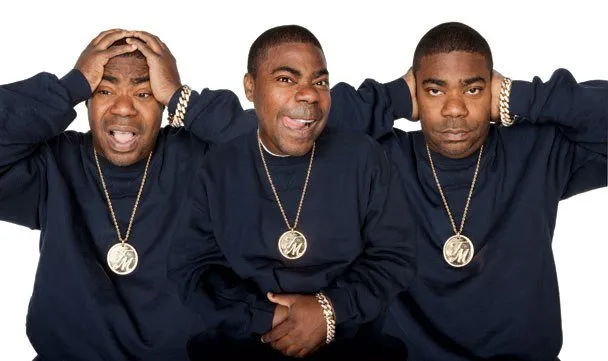
In Character By Howard Schatz Part 2

Photographer Howard Schatz had an idea: place actors in a series of roles and dramatic situations to reveal the essence of their characters. Such was the premise behind his book, In Character: Actors Acting, which captures some of Hollywood’s most emotive stars in the act of, well, making faces. Luckily for us, he continued the tradition for Vanity Fair. Here are some of the best.
Details
06 Jan 2014 11:48:00
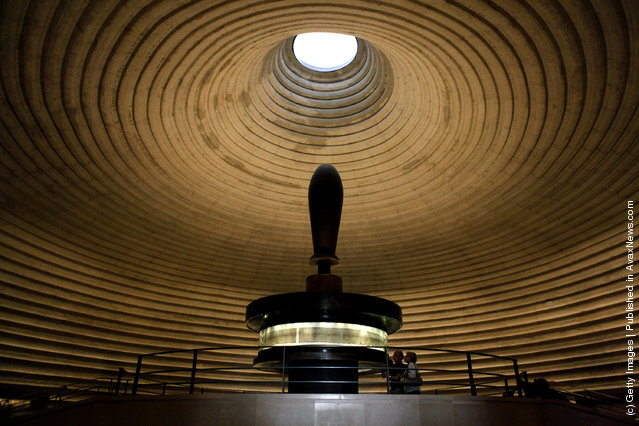
Israel Museum Displays Dead Sea Scrolls

Dr. Adolfo Roitman presents a part of the Isaiah Scroll, one of the Dead Sea Scrolls, inside the vault of the Shrine of the Book building at the Israel Museum on September, 26, 2011. in Jerusalem, Israel. For the first time some of the Dead Sea Scrolls are available online thanks to a partnership between Google and Israel's national museum. (Photo by Lior Mizrahi/Getty Images)
Details
30 Sep 2011 11:08:00
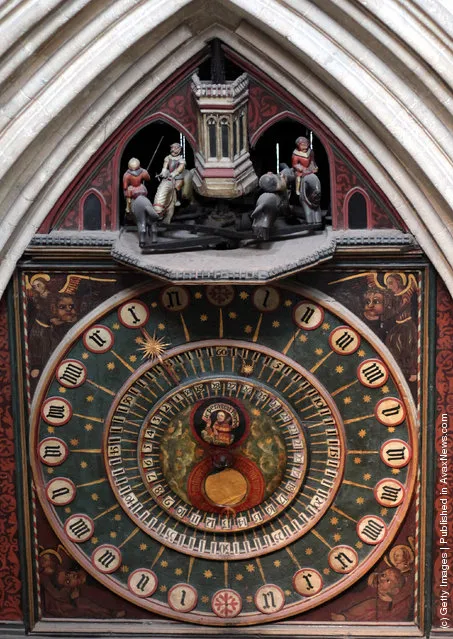
Wells Clock – World's Oldest Mechanical Clock

“Wells Cathedral is a Church of England cathedral in Wells, Somerset, England. Built between 1175 and 1490, Wells Cathedral has been described as “the most poetic of the English Cathedrals”. The Wells clock, an astronomical clock, is located in the north transept. The surviving mechanism, dated to between 1386 and 1392, was replaced in the 19th century, and was eventually moved to the Science Museum in London, where it continues to operate. It is the second-oldest surviving clock in England”. – Wikipedia

Photo: The clock face of world's oldest continually-working mechanical clock is seen as it is hand wound for the very last time on August 21, 2010 in Wells, England. (Photo by Matt Cardy/Getty Images)
Details
10 Aug 2011 11:23:00
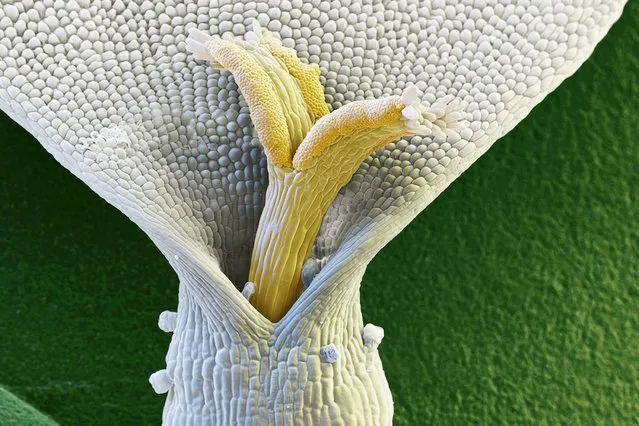
The floret of a Chamomile flower up close and personal. (Photo by Oliver Meckes/Barcroft Media)

These images have been created using a colour scanning electron microscope (SEM) by the award-winning Eye of Science, comprised of snapper Oliver Meckes and biologist Nicole Ottawa. For a decade the pair, based in Reutlingen in the south of Germany, worked with an old SEM they saved from the scrapheap, but for the last five years they have used a £250,000 FEI Quanta Series Field Emission SEM. Oliver said: “Flowers are beautiful in 'normal' view, but when you look closer, some parts get very bizarre and unexpected structures appear – flowers within flowers, worlds within worlds”. Photo: The floret of a Chamomile flower up close and personal. (Photo by Oliver Meckes/Barcroft Media)
Details
26 May 2014 13:51:00
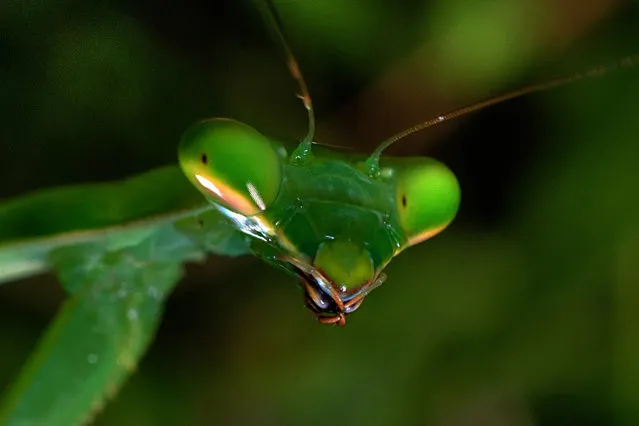
Close Encounter of the Insect Kind: Check out the awesome face on this praying mantis. I can't get over the mouth, it's like something from a science fiction movie. Of all photographic styles macro is definitely my favorite. I am constantly amazed, in every photo that I take, by the intricate level of detail that exists on even the smallest of creatures. It's a stark reminder that a very complex and infinitely beautiful world exists just beyond our human-sized level of perception. Photo taken in Donnybrook, Queensland, Australia. (Photo by Andrew Young/National Geographic Photo Contest

Close Encounter of the Insect Kind: “Check out the awesome face on this praying mantis. I can't get over the mouth, it's like something from a science fiction movie. Of all photographic styles macro is definitely my favorite. I am constantly amazed, in every photo that I take, by the intricate level of detail that exists on even the smallest of creatures. It's a stark reminder that a very complex and infinitely beautiful world exists just beyond our human-sized level of perception. Photo taken in Donnybrook, Queensland, Australia” – Andrew Young. (Photo by Andrew Young/National Geographic Photo Contest via The Atlantic)
Details
24 Sep 2012 09:18:00