Loading...
Done
Abandoned Six Flags - New Orleans

Six Flags New Orleans, also abbreviated to SFNO, is an abandoned theme park in New Orleans, Louisiana, that has been closed since just before Hurricane Katrina struck in August 2005 and is currently owned by the city of New Orleans. Six Flags had previously owned the park since March 2002, but after assessing the devastation caused by Hurricane Katrina and the related exorbitant expenses of repairing the damage, sought to terminate their 75-year lease with the city, beginning in July 2006 and finally succeeding in September 2009. The park is located in Eastern New Orleans, in the Ninth Ward of the city, off Interstate 10. Despite various announced plans to redevelop the site, as of 2014, it is still an abandoned amusement park in extremely poor condition. It is a well-known urban exploration destination.
Details
29 Apr 2014 12:06:00
Lu Wei-ming (L), priest of the Wei-ming temple, and a worshipper burn a Taoist paper amulet during a prayer ritual at the temple in New Taipei city January 8, 2015. The shrine, down a narrow alleyway in a bustling district of the city, is dedicated to a deity who has watched over homosexuals for four centuries. (Photo by Pichi Chuang/Reuters)

Lu Wei-ming (L), priest of the Wei-ming temple, and a worshipper burn a Taoist paper amulet during a prayer ritual at the temple in New Taipei city January 8, 2015. The shrine, down a narrow alleyway in a bustling district of the city, is dedicated to a deity who has watched over homosexuals for four centuries. Priest Lu founded the temple in 2006, at a time gays were excluded from most religious ceremonies. (Photo by Pichi Chuang/Reuters)
Details
21 Jan 2015 13:06:00
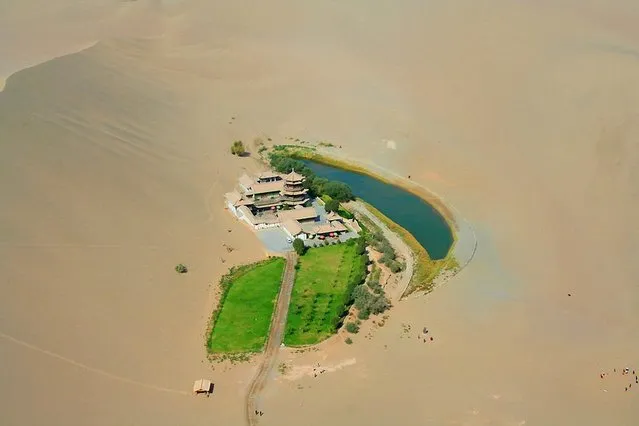
Crescent Lake In China

Yueyaquan is a crescent-shaped lake in an oasis, 6 km south of the city of Dunhuang in Gansu Province, China. It was named Yueyaquan in the Qing Dynasty. According to measurements made in 1960, the average depth of the lake was 4 to 5 meters, with a maximum depth of 7.5 metres In the following 40 years, the depth of the lake continually declined. In the early 1990s, its area had shrunk to only 5,500 m2 with an average depth of 0.9 meter (maximum 1.3 meter). In 2006, the local government with help of the central government started to fill the lake and restore its depth; its depth and size have been growing yearly since then. The lake and the surrounding deserts are very popular with tourists, who are offered camel and 4x4 rides.
Details
25 Jun 2013 10:29:00
Vinyl Clock By Pavel Sidorenko Part 2

Pavel Sidorenko is an award winning Estonian designer who was born in 1980 in Tallinn and studied product design at Estonian Academy of Arts and Graduated in 2006. Not only does he incorporate pragmatic necessity, but also transmits an emotional qualities within the everyday environment. His fantastic collection of Re Vinyl designs are a result of upcycling a product fashioned from old vinyl records. Beautifully crafted and working with a range of themes from scenography to animal creatures, there is sure to be something for everyone with these stylish selection of recycled vinyl clocks!


See also: Part 1
Details
01 Mar 2014 11:09:00
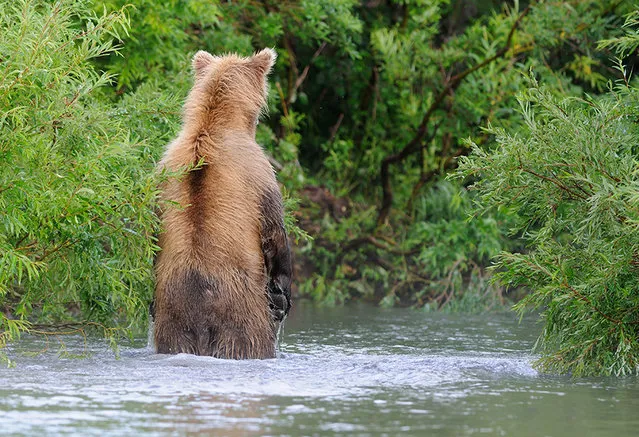
Where's the fish?/n. South Kamchatka Sanctuary<><>South Kamchatka Sanctuary; Kuril Lake; Kamchatka; bear; salmon; spawning

Igor Shpilenok works in the reserve at Kamchatka, Russia. Igor is a fellow of the International League of Conservation Photographers and a winner of the 2006 BBC Wildlife Photographer Competition. Igor’s work has been published in numerous international and Russian magazines, including Smithsonian, National Wildlife, Geo, and BBC Wildlife.

“How does a bear behave when encounter a human? In most cases he runs away. But before running he almost always would rise to stand on his rear feet. And this behavior does not indicate the attack, as many people think...” – Igor Shpilenok. (Photo by Igor Shpilenok via Wildlife Photo Russia)
Details
16 Sep 2012 12:54:00
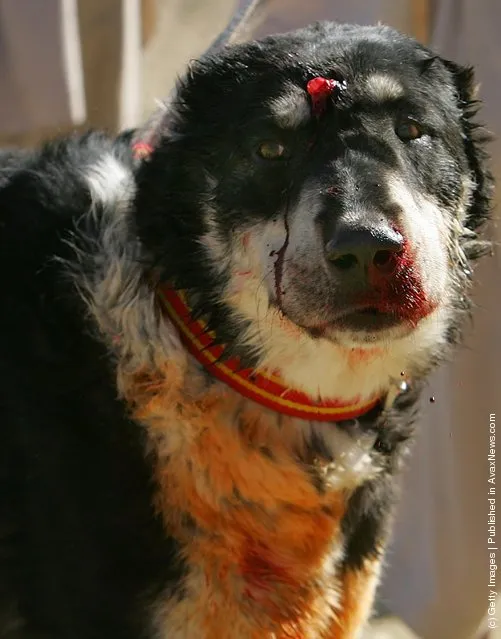
Afghan Dog Fighting

“Dog fighting is a form of blood sport in which game dogs are made to fight, sometimes to the death. It is illegal in most developed countries. Dog fighting is used for entertainment and may also generate revenue from stud fees, admission fees and gambling”. – Wikipedia

Photo: A bloody Afghan dog is bleeding with many wounds after he lost a dog fight November 24, 2006 in Kabul, Afghanistan. While the Afghan government is trying to ban the violent use of dogs for fighting, the unofficial sport remains a regular weekly event. Afghan dog fighting is popular among Afghan men who gamble on the dogs making upwards of 15,000 Afghanie (300 USD). (Photo by Paula Bronstein/Getty Images)
Details
07 Aug 2011 11:47:00
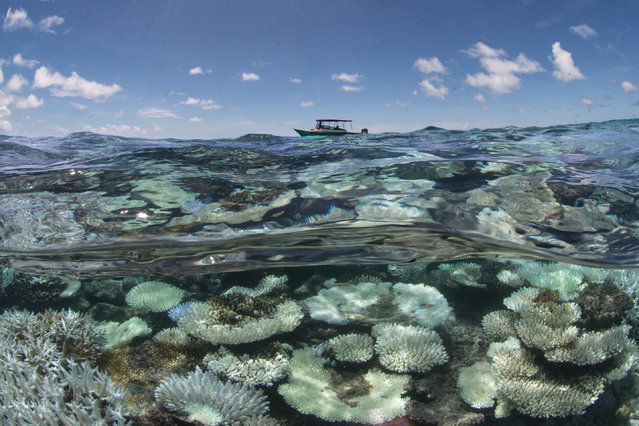
In this May 2016 photo released by The Ocean Agency/XL Catlin Seaview Survey, a boat sails near a coral reef that has been bleached white by heat stress in the Maldives. (Photo by The Ocean Agency/XL Catlin Seaview Survey via AP Photo)

In this May 2016 photo released by The Ocean Agency/XL Catlin Seaview Survey, a boat sails near a coral reef that has been bleached white by heat stress in the Maldives. oral reefs, unique underwater ecosystems that sustain a quarter of the world's marine species and half a billion people, are dying on an unprecedented scale. Scientists are racing to prevent a complete wipeout within decades. (Photo by The Ocean Agency/XL Catlin Seaview Survey via AP Photo)
Details
14 Mar 2017 00:05:00


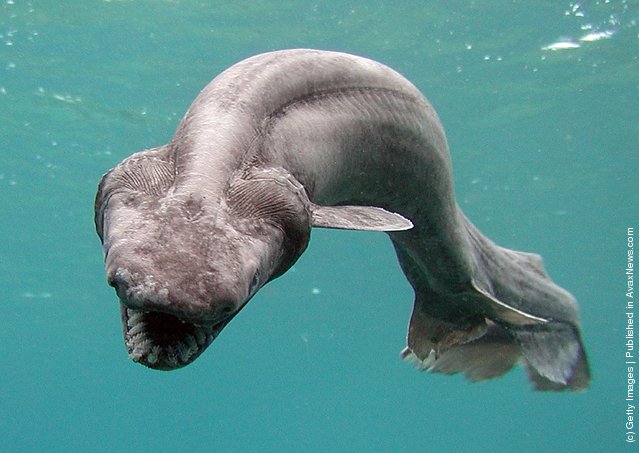
“The frilled shark (Chlamydoselachus anguineus) is one of two extant species of shark in the family Chlamydoselachidae, with a wide but patchy distribution in the Atlantic and Pacific Oceans. This uncommon species is found over the outer continental shelf and upper continental slope, generally near the bottom though there is evidence of substantial upward movements. It has been caught as deep as 1,570 m (5,150 ft), whereas in Suruga Bay, Japan it is most common at depths of 50–200 m (160–660 ft). Exhibiting several “primitive” features, the frilled shark has often been termed a «living fossil»”. – Wikipedia

Photo: A 1.6 meter long Frill shark swims in a tank after being found by a fisherman at a bay in Numazu, on January 21, 2007 in Numazu, Japan. The frill shark, also known as a Frilled shark usually lives in waters of a depth of 600 meters and so it is very rare that this shark is found alive at sea-level. It's body shape and the number of gill are similar to fossils of sharks which lived 350,000,000 years ago. (Photo by Awashima Marine Park/Getty Images)
Details
05 May 2011 10:01:00