Loading...
Done
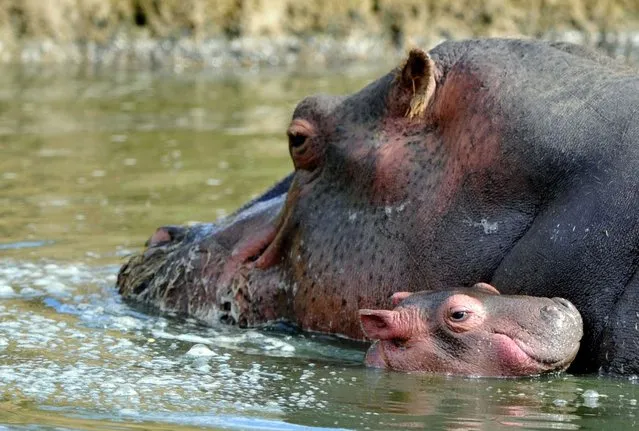
A six-day-old hippopotamus is pictured next to his mother, Kara, aged 21, on September 12, 2012 at “Planet sauvage” (“Wild planet”) Zoo in Port-Saint-Pere, western France. The birth, a rare event for this species in captivity, occured on September 7, 2012 in the Zoo. (Photo by Frank Perry/AFP Photo)

A six-day-old hippopotamus is pictured next to his mother, Kara, aged 21, on September 12, 2012 at “Planet sauvage” (“Wild planet”) Zoo in Port-Saint-Pere, western France. The birth, a rare event for this species in captivity, occured on September 7, 2012 in the Zoo. (Photo by Frank Perry/AFP Photo)
Details
13 Sep 2012 08:57:00
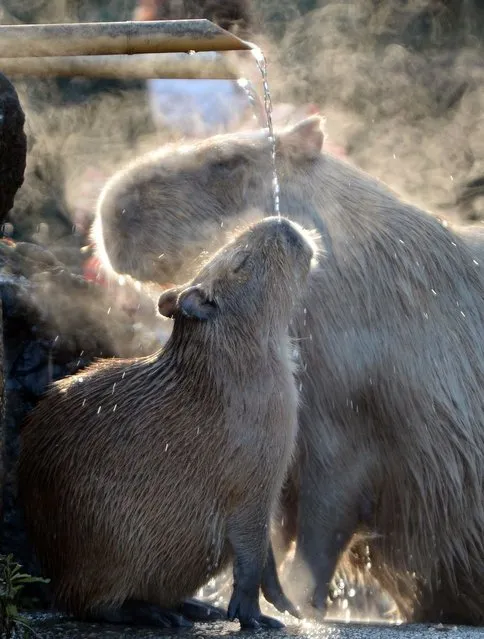
Capybaras bathe in the hot spring water at the Saitama Children's zoo in Higashi Matsuyama city, Saitama prefecture on December 25, 2013. 13 capybaras in the zoo, originally from South America, enjoyed the hot spring water. (Photo by Toshifumi Kitamura/AFP Photo)

Capybaras bathe in the hot spring water at the Saitama Children's zoo in Higashi Matsuyama city, Saitama prefecture on December 25, 2013. 13 capybaras in the zoo, originally from South America, enjoyed the hot spring water. (Photo by Toshifumi Kitamura/AFP Photo)
Details
28 Dec 2013 12:46:00
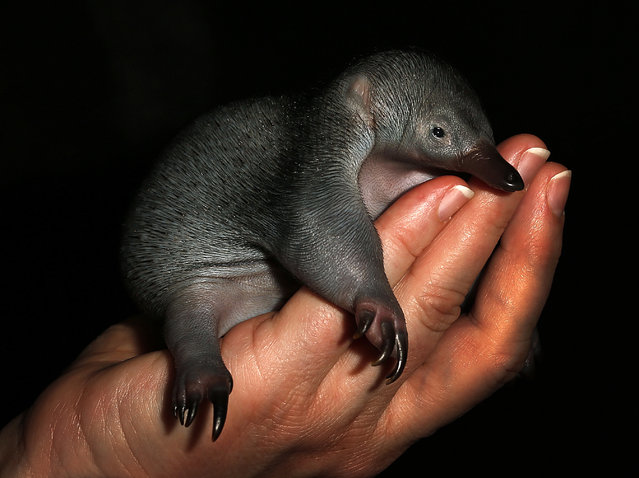
Bo, a 55-day-old baby Echidna known as a puggle, rests in the hands of vet nurse Annabelle Sehlmeier at Taronga Zoo in Sydney November 1, 2012. The puggle was brought to the zoo after it being found by itself on a walking track north of Sydney and will be fed by hand until it is weaned at about six months of age. (Photo by Tim Wimborne/Reuters)

Bo, a 55-day-old baby Echidna known as a puggle, rests in the hands of vet nurse Annabelle Sehlmeier at Taronga Zoo in Sydney November 1, 2012. The puggle was brought to the zoo after it being found by itself on a walking track north of Sydney and will be fed by hand until it is weaned at about six months of age. (Photo by Tim Wimborne/Reuters)
Details
23 Apr 2018 00:03:00
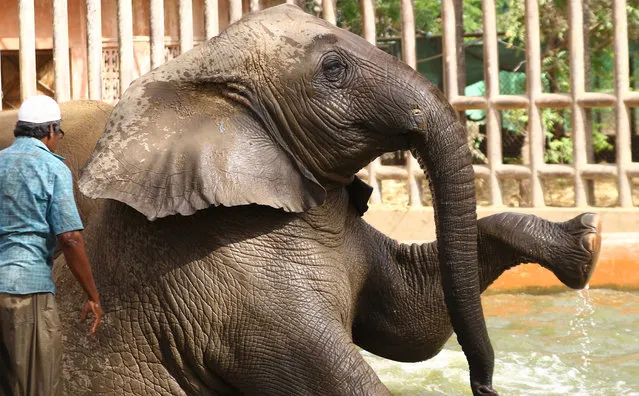
An elephant cools off at a zoo in Karachi, Pakistan, 31 March 2021. Caretakers at Karachi's zoo were working to keep animals cool during a​ heatwave affecting southern Pakistan. (Photo by Shahzaib Akber/EPA/EFE)

An elephant cools off at a zoo in Karachi, Pakistan, 31 March 2021. Caretakers at Karachi's zoo were working to keep animals cool during a​ heatwave affecting southern Pakistan. (Photo by Shahzaib Akber/EPA/EFE)
Details
18 Apr 2021 09:15:00
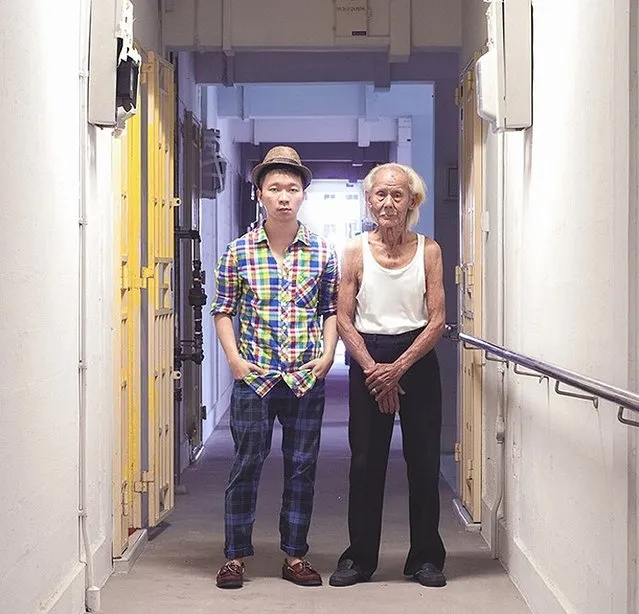
Spring - Autumn By Cue Qozop

People don’t realize how much our exterior can affect our mood. If we make ourselves smile, we might feel a little better, yet if we frown, we soon get the irresistible urge to listen to Blues and weep over the days long gone. The same goes for our clothing. Many people, especially the elderly, tend to dress in the same old rags, without ever feeling the need to change something about their appearance. However, as Cue Qozop clearly demonstrates in his Spring – Autumn photoset, clothes can completely alter the appearance and the mood of the wearer. Elderly people dressed in young people’s clothes look much younger and happier. They look as if they are full of vigor and are about to set out on an amazing adventure.
Details
09 Apr 2015 09:50:00
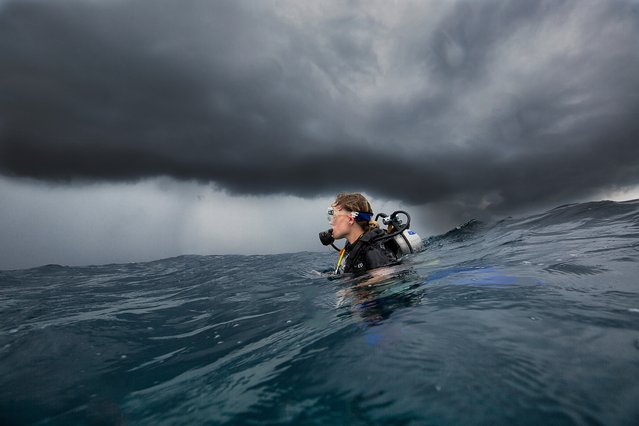
Winner. “This was taken in the South Ari Atolls, Maldives, as the south-west monsoon season was setting in. It features my partner – and dive buddy – Emma after surfacing at the end of the last dive of the day to find 1.5 metre swells and dark monsoon clouds. MICK RYAN, JUDGE: This beautiful portrait of a diver in an ocean swell below a menacing sky stands out this month for its emotional and elemental beauty. It is a reminder that while we may play among nature we are always dwarfed by its power and must be constantly on our guard”. (Photo by Simon Dunn/The Guardian)

Winner. “This was taken in the South Ari Atolls, Maldives, as the south-west monsoon season was setting in. It features my partner – and dive buddy – Emma after surfacing at the end of the last dive of the day to find 1.5 metre swells and dark monsoon clouds. MICK RYAN, JUDGE: This beautiful portrait of a diver in an ocean swell below a menacing sky stands out this month for its emotional and elemental beauty. It is a reminder that while we may play among nature we are always dwarfed by its power and must be constantly on our guard”. (Photo by Simon Dunn/The Guardian)
Details
04 Oct 2016 10:55:00
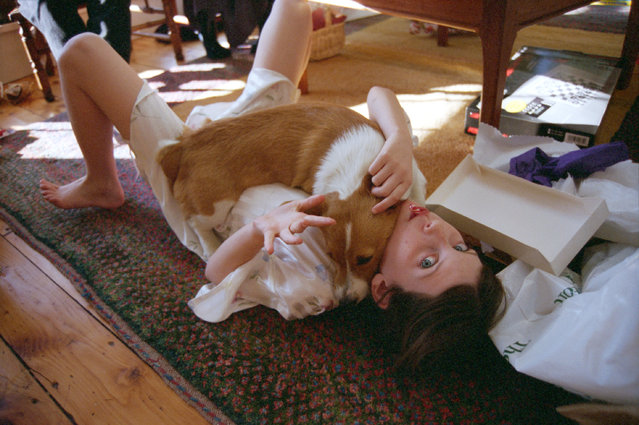
«After Presents», 1996. Siri Kaur: “I was 14 when Simran was born in 1990. We have different mothers, so we grew up separately and I made pictures with her whenever I saw her. The work of Sally Mann and Nan Goldin gave me permission to see my family as a valid art subject. This image shows the aftermath of Christmas morning. Simran is unselfconsciously lounging on the floor, melding into her beloved dog”. (Photo by Siri Kaur)

«After Presents», 1996. Siri Kaur: “I was 14 when Simran was born in 1990. We have different mothers, so we grew up separately and I made pictures with her whenever I saw her. The work of Sally Mann and Nan Goldin gave me permission to see my family as a valid art subject. This image shows the aftermath of Christmas morning. Simran is unselfconsciously lounging on the floor, melding into her beloved dog”. (Photo by Siri Kaur)
Details
10 Aug 2025 04:03:00


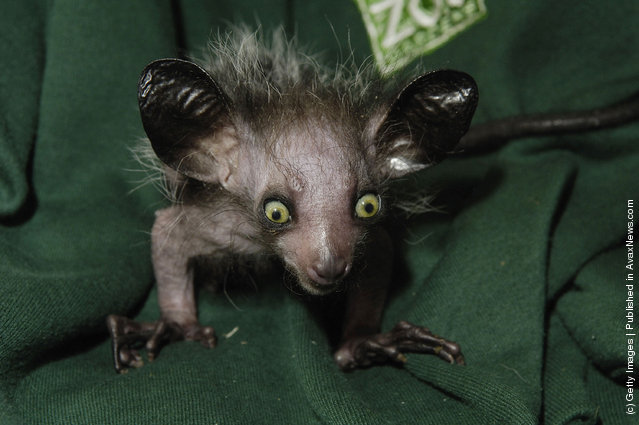
“The aye-aye (Daubentonia madagascariensis) is a lemur, a strepsirrhine primate native to Madagascar that combines rodent-like teeth and a special thin middle finger to fill the same ecological niche as a woodpecker. It is the world's largest nocturnal primate, and is characterized by its unusual method of finding food; it taps on trees to find grubs, then gnaws holes in the wood and inserts its narrow middle finger to pull the grubs out. The only other animal species known to find food in this way is the striped possum. From an ecological point of view the aye-aye fills the niche of a woodpecker as it is capable of penetrating wood to extract the invertebrates within”. – Wikipedia

Photo: In this handout image from Bristol Zoo is seen the first captive bred aye-aye in the UK named “Kintana” (meaning star in Malagasy) April 15, 2005 at Bristol Zoo Gardens, England. The zoo announced today only the second baby aye-aye to be hand-reared in the world (the first was in Jersey Zoo) and has now made his first public appearance since his birth on 11 February 2005. (Photo by Rob Cousins/Bristol Zoo via Getty Images)
Details
13 Apr 2011 13:33:00