Loading...
Done
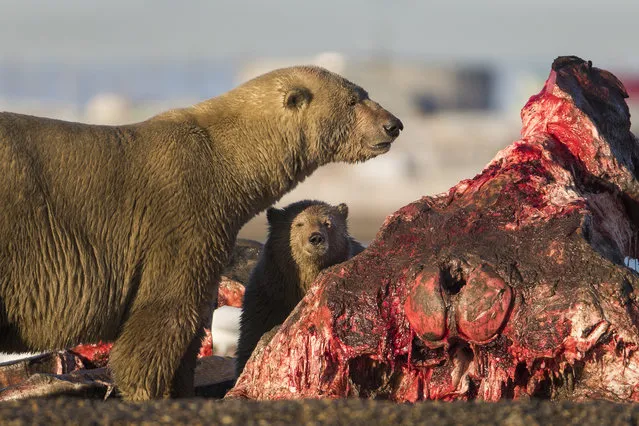
Polar bears prepare to feast on the remains of a bowhead whale, harvested legally by whalers during their annual subsistence hunt, just outside the Inupiat village of Kaktovik, Alaska, USA, 10 September 2017. (Photo by Jim Lo Scalzo/EPA/EFE)

Polar bears prepare to feast on the remains of a bowhead whale, harvested legally by whalers during their annual subsistence hunt, just outside the Inupiat village of Kaktovik, Alaska, USA, 10 September 2017. As climate change shrinks their natural habitat, polar bears are turning Kaktovik into their very own sanctuary city. (Photo by Jim Lo Scalzo/EPA/EFE)
Details
28 Sep 2017 07:33:00
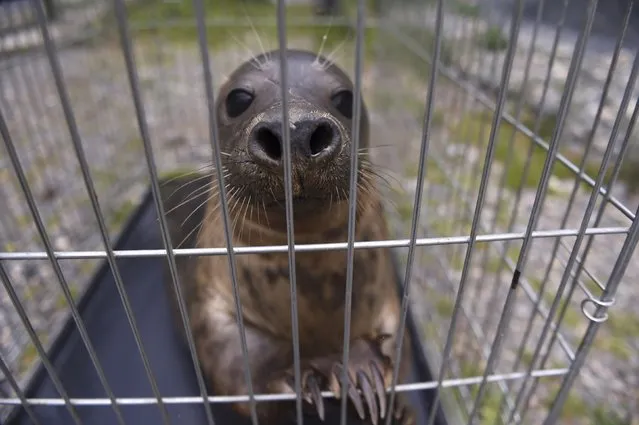
A Common seal named Groot is prepared for release in a transfer cage at Seal Rescue Ireland wildlife sanctuary where two rescued and rehabilitated seals are released back into the sea after months of care in Wexford, Ireland, June 12, 2016. (Photo by Clodagh Kilcoyne/Reuters)

A Common seal named Groot is prepared for release in a transfer cage at Seal Rescue Ireland wildlife sanctuary where two rescued and rehabilitated seals are released back into the sea after months of care in Wexford, Ireland, June 12, 2016. (Photo by Clodagh Kilcoyne/Reuters)
Details
13 Jun 2016 11:18:00
A bus goes through a flooded street in Wuhan, Hubei province, China July 6, 2016. (Photo by Reuters/China Daily)

A bus goes through a flooded street in Wuhan, Hubei province, China July 6, 2016. (Photo by Reuters/China Daily)
Details
11 Jul 2016 12:29:00
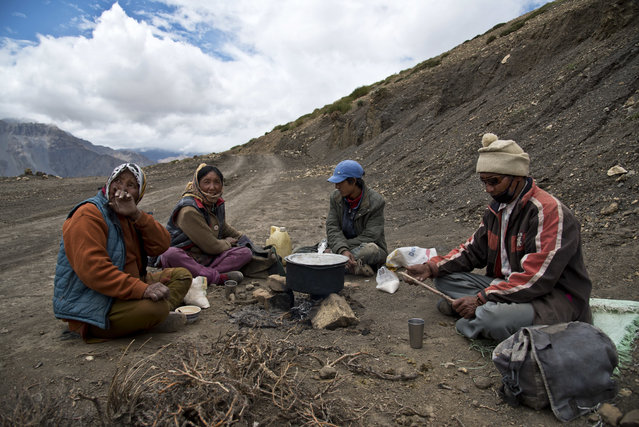
In this August 17, 2016, photo, from left to right, Chhering Chodom, 60, Tashi Yangzom, 50, Lobsang Chhering, 27, and Dorje Tandup, 58, drink milk tea on the side of the road. For centuries, the sleepy valley nestled in the Indian Himalayas remained a hidden Buddhist enclave forbidden to outsiders. Enduring the harsh year-round conditions of the high mountain desert, the people of Spiti Valley lived by a simple communal code – share the Earth's bounty, be hospitable to neighbors, and eschew greed and temptation at all turns. That's all starting to change, for better or worse. Since India began allowing its own citizens as well as outsiders to visit the valley in the early 1990s, tourism and trade have boomed. And the marks of modernization, such as solar panels, asphalt roads and concrete buildings, have begun to appear around some of the villages that dot the remote landscape at altitudes above 4,000 meters (13,000 feet). (Photo by Thomas Cytrynowicz/AP Photo)

In this August 17, 2016, photo, from left to right, Chhering Chodom, 60, Tashi Yangzom, 50, Lobsang Chhering, 27, and Dorje Tandup, 58, drink milk tea on the side of the road. For centuries, the sleepy valley nestled in the Indian Himalayas remained a hidden Buddhist enclave forbidden to outsiders. Enduring the harsh year-round conditions of the high mountain desert, the people of Spiti Valley lived by a simple communal code – share the Earth's bounty, be hospitable to neighbors, and eschew greed and temptation at all turns. That's all starting to change, for better or worse. (Photo by Thomas Cytrynowicz/AP Photo)
Details
15 Sep 2016 09:22:00
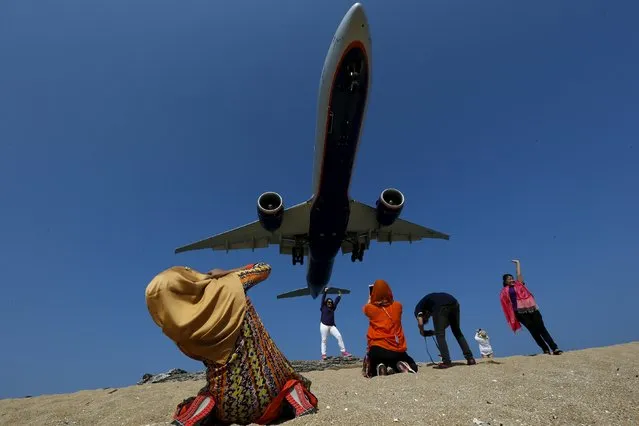
Tourist take pictures at Mai Khao Beach, as a plane approaches the Phuket International Airport in Phuket, Thailand March 17, 2016. With its palm-fringed beaches, Buddhist culture and racy nightlife, Thailand has been the poster child for Asian tourism for decades, attracting a range of visitors from backpackers and adventure-seekers, to families and culture vultures. But dark clouds could be forming even as a record of 32 million tourists are expected this year. (Photo by Athit Perawongmetha/Reuters)

Tourist take pictures at Mai Khao Beach, as a plane approaches the Phuket International Airport in Phuket, Thailand March 17, 2016. With its palm-fringed beaches, Buddhist culture and racy nightlife, Thailand has been the poster child for Asian tourism for decades, attracting a range of visitors from backpackers and adventure-seekers, to families and culture vultures. But dark clouds could be forming even as a record of 32 million tourists are expected this year. (Photo by Athit Perawongmetha/Reuters)
Details
31 Mar 2016 11:01:00
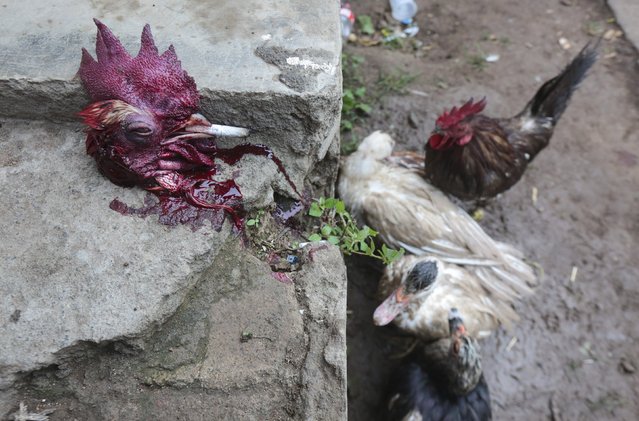
The head of a decapitated rooster is pictured after a rooster run, during celebrations in honour of San Juan Bautista in San Juan de Oriente town, Nicaragua, June 26, 2015. The rooster runs, where horse-riders try to pull the head off live roosters, symbolize the beheading of John the Baptist. (Photo by Oswaldo Rivas/Reuters)

The head of a decapitated rooster is pictured after a rooster run, during celebrations in honour of San Juan Bautista in San Juan de Oriente town, Nicaragua, June 26, 2015. The rooster runs, where horse-riders try to pull the head off live roosters, symbolize the beheading of John the Baptist. (Photo by Oswaldo Rivas/Reuters)
Details
28 Jun 2015 12:45:00
A walruses at Hagenbeck Zoo in Hamburg, Germany on  July, 7, 2015. (Photo by Werner Struss/Startraks action)

A walruses at Hagenbeck Zoo in Hamburg, Germany on July, 7, 2015. (Photo by Werner Struss/Startraks action)
Details
12 Jul 2015 13:06:00
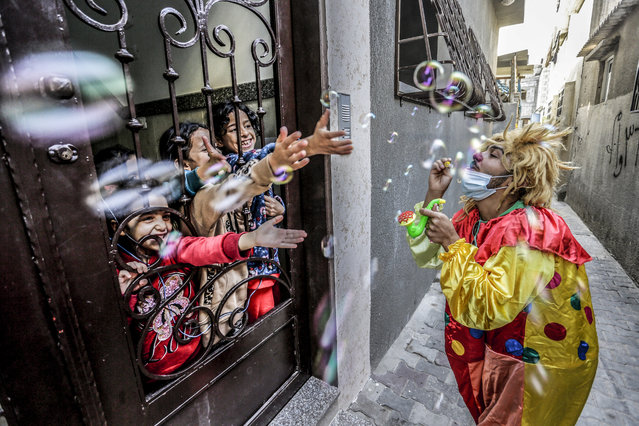
A Palestinian clown wearing a face mask while entertaining children at their home during the lockdown after the outbreak of the COVID-19 pandemic in Jabalia Refugee Camp in northern Gaza Strip on November 18, 2020. (Photo by Mahmoud Issa/Quds Net News/ZUMA Wire/Rex Features/Shutterstock)

A Palestinian clown wearing a face mask while entertaining children at their home during the lockdown after the outbreak of the COVID-19 pandemic in Jabalia Refugee Camp in northern Gaza Strip on November 18, 2020. (Photo by Mahmoud Issa/Quds Net News/ZUMA Wire/Rex Features/Shutterstock)
Details
07 Dec 2020 00:05:00