Loading...
Done
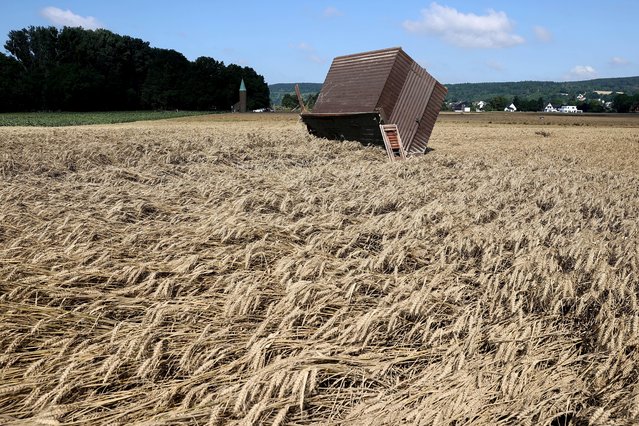
A damaged wooden garden house is seen amid a field of wheat following floods caused by heavy rainfalls, in Bad Bodendorf, Germany, July 18, 2021. (Photo by Wolfgang Rattay/Reuters)

A damaged wooden garden house is seen amid a field of wheat following floods caused by heavy rainfalls, in Bad Bodendorf, Germany, July 18, 2021. (Photo by Wolfgang Rattay/Reuters)
Details
19 Jul 2021 09:05:00
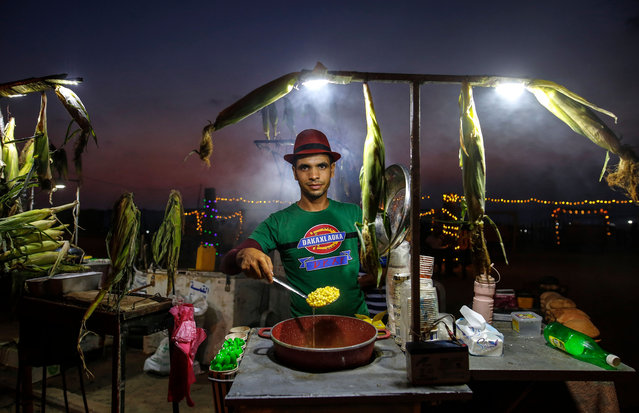
A Palestinian man sells corn at Gaza Beach during sunset on August 8, 2021. (Photo by Sameh Rahmi/NurPhoto/Rex Features/Shutterstock)

A Palestinian man sells corn at Gaza Beach during sunset on August 8, 2021. (Photo by Sameh Rahmi/NurPhoto/Rex Features/Shutterstock)
Details
04 Sep 2021 08:52:00
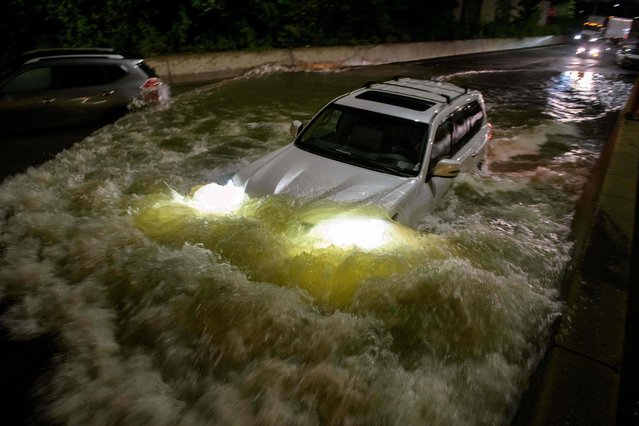
A motorist drives a car through a flooded expressway in Brooklyn, New York early on September 2, 2021, as flash flooding and record-breaking rainfall brought by the remnants of Storm Ida swept through the area. (Photo by Ed Jones/AFP Photo)

A motorist drives a car through a flooded expressway in Brooklyn, New York early on September 2, 2021, as flash flooding and record-breaking rainfall brought by the remnants of Storm Ida swept through the area. (Photo by Ed Jones/AFP Photo)
Details
08 Sep 2021 08:45:00
Dancer Maithili Vijayakumar performs on the occasion of the launch of 2021 Diwali celebrations, at St. Andrew Square in Edinburgh, Scotland, Tuesday, November 16, 2021. The multi-cultural celebration will take place for the first time in two years in the center of Edinburgh on Sunday, Nov. 21. (Photo by Andrew Milligan/PA Wire via AP Photo)

Dancer Maithili Vijayakumar performs on the occasion of the launch of 2021 Diwali celebrations, at St. Andrew Square in Edinburgh, Scotland, Tuesday, November 16, 2021. The multi-cultural celebration will take place for the first time in two years in the center of Edinburgh on Sunday, Nov. 21. (Photo by Andrew Milligan/PA Wire via AP Photo)
Details
17 Nov 2021 08:41:00
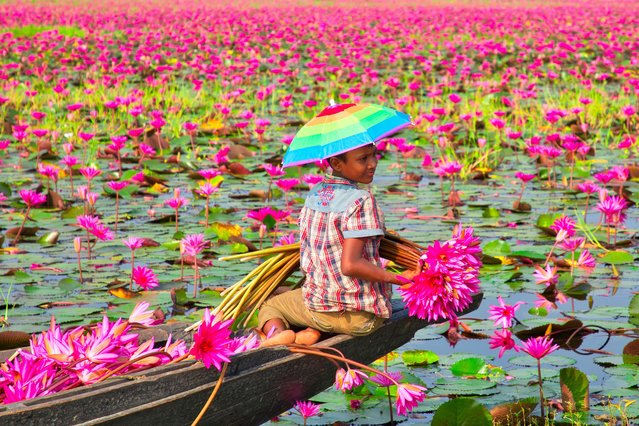
A young farmer harvests water lilies from a canal in Barisal, Bangladesh on October 12, 2019, where the flowers cover the 10,000-acre waterway, to take to nearby markets. (Photo by Azim Khan Ronnie/Caters News Agency)

A young farmer harvests water lilies from a canal in Barisal, Bangladesh on October 12, 2019, where the flowers cover the 10,000-acre waterway, to take to nearby markets. (Photo by Azim Khan Ronnie/Caters News Agency)
Details
27 Dec 2019 00:01:00
Three-year-old orangutan from Sumatra, Berani, is pictured at the Pairi Daiza wildlife park, zoo and botanical garden in Brugelette, Belgium on August 2, 2019. (Photo by Yves Herman/Reuters)

Three-year-old orangutan from Sumatra, Berani, is pictured at the Pairi Daiza wildlife park, zoo and botanical garden in Brugelette, Belgium on August 2, 2019. (Photo by Yves Herman/Reuters)
Details
17 Jan 2020 00:03:00
A demonstrator holds up her fist, in front of police officers during a protest, organised by Black Lives Matter Belgium, against racial inequality in the aftermath of the death in Minneapolis police custody of George Floyd, in central Brussels, Belgium on June 7, 2020. (Photo by Yves Herman/Reuters)

A demonstrator holds up her fist, in front of police officers during a protest, organised by Black Lives Matter Belgium, against racial inequality in the aftermath of the death in Minneapolis police custody of George Floyd, in central Brussels, Belgium on June 7, 2020. (Photo by Yves Herman/Reuters)
Details
09 Jun 2020 00:03:00
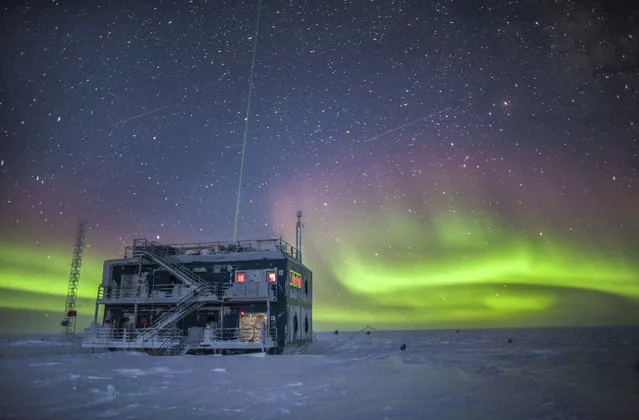
This undated photo provided by NOAA in May 2018 shows aurora australis near the South Pole Atmospheric Research Observatory in Antarctica. When a hole in the ozone formed over Antarctica, countries around the world in 1987 agreed to phase out several types of ozone-depleting chemicals called chlorofluorocarbons (CFCs). Production was banned, emissions fell and the hole shriveled. But according to a study released on Wednesday, May 16, 2018, scientists say since 2013, there’s more of a banned CFC going into the atmosphere. (Photo by Patrick Cullis/NOAA via AP Photo)

This undated photo provided by NOAA in May 2018 shows aurora australis near the South Pole Atmospheric Research Observatory in Antarctica. When a hole in the ozone formed over Antarctica, countries around the world in 1987 agreed to phase out several types of ozone-depleting chemicals called chlorofluorocarbons (CFCs). Production was banned, emissions fell and the hole shriveled. But according to a study released on Wednesday, May 16, 2018, scientists say since 2013, there’s more of a banned CFC going into the atmosphere. (Photo by Patrick Cullis/NOAA via AP Photo)
Details
15 Aug 2018 00:05:00