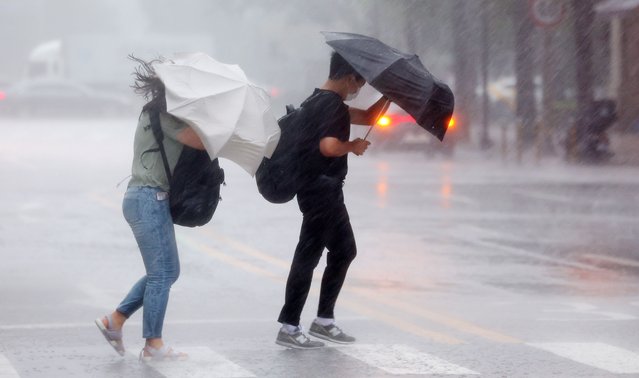
People struggle to hold onto their umbrellas in a crosswalk in the rain in Seoul, South Korea, 08 August 2022, as the rainy season revisits the country. (Photo by Yonhap/EPA/EFE)
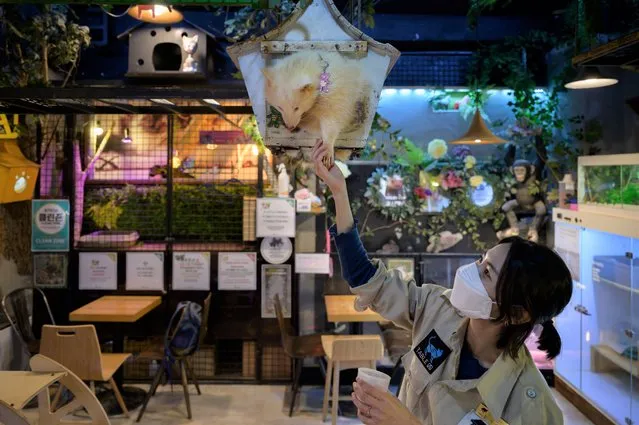
In a photo taken on April 2, 2020 a staff member feeds a raccoon at the Table A Raccoon Cafe in Seoul. Business has been devastated by the coronavirus outbreak, with South Koreans staying at home under social distancing guidelines, and tourism disappearing. But unlike other firms, animal cafes have to stay open so that staff can look after their stock. (Photo by Ed Jones/AFP Photo)
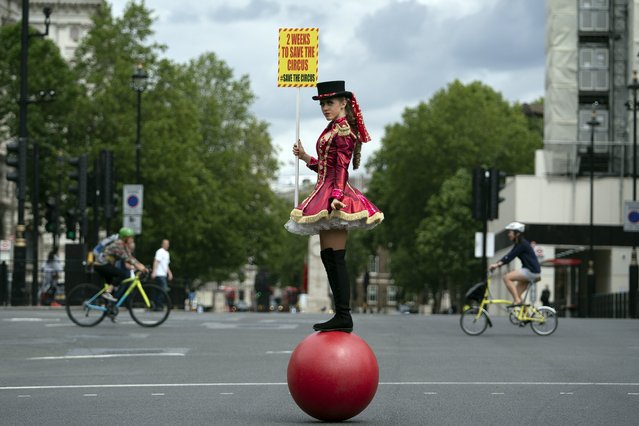
Circus performer from the Association of Circus Proprietors on Whitehall, London, Britain, 07 July 2020. The association handed a petition to Downing Street to ask British Prime Minister Boris Johnson to allow circuses to reopen. (Photo by Will Oliver/EPA/EFE)
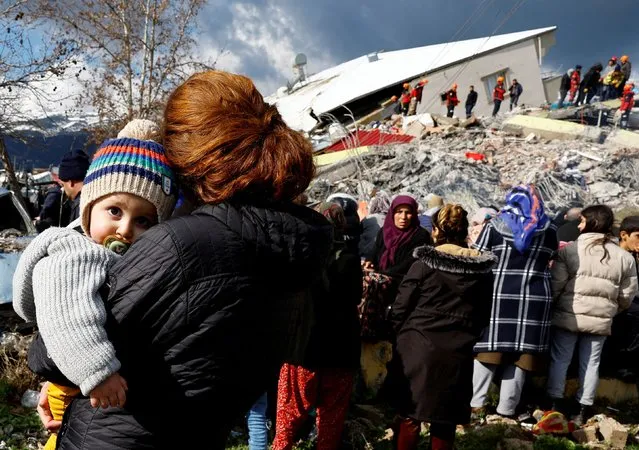
A woman holds a child as she stands near rubble and damages following an earthquake in Gaziantep, Turkey on February 7, 2023. (Photo by Suhaib Salem/Reuters)
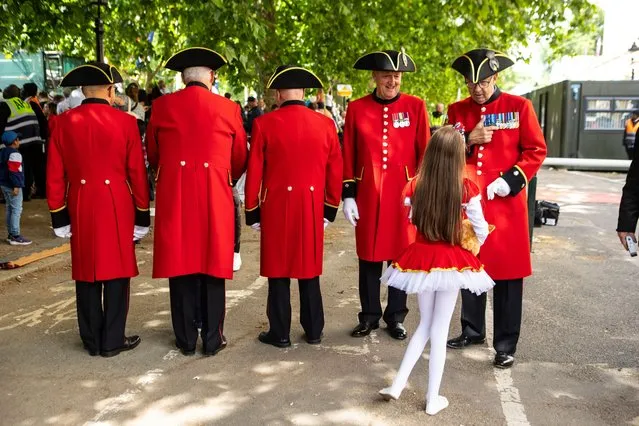
Alicia Finn-O’Shea, 10, talks to Chelsea Pensioners on the Mall during the Queen's Platinum Jubilee celebrations in London, United Kingdom on June 2, 2022 (Photo by Antonio Olmos/The Observer)
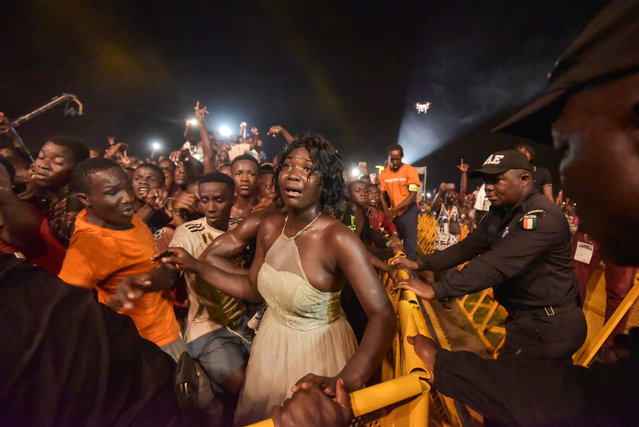
Ivorian police officers of the Anti-Riot Brigade (BAE) contain the crowd during a performance by French rapper Okou Armand Gnakouri known as Kaaris during the Festival of Urban Music of Anoumabo (Femua) in Abidjan on April 28, 2019. The performance of French-Ivorian rapper Kaaris at the Festival of Urban Music of Anoumabo (Femua) in Abidjan escalated into violence after a crowd surge, causing some minor injuries, according to an AFP journalist at the concert. (Photo by Sia Kambou/AFP Photo)
Animal rights activists protest against the use of animal leather in fashion businness, a few days before the fashion week opening in Milan, Italy, 16 September 2018. (Photo by Matteo Bazzi/EPA/EFE)
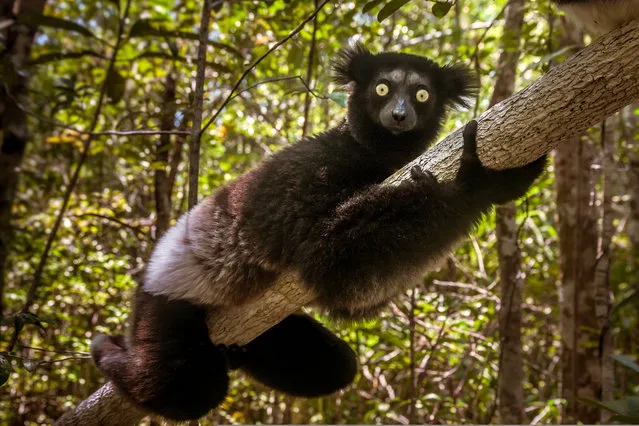
The secretive indri (Indri indri) of Madagascar, the largest living lemur. It is also critically endangered and highly evolutionarily distinct with no close relatives, which makes its branch one of most precarious on the mammal evolutionary tree. In the likely event that the indri goes extinct, we will lose 19m years of unique evolutionary history from the mammal tree of life. (Photo by Pierre-Yves Babelon/Aarhus University)