Loading...
Done
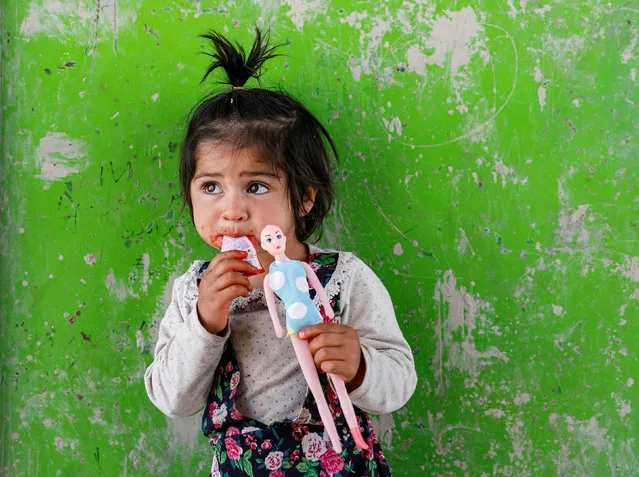
An internally displaced Afghan girl plays outside her shelter, amid the spread of the coronavirus disease (COVID-19), in Kabul, Afghanistan on May 7, 2020. (Photo by Mohammad Ismail/Reuters)

An internally displaced Afghan girl plays outside her shelter, amid the spread of the coronavirus disease (COVID-19), in Kabul, Afghanistan on May 7, 2020. (Photo by Mohammad Ismail/Reuters)
Details
11 May 2020 00:05:00
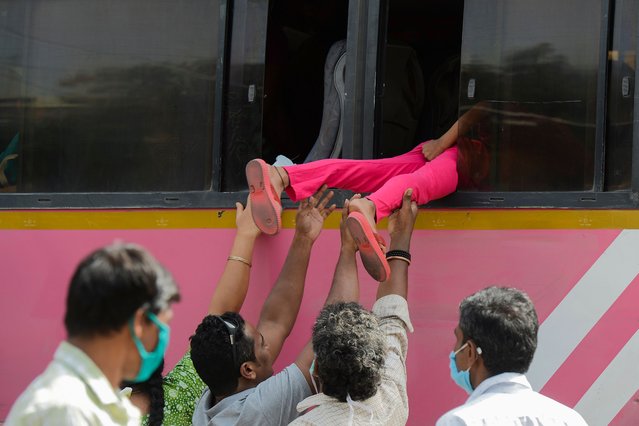
Passengers board children through the window of a bus as Telangana State Road Transport Corporation (TSRTC) resumed bus services after the government eased a nationwide lockdown imposed as a preventive measure against the COVID-19 coronavirus, at Jubilee Bus Station (JBS) in Secunderabad, the twin city of Hyderabad on May 20, 2020. (Photo by Noah Seelam/AFP Photo)

Passengers board children through the window of a bus as Telangana State Road Transport Corporation (TSRTC) resumed bus services after the government eased a nationwide lockdown imposed as a preventive measure against the COVID-19 coronavirus, at Jubilee Bus Station (JBS) in Secunderabad, the twin city of Hyderabad on May 20, 2020. (Photo by Noah Seelam/AFP Photo)
Details
25 May 2020 00:01:00

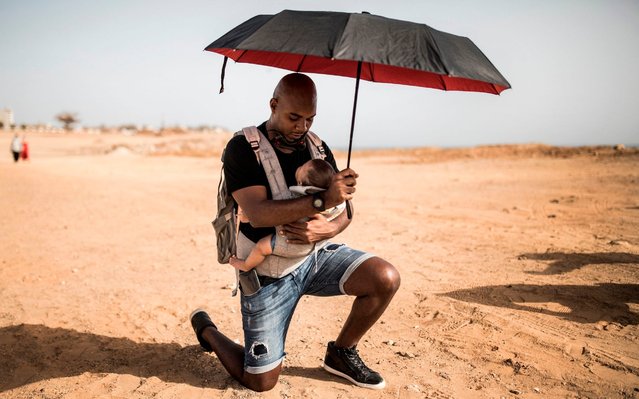
Alexis kneels with his baby at a protest in solidarity with the Black Lives Matter movement in Dakar, Senegal on June 9, 2020. (Photo by John Wessels/AFP Photo)

Alexis kneels with his baby at a protest in solidarity with the Black Lives Matter movement in Dakar, Senegal on June 9, 2020. (Photo by John Wessels/AFP Photo)
Details
12 Jun 2020 00:01:00
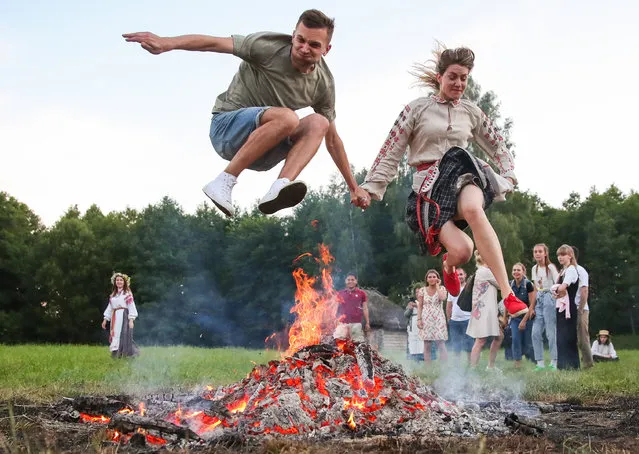
A man and a woman jump over a bonfire during Ivan Kupala Day celebrations held by the Belarusian State Museum of Folk Architecture and Rural Lifestyle in the village of Ozertso near Minsk, Belarus on July 4, 2020. Ivan Kupala Day, also known as Ivana-Kupala or Kupala Night, is a traditional pagan holiday celebrated in eastern Slavic cultures. Various rituals are traditionally performed on Kupala Night, including making flower wreaths, fortune-telling, jumping over bonfires, and burning a wheel-like effigy symbolizing the sun. (Photo by Natalia Fedosenko/TASS)

A man and a woman jump over a bonfire during Ivan Kupala Day celebrations held by the Belarusian State Museum of Folk Architecture and Rural Lifestyle in the village of Ozertso near Minsk, Belarus on July 4, 2020. Ivan Kupala Day, also known as Ivana-Kupala or Kupala Night, is a traditional pagan holiday celebrated in eastern Slavic cultures. Various rituals are traditionally performed on Kupala Night, including making flower wreaths, fortune-telling, jumping over bonfires, and burning a wheel-like effigy symbolizing the sun. (Photo by Natalia Fedosenko/TASS)
Details
07 Jul 2020 00:07:00
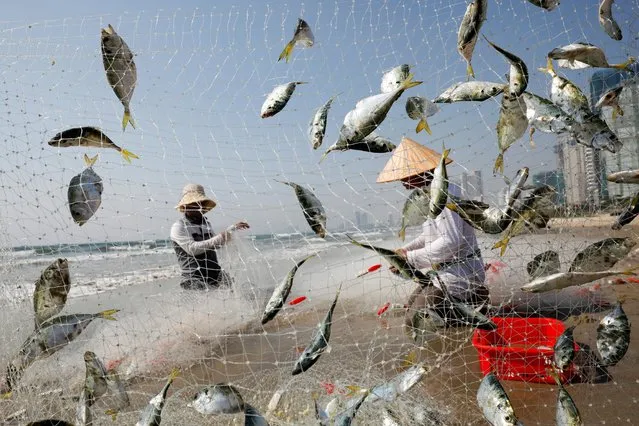
People collect fish on the beach during the coronavirus disease (COVID-19) outbreak in Da Nang, Vietnam on May 6, 2020. (Photo by Kham via Reuters)

People collect fish on the beach during the coronavirus disease (COVID-19) outbreak in Da Nang, Vietnam on May 6, 2020. (Photo by Kham via Reuters)
Details
09 Jul 2020 00:05:00
A woman runs along a bridge in front of a Stalin-era skyscraper in central Moscow on June 29, 2020. (Photo by Yuri Kadobnov/AFP Photo)

A woman runs along a bridge in front of a Stalin-era skyscraper in central Moscow on June 29, 2020. (Photo by Yuri Kadobnov/AFP Photo)
Details
11 Jul 2020 00:03:00
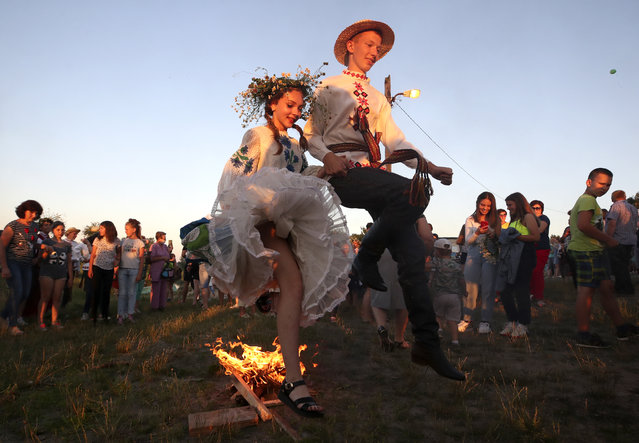
People in ethnic costumes jump over a bonfire during Ivan Kupala Day celebrations held by the Pripyat River in the town of Turauin Gomel Region, Belarus on July 6, 2020. Ivan Kupala Day, also known as Ivana-Kupala or Kupala Night, is a traditional pagan holiday celebrated in eastern Slavic cultures. Various rituals are traditionally performed on Kupala Night, including making flower wreaths, fortune-telling, jumping over bonfires, and burning a wheel-like effigy symbolizing the sun. (Photo by Natalia Fedosenko/TASS)
People in ethnic costumes jump over a bonfire during Ivan Kupala Day celebrations held by the Pripyat River in the town of Turauin Gomel Region, Belarus on July 6, 2020. Ivan Kupala Day, also known as Ivana-Kupala or Kupala Night, is a traditional pagan holiday celebrated in eastern Slavic cultures. Various rituals are traditionally performed on Kupala Night, including making flower wreaths, fortune-telling, jumping over bonfires, and burning a wheel-like effigy symbolizing the sun. (Photo by Natalia Fedosenko/TASS)
Details
19 Jul 2020 00:01:00
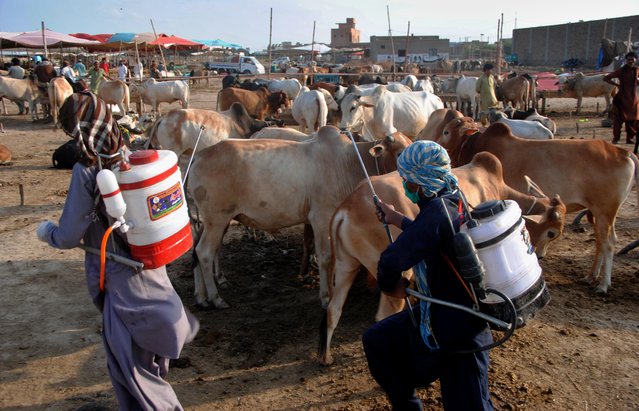
Health workers wearing face masks spray disinfectant liquid on sacrificial animals amid concerns over the spread of the SARS-CoV-2 coronavirus that causes the pandemic COVID-19 disease ahead of the Muslim festival of Eid al-Adha at an animal market in Hyderabad, southern Pakistan, 21 July 2020. Eid al-Adha, also known as the Festival of the Sacrifice, is the second and holiest of the two main Islamic holidays celebrated each year (the other one being Eid al-Fitr). Every year, on the 10th day of the Islamic lunar month of Dhu al-Hijjah, Muslims around the world ritually slaughter a sacrificial animal and split the meat into three parts: one is reserved for the family, another for friends and relatives, and the third is given to the poor and needy. The Saudi Supreme Court has declared that the first day of Eid al-Adha this year falls on 31 July. (Photo by Nadeem Khawar/EPA/EFE)

Health workers wearing face masks spray disinfectant liquid on sacrificial animals amid concerns over the spread of the SARS-CoV-2 coronavirus that causes the pandemic COVID-19 disease ahead of the Muslim festival of Eid al-Adha at an animal market in Hyderabad, southern Pakistan, 21 July 2020. (Photo by Nadeem Khawar/EPA/EFE)
Details
23 Jul 2020 00:07:00