Loading...
Done
A woman smokes a cigarette next to man wearing a mask during lunch hour at the central business district in Singapore September 29, 2015. (Photo by Edgar Su/Reuters)

A woman smokes a cigarette next to man wearing a mask during lunch hour at the central business district in Singapore September 29, 2015. The 3-hour haze Pollutant Standards Index (PSI) reached a high of 173 at 8am on Tuesday, according to the National Environment Agency. Slash-and-burn agriculture in neighboring Indonesia has blanketed Singapore in a choking haze for weeks. (Photo by Edgar Su/Reuters)
Details
02 Oct 2015 08:00:00
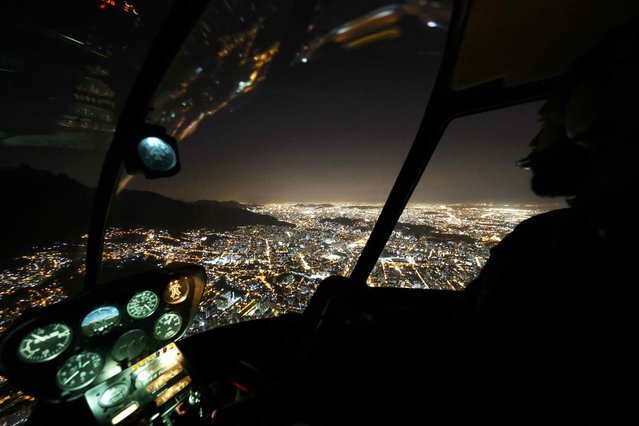
A pilot steers his helicopter at night over Rio de Janeiro, Brazil, less than two weeks before the start of the Rio 2016 Olympic Games, July 23, 2016. Picture taken July 23, 2016. (Photo by Pawel Kopczynski/Reuters)

A pilot steers his helicopter at night over Rio de Janeiro, Brazil, less than two weeks before the start of the Rio 2016 Olympic Games, July 23, 2016. Picture taken July 23, 2016. (Photo by Pawel Kopczynski/Reuters)
Details
26 Jul 2016 10:46:00
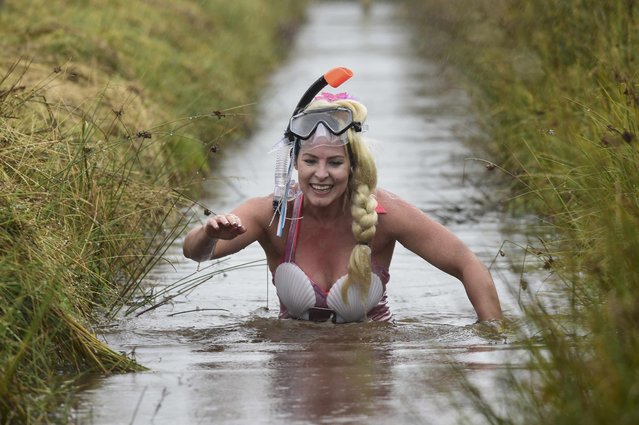
A competitor takes part in the 31st World Bog Snorkelling Championships, held annually at Llanwrtyd Wells in Wales, Britain August 28, 2016. (Photo by Rebecca Naden/Reuters)

A competitor takes part in the 31st World Bog Snorkelling Championships, held annually at Llanwrtyd Wells in Wales, Britain August 28, 2016. Entrants must negotiate two lengths of a 60-yard trench through the peat bog in the quickest possible time without using any conventional swimming strokes. (Photo by Rebecca Naden/Reuters)
Details
29 Aug 2016 07:40:00
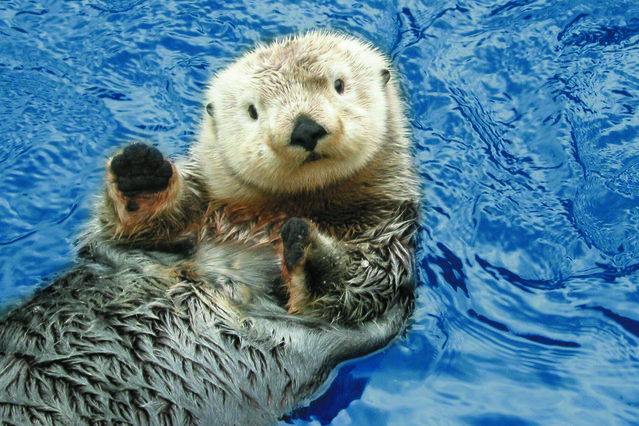
The Sea Otter

The sea otter (Enhydra lutris) is a marine mammal native to the coasts of the northern and eastern North Pacific Ocean. Adult sea otters typically weigh between 14 and 45 kg (31 and 99 lb), making them the heaviest members of the weasel family, but among the smallest marine mammals. Unlike most marine mammals, the sea otter's primary form of insulation is an exceptionally thick coat of fur, the densest in the animal kingdom. Although it can walk on land, the sea otter lives mostly in the ocean.
Details
26 Jan 2014 12:20:00
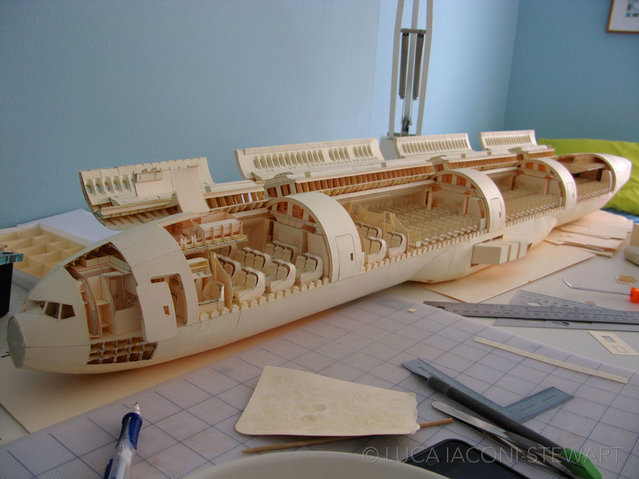
 Realistic Paper Boeing 777 By Luca Laconi Stewart

Inspired by high school architecture class where he was assigned to create simple paper models using cut paper manilla folders, San Francisco-based designer Luca Iaconi-Stewart went home to begin construction on an extremely ambitious project: a 1:60 scale reproduction of a Boeing 777 using some of the techniques he learned in class. That was in 2008, when Iaconi-Stewart was just a junior in high school.
Details
13 Feb 2014 12:29:00
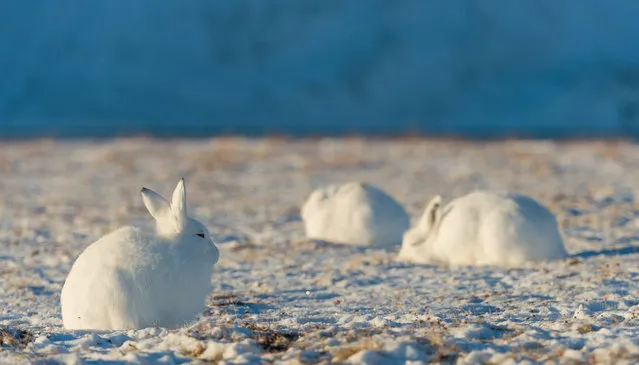
Arctic Hare

The arctic hare, or polar rabbit, is a species of hare which is adapted largely to polar and mountainous habitats. The arctic hare survives with a thick coat of fur and usually digs holes in the ground or under snow to keep warm and sleep. Arctic hares look like rabbits but have shorter ears, are taller when standing, and, unlike rabbits, can thrive in cold climates. They can travel together with many other hares, sometimes huddling with dozens or more, but are usually found alone, taking, in some cases, more than one partner. The arctic hare can run up to 60 kilometres per hour (40 mph). Its predators include the arctic wolf, arctic fox, and ermine.
Details
17 Mar 2014 13:56:00
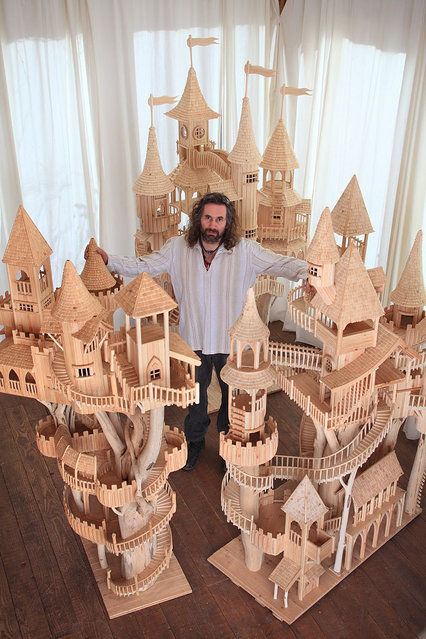
Rob Heard's Wooden Bough House

Living on the edge of Exmoor, Rob takes his inspiration from the rolling countryside surrounding his home, where each Bough House sculpture takes several months to construct. The designs do not follow an explicit plan or process, each piece is unique. They evolve and flow freely, as part of a creative journey which has no natural limit, whilst also revealing great logic and engineering integrity. Every aerial walkway or staircase leads to a room - there are no dead-ends and every turret and tower can be reached.
Details
29 May 2013 10:31:00
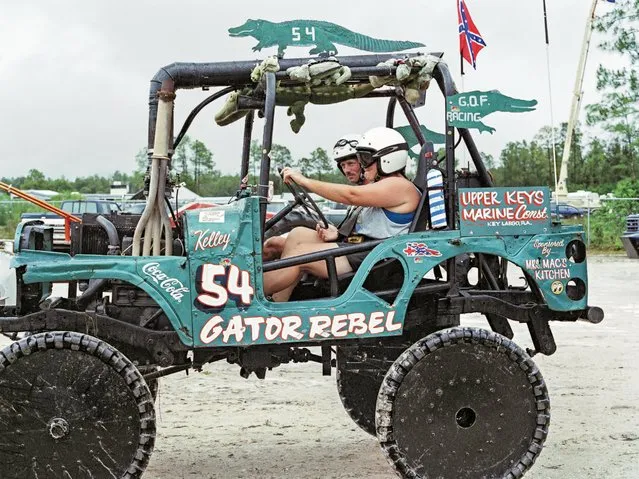
Kelley McMann, Gator Rebel, 2002. (Photo by Malcolm Lightner)

The Mile O' Mud is a 7/8-mile oval track with a 1/8-mile diagonal lane slashed through the center. The racing lanes are approximately 60 feet wide. On average, the muddy water is four to six feet deep, with three strategically placed holes. The largest hole, located in front of the grandstand, is the treacherous “Sippy Hole”, named for the legendary driver “Mississippi” Milton Morris, Swamp Buggy King 1955, who repeatedly got stuck in it. (Photo by Malcolm Lightner)
Details
19 May 2016 11:20:00