Loading...
Done
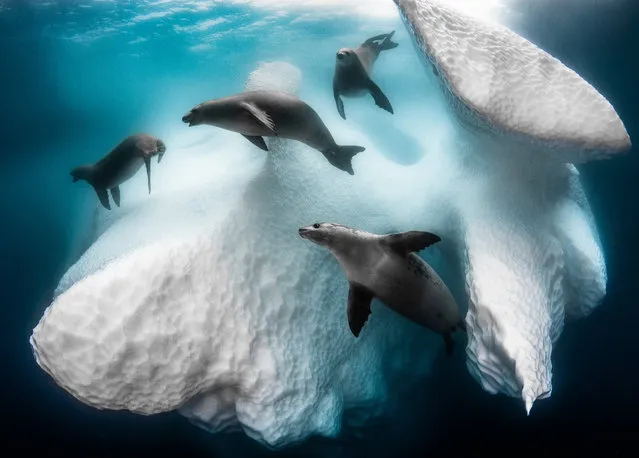
Underwater photographer of the year 2020 and wide angle category winner: Frozen Mobile Home by Greg Lecoeur (France) in the Antarctic peninsula, Antarctica. Crabeater seals swim around an iceberg. These massive and mysterious habitats are dynamic kingdoms that support marine life. As they swing and rotate slowly through polar currents, icebergs fertilise the oceans by carrying nutrients from land that spark blooms of phytoplankton, fundamental to the carbon cycle. (Photo by Greg Lecoeur/Underwater Photographer of the Year 2020)

Underwater photographer of the year 2020 and wide angle category winner: Frozen Mobile Home by Greg Lecoeur (France) in the Antarctic peninsula, Antarctica. Crabeater seals swim around an iceberg. These massive and mysterious habitats are dynamic kingdoms that support marine life. As they swing and rotate slowly through polar currents, icebergs fertilise the oceans by carrying nutrients from land that spark blooms of phytoplankton, fundamental to the carbon cycle. (Photo by Greg Lecoeur/Underwater Photographer of the Year 2020)
Details
28 Feb 2020 00:05:00
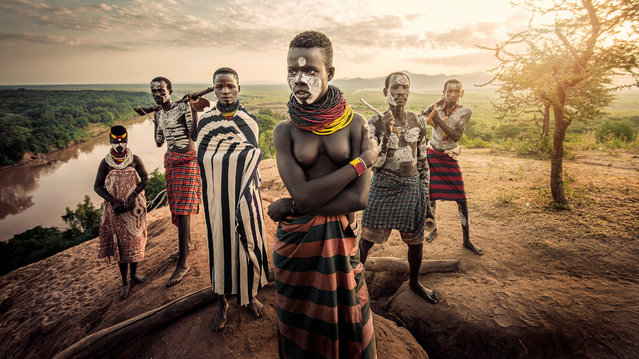
“People of the River”. This is a Karo tribe family; father, mother, two sisters and two brothers. The tribe, who live along the Omo River in east Africa, incorporate rich symbolism into their rituals by using ornate body art, headdresses and body scarification to express beauty and significance. (Photo by Jatenipat Ketpradit/International Portrait Photographer of the Year)

“People of the River”. This is a Karo tribe family; father, mother, two sisters and two brothers. The tribe, who live along the Omo River in east Africa, incorporate rich symbolism into their rituals by using ornate body art, headdresses and body scarification to express beauty and significance. (Photo by Jatenipat Ketpradit/International Portrait Photographer of the Year)
Details
04 Jul 2021 09:39:00
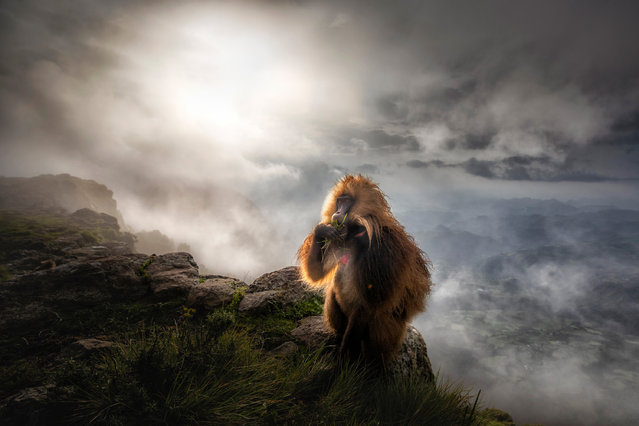
Highly commended, mammals: Gelada after the storm – Marco Gaiotti (Italy). “Gelada baboons are the only monkey species in the world that feed on grasses. They are native to the tableland of Ethiopia. Every morning large family groups wander from their sleeping places in the steep rock face, up to 1,000 metres high, to the feeding grounds at the tablelands. This image clearly depicts their feeding strategy: they pull out bunches of grass, sort the stalks and then lift them to their mouth. This shot was taken towards the end of the rainy season after a heavy storm”. (Photo by Marco Gaiotti/2019 GDT European Wildlife Photographer of the Year)

Highly commended, mammals: Gelada after the storm – Marco Gaiotti (Italy). “Gelada baboons are the only monkey species in the world that feed on grasses. They are native to the tableland of Ethiopia. Every morning large family groups wander from their sleeping places in the steep rock face, up to 1,000 metres high, to the feeding grounds at the tablelands. This image clearly depicts their feeding strategy: they pull out bunches of grass, sort the stalks and then lift them to their mouth. This shot was taken towards the end of the rainy season after a heavy storm”. (Photo by Marco Gaiotti/2019 GDT European Wildlife Photographer of the Year)
Details
31 Oct 2019 00:03:00
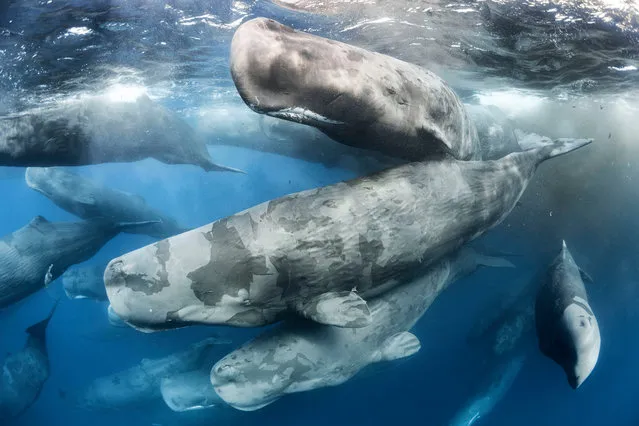
Behaviour: Mammals category. Giant Gathering by Tony Wu, USA. Dozens of sperm whales mingled noisily off Sri Lanka’s northeast coast, stacked as far down as Tony could see. This was a congregation of dozens of social units, like a gathering of the clans. Aggregations like this could be a critical part of the whales’ rich social lives but are rarely reported. Some two thirds of the population was wiped out before commercial whaling was banned in 1986. This kind of major gathering could be “a sign that populations are recovering”, says Tony. (Photo by Tony Wu/Wildlife Photographer of the Year 2017)

Behaviour: Mammals category. Giant Gathering by Tony Wu, USA. Dozens of sperm whales mingled noisily off Sri Lanka’s northeast coast, stacked as far down as Tony could see. This was a congregation of dozens of social units, like a gathering of the clans. Aggregations like this could be a critical part of the whales’ rich social lives but are rarely reported. Some two thirds of the population was wiped out before commercial whaling was banned in 1986. This kind of major gathering could be “a sign that populations are recovering”, says Tony. (Photo by Tony Wu/Wildlife Photographer of the Year 2017)
Details
19 Oct 2017 09:38:00
Old-Style Photographic Works By Cally Whitham Part1

Cally Whitham is a photographic artist from New Zealand with romantic notions of finding value in banality. Her work identifies aesthetic value where none appears apparent and often invites viewers to reflect on our rural beginnings. via Photography Blogs.
Details
27 Aug 2013 13:43:00
Fire patterns created by igniting gasoline in midair. (Photo by Rob Prideaux)

A photographer has taken an explosive set of images by igniting gasoline in midair. Rob Prideaux, 45, photographs fire and smoke and then creates patterns from it. The San Francisco-based artist captures the fire in the split second its visible by using highly arcane methods. Rob's Smoke and Fire series is his quest “to shape one of the more uncontrollable phenomena in nature”. (Photo by Rob Prideaux)
Details
10 Sep 2013 11:50:00
Moscow, September 2012. (Igor Mukhin)

Moscow, September 2012. (Photo by Igor Mukhin)
Details
21 Oct 2013 11:39:00
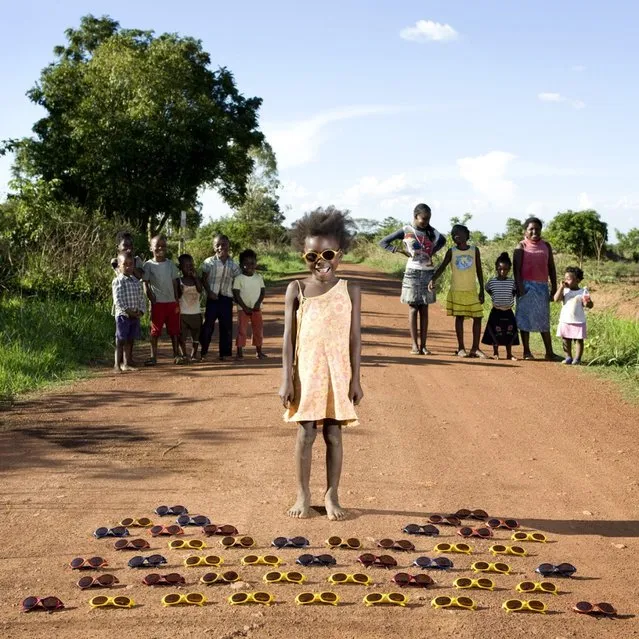
Maudy – Kalulushi, Zambia. Maudy was born in a hut in a small village close to Kalulushi, in Zambia. She grew up playing in the street with the other children in the village, who all attend the same school, where students ages 3 to 10 years old are in the same class. The village has no shops, restaurants or hotels, and just a few children are lucky enough to have toys. Maudy and her friends found a box full of sunglasses on the street, which quickly became their favorite toys. “Toy Stories” project. (Gabriele Galimberti)

Maudy – Kalulushi, Zambia. Maudy was born in a hut in a small village close to Kalulushi, in Zambia. She grew up playing in the street with the other children in the village, who all attend the same school, where students ages 3 to 10 years old are in the same class. The village has no shops, restaurants or hotels, and just a few children are lucky enough to have toys. Maudy and her friends found a box full of sunglasses on the street, which quickly became their favorite toys. “Toy Stories” project. (Photo and caption by Gabriele Galimberti)
Details
05 Dec 2013 07:54:00