Loading...
Done
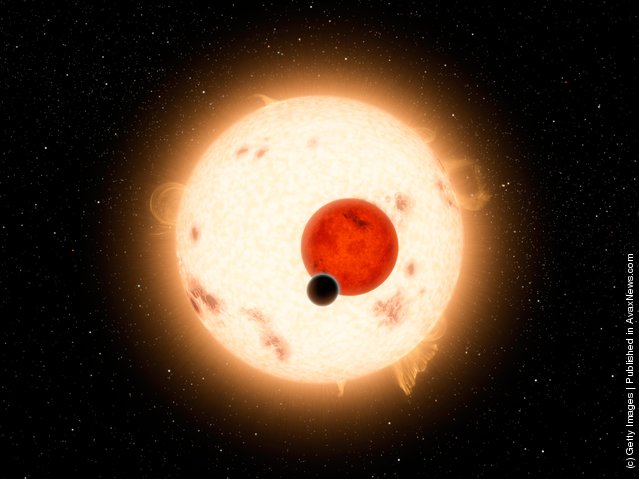
The newly-discovered gaseous planet Kepler-16b orbits it's two stars

The newly-discovered gaseous planet Kepler-16b orbits it's two stars. NASA's Kepler Mission discoverd the world orbiting two Stars, the larger a K dwarf and the smaller a red dwarf. (Photo by NASA/JPL-Caltech/T. Pyle via Getty Images)
Details
07 Dec 2011 12:28:00
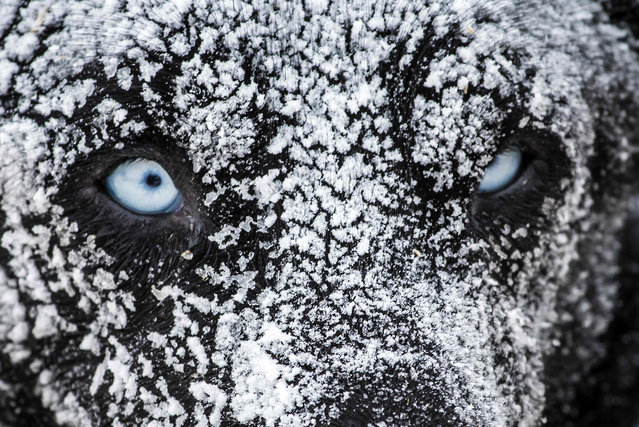
A sledding dog is covered in ice after spending the night in the open air with his musher at the polar base of Val-Cenis, as they ready for the next stage of the 12th edition of “La Grande Odyssee” sledding race across the Alps on January 17, 2016 in Val Cenis Lanslevillard. (Photo by Jean-Philippe Ksiazek/AFP Photo)

A sledding dog is covered in ice after spending the night in the open air with his musher at the polar base of Val-Cenis, as they ready for the next stage of the 12th edition of “La Grande Odyssee” sledding race across the Alps on January 17, 2016 in Val Cenis Lanslevillard. (Photo by Jean-Philippe Ksiazek/AFP Photo)
Details
19 Jan 2016 08:05:00
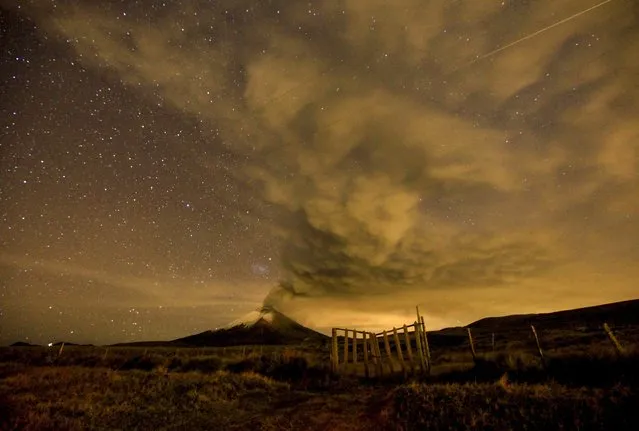
A general view shows smoke and volcanic ashes billowing from volcano Cotopaxi in Pedregal, Ecuador, late 07 October 2015. (Photo by Jose Jacome/EPA)

A general view shows smoke and volcanic ashes billowing from volcano Cotopaxi in Pedregal, Ecuador, late 07 October 2015. (Photo by Jose Jacome/EPA)
Details
23 Nov 2015 08:04:00
A sifaka lemur eats leaves at the Berenty Reserve in Toliara province, Madagascar, February 15, 2022. (Photo by Alkis Konstantinidis/Reuters)

A sifaka lemur eats leaves at the Berenty Reserve in Toliara province, Madagascar, February 15, 2022. (Photo by Alkis Konstantinidis/Reuters)
Details
06 Mar 2022 05:40:00
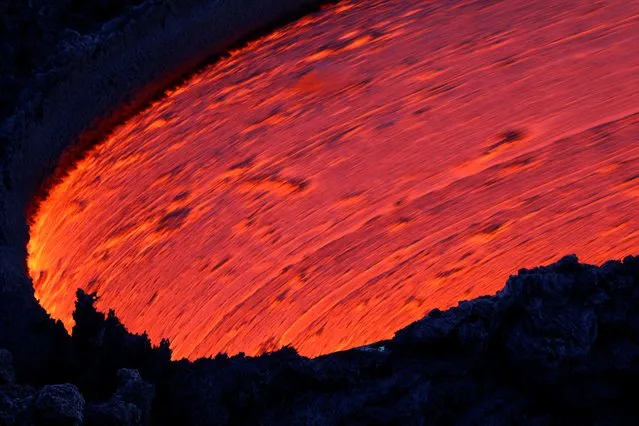
Long streams of red-hot lava flow down the southeast crater of Mount Etna, Europe's tallest and most active volcano, seen from Zafferana Etnea, Italy, June 11, 2022. (Photo by Antonio Parrinello/Reuters)

Long streams of red-hot lava flow down the southeast crater of Mount Etna, Europe's tallest and most active volcano, seen from Zafferana Etnea, Italy, June 11, 2022. (Photo by Antonio Parrinello/Reuters)
Details
16 Jun 2022 02:01:00
Renowned aerobatic pilots Sean D. Tucker, flying the Oracle Challenger III, and Jeff Boerboon, flying the Jack Link's Screamin' Sasquatch, take to the skies over EAA's 2015 AirVenture Oshkosh, on Monday, July 20, 2015 in Oshkosh, Wis. (Photo by Matt Ludtke/AP Images for Jack Link's)

Renowned aerobatic pilots Sean D. Tucker, flying the Oracle Challenger III, and Jeff Boerboon, flying the Jack Link's Screamin' Sasquatch, take to the skies over EAA's 2015 AirVenture Oshkosh, on Monday, July 20, 2015 in Oshkosh, Wis. (Photo by Matt Ludtke/AP Images for Jack Link's)
Details
31 Aug 2015 12:04:00
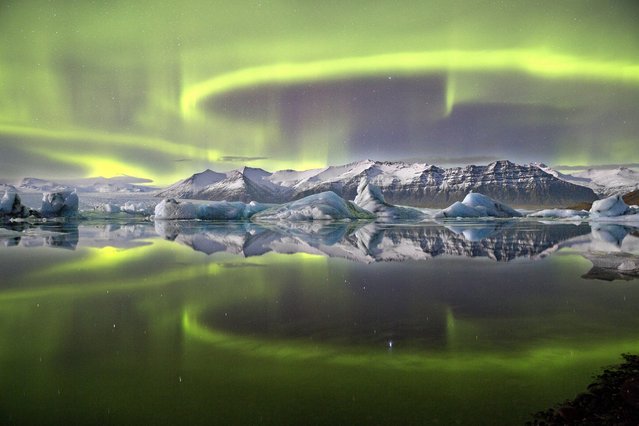
“Aurora over a glacier lagoon”. A vivid green overheaded aurrora pictured in Iceland's Vatnajokull National Park reflected almost symetrically in Jokulsrlon Glacier lagoon. A complete lack of wind and currrent combin in this sheltred lagoon scene to crete an arresting mirror effect giving the image a sensation of utter stillness. Despite theis there is motion on a suprising scale, as the loops and arcs of the aurora are shaped by the shifting forces of the Earth's magnetic field. (Photo by  James Woodend/The Astronomy Photographer of the Year 2014 Contest)

“Aurora over a glacier lagoon”. A vivid green overheaded aurrora pictured in Iceland's Vatnajokull National Park reflected almost symetrically in Jokulsrlon Glacier lagoon. A complete lack of wind and currrent combin in this sheltred lagoon scene to crete an arresting mirror effect giving the image a sensation of utter stillness. Despite theis there is motion on a suprising scale, as the loops and arcs of the aurora are shaped by the shifting forces of the Earth's magnetic field. James Woodend of Great Britain won the grand prize with the image, beating out more than 2,500 other entries. The Astronomy Photographer of the Year 2014 contest is judged by the Royal Observatory Greenwich and BBC Sky at Night magazine. (Photo by James Woodend/The Astronomy Photographer of the Year 2014 Contest)
Details
26 Sep 2014 13:39:00
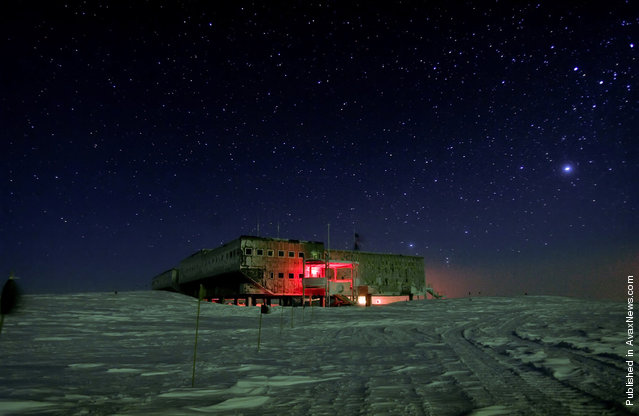
Amundsen-Scott South Pole Station experiences months of darkness. The sun dips below the horizon on March 21, after which follows several weeks of twilight before complete darkness results

Amundsen-Scott South Pole Station experiences months of darkness. The sun dips below the horizon on March 21, after which follows several weeks of twilight before complete darkness results. Photo taken on June 25, 2009. (National Science Foundation/Jeremy Johnson)
Details
08 Apr 2012 13:07:00