Loading...
Done
A sparrow feeds its nestlings inside a hole in a building while waiting for food in Lalitpur, Nepal on Friday, March 17, 2023. (Photo by Skanda Gautam/ZUMA Press Wire/Rex Features/Shutterstock)

A sparrow feeds its nestlings inside a hole in a building while waiting for food in Lalitpur, Nepal on Friday, March 17, 2023. (Photo by Skanda Gautam/ZUMA Press Wire/Rex Features/Shutterstock)
Details
29 Apr 2023 04:37:00
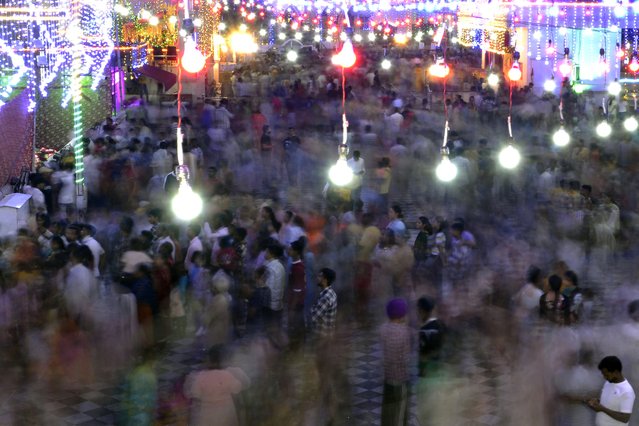
Devotees gather to take part in the celebrations to mark the Krishna Janmashtami festival at a temple in Jalandhar on August 26, 2024. (Photo by Shammi Mehra/AFP Photo)

Devotees gather to take part in the celebrations to mark the Krishna Janmashtami festival at a temple in Jalandhar on August 26, 2024. (Photo by Shammi Mehra/AFP Photo)
Details
19 Sep 2024 04:21:00
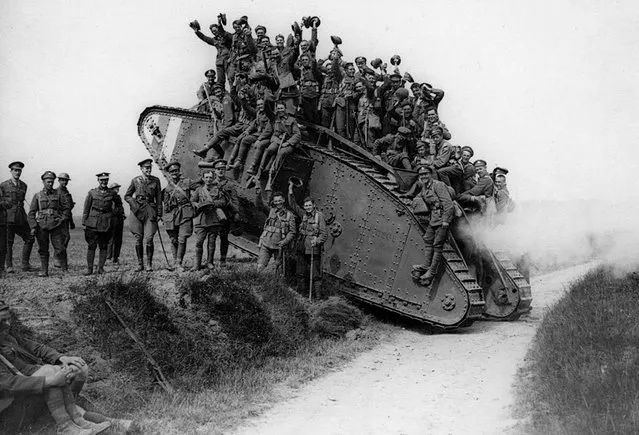
These black-and-white photos are taken from the new book “Armoured Warfare in the First World War 1916 – 1918” by Anthony Tucker-Jones and published by Pen & Sword Military. “Interestingly the British, French and Germans took completely different approaches with varying results”. The British military produced “Little Willie” in Autumn 1915 weighing 18 tonnes, which had a crew of two plus four gunners. “Inspired by a tracked artillery tractor “Little Willie” was referred to as a water tank – hence the name tank – to ensure secrecy”, said Anthony. “This led to the strange looking Mark I with its peculiar rhomboid shape, designed to cross trenches with guns in sponsons on either side. The Germans saw the tank as unchivalrous and were slow to grasp its utility. They favoured the Stormtrooper (specialist soldiers used to infiltrate enemy trenches) and artillery, not the tank”, said Anthony. “However, they didn’t hesitate to make use of captured British tanks. Although the tank helped secure victory and German soldiers dubbed it “Germany’s Downfall” the country was ultimately brought to its knees by the Allies blockade”. Here: British troops hitch a ride on a Mark IV after the massed tank fleet spearheading attack at Cambrai on November 20, 1917. (Photo by Anthony Tucker-Jones/Mediadrumworld.com)

These black-and-white photos are taken from the new book “Armoured Warfare in the First World War 1916 – 1918” by Anthony Tucker-Jones and published by Pen & Sword Military. Here: British troops hitch a ride on a Mark IV after the massed tank fleet spearheading attack at Cambrai on November 20, 1917. (Photo by Anthony Tucker-Jones/Mediadrumworld.com)
Details
23 Feb 2017 00:02:00
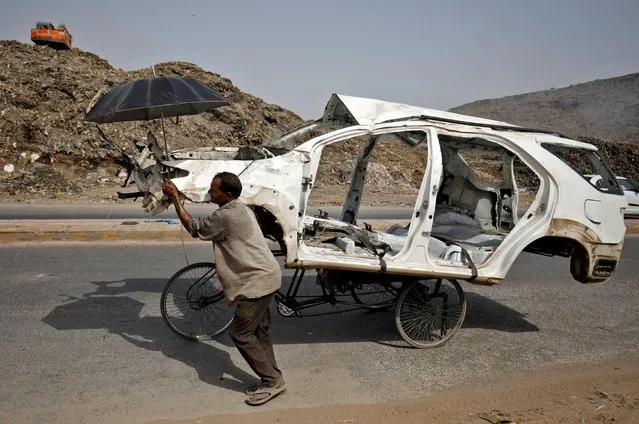
A man uses an umbrella for shade as he carries a dismantled car on a cycle rickshaw to a scrapyard on a hot weather day on the outskirts of Ahmedabad, India, May 19, 2022. (Photo by Amit Dave/Reuters)

A man uses an umbrella for shade as he carries a dismantled car on a cycle rickshaw to a scrapyard on a hot weather day on the outskirts of Ahmedabad, India, May 19, 2022. (Photo by Amit Dave/Reuters)
Details
23 May 2022 04:50:00
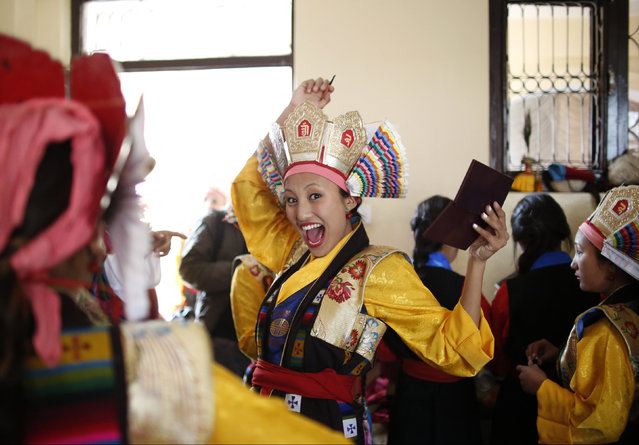
A Tibetan girl reacts as she gets ready to perform in a function organised to mark “Losar” or the Tibetan New Year in Kathmandu, Nepal, February 11, 2016. (Photo by Navesh Chitrakar/Reuters)

A Tibetan girl reacts as she gets ready to perform in a function organised to mark “Losar” or the Tibetan New Year in Kathmandu, Nepal, February 11, 2016. (Photo by Navesh Chitrakar/Reuters)
Details
12 Feb 2016 13:03:00
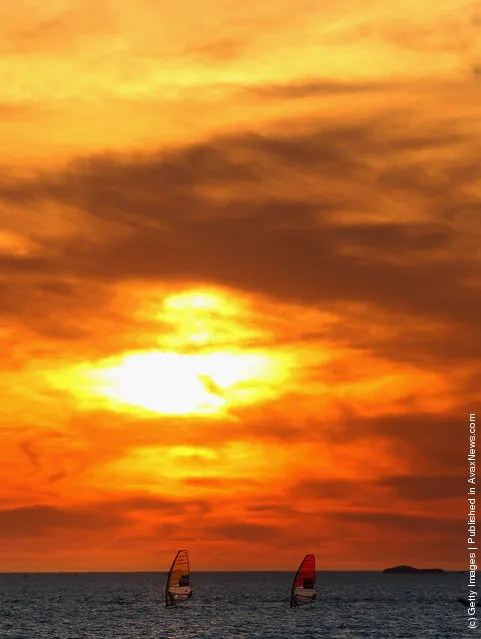
The current world Champions in the Men's and Women's RS:X, Piotr Myszka of Poland and Blanca Manchon of Spain arrive at Bathers Beach carrying the ISAF World Championships Flag to be raised to officially open the 2011 ISAF Sailing World Championships

The current world Champions in the Men's and Women's RS:X, Piotr Myszka of Poland and Blanca Manchon of Spain arrive at Bathers Beach carrying the ISAF World Championships Flag to be raised to officially open the 2011 ISAF Sailing World Championships on December 2, 2011 in Perth, Australia. (Photo by Mark Dadswell/Getty Images)
Details
05 Dec 2011 13:50:00
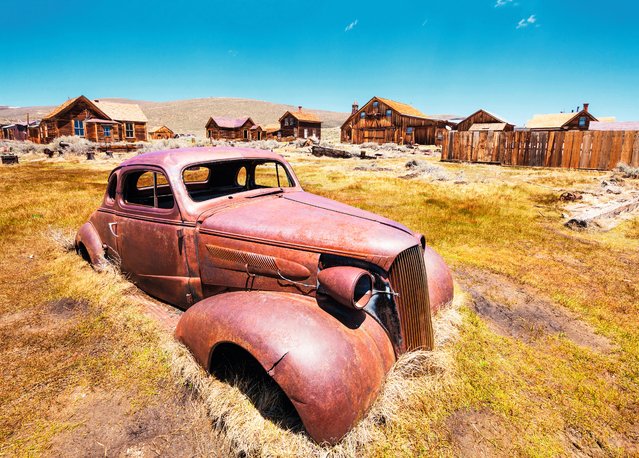
Bodie, Mono County, California. Gold was discovered at Bodie in 1859 (just after the initial California gold rush) and it went from mining camp to boomtown. Its decline began in 1880, when word spread of new boomtowns elsewhere. The Standard Consolidated Mine closed in 1913, and four years later the Bodie Railway was abandoned. By 1940 the population was down to 40. Today, Bodie is maintained in a state of arrested decay as a visitor attraction. (Photo by Alamy Stock Photo)

Kieron Connolly’s new book of photographs of more than 100 once-busy and often elegant buildings gives an idea of how the world might look if humankind disappeared. Here: Bodie, Mono County, California. Gold was discovered at Bodie in 1859 (just after the initial California gold rush) and it went from mining camp to boomtown. Its decline began in 1880, when word spread of new boomtowns elsewhere. The Standard Consolidated Mine closed in 1913, and four years later the Bodie Railway was abandoned. By 1940 the population was down to 40. Today, Bodie is maintained in a state of arrested decay as a visitor attraction. (Photo by Alamy Stock Photo)
Details
07 Sep 2016 09:50:00
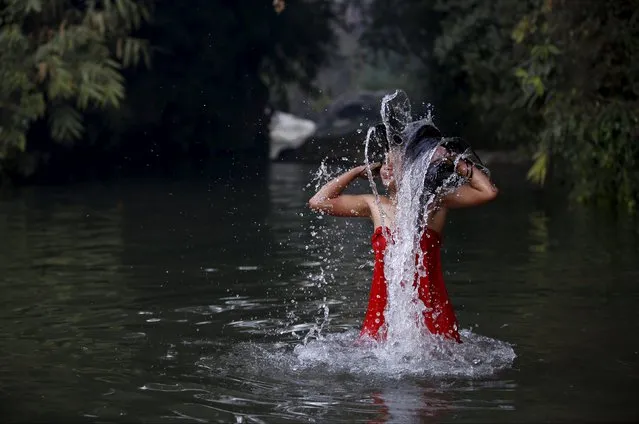
A devotee takes a holy bath in River Saali in Sankhu during the Swasthani Brata Katha festival in Kathmandu, Nepal, January 24, 2016. (Photo by Navesh Chitrakar/Reuters)

A devotee takes a holy bath in River Saali in Sankhu during the Swasthani Brata Katha festival in Kathmandu, Nepal, January 24, 2016. During the month long festival, devotees recite one chapter of a Hindu tale daily from the 31-chapter sacred Swasthani Brata Katha book that is dedicated to God Madhavnarayan and Goddess Swasthani, alongside various other gods and goddess and the miraculous feats performed by them. The devotees also go on pilgrimages to various temples, perform religious rituals, take a holy bath in the rivers and fast for a month, especially among women who believe fasting helps in their family's well-being or in getting them a good husband. (Photo by Navesh Chitrakar/Reuters)

Details
25 Jan 2016 12:05:00