Loading...
Done
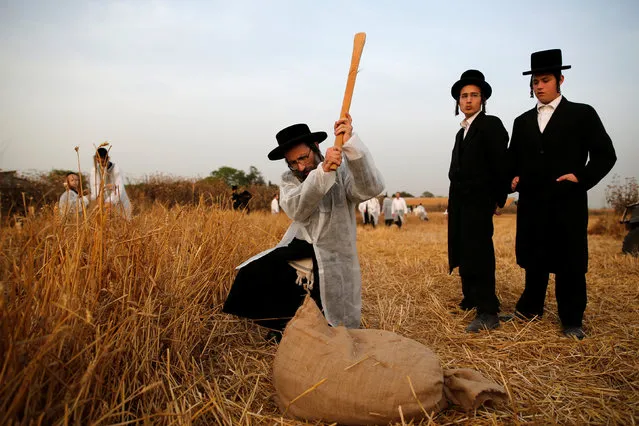
An Ultra-Orthodox Jewish man uses a stick to to separate the wheat grains in the Ultra-orthodox moshav of Komemiyut May 3, 2016. (Photo by Amir Cohen/Reuters)

An Ultra-Orthodox Jewish man uses a stick to to separate the wheat grains in the Ultra-orthodox moshav of Komemiyut May 3, 2016. The harvested wheat will later be used to make the traditional unleavened bread eaten during the Jewish holiday of Passover. (Photo by Amir Cohen/Reuters)
Details
04 May 2016 11:35:00
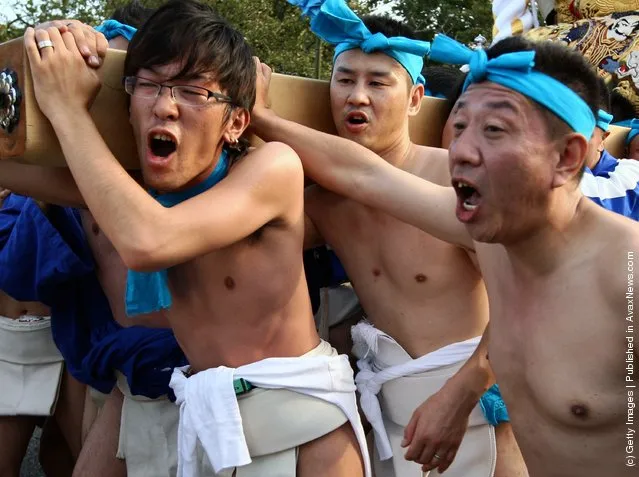
Nada No Kenka Matsuri, or Nada Fight Festival

Shrine Parishioners pull their portable shrine during Nada No Kenka Matsuri, or Nada Fight Festival at Matsubara Hachiman Shrine on October 16, 2011 in Himeji, Hyogo, Japan. The fight, the highlight of the shrine's Autumn Harvest Festival, attracts 100,000 people. (Photo by Buddhika Weerasinghe/Getty Images)
Details
17 Oct 2011 09:50:00
“Lofoten Glow”. I was desperately searching a good sunrise spot this particular morning. Normally Storvatnet Lake is completely covered in snow, so you can only imagine my surprise when I saw these crazy ice formations almost being shot out of the frozen lake. I put my crampons on and took a big risk walking out. Photo location: Storvatnet, Lofoten Islands in Northern Norway. (Photo and caption by Stian Klo/National Geographic Photo Contest)

“Lofoten Glow”. I was desperately searching a good sunrise spot this particular morning. Normally Storvatnet Lake is completely covered in snow, so you can only imagine my surprise when I saw these crazy ice formations almost being shot out of the frozen lake. I put my crampons on and took a big risk walking out. I could hear the ice cracking underneath my feet, and when you’re all alone in a fjord/canyon like this – the cracks are echoed and sound really frightening. Was it worth it? I sure think so! Photo location: Storvatnet, Lofoten Islands in Northern Norway. (Photo and caption by Stian Klo/National Geographic Photo Contest)
Details
08 Apr 2014 09:40:00
Legs Photography By Stacey Baker


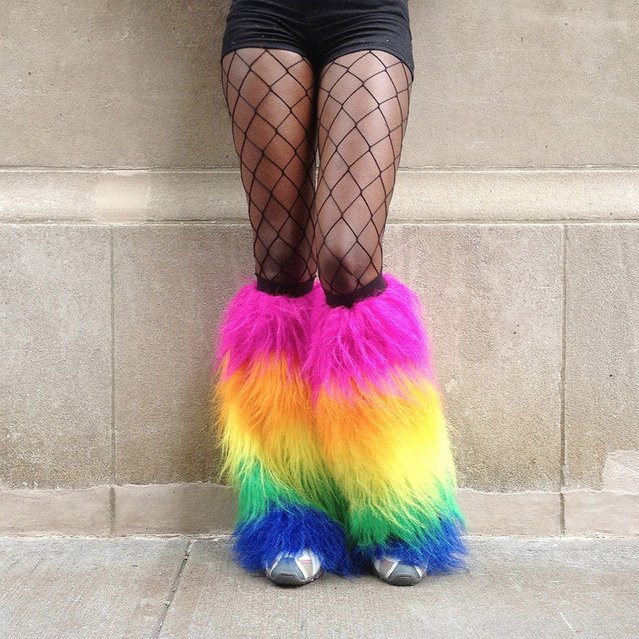
When you look at the pictures created by Stacey Baker, you immediately think that these photos must have been staged by the photographer to convey some deep meaning. In reality, however, Stacy created her new series called “CitiLegs”, which has about 300 pictures of female legs, by asking passing girls and women in Manhattan, New York if she could photograph their legs. And that is when the realization hits you – “Some people actually dress like that!” What kind of a person would wear neon-green shorts over orange leggings with leopard-patterned boots, the toes of which are completely torn? Yes, there is a possibility that such a person might be insane; however, there are just too many “crazy” photos in this series! (Photo by Stacey Baker)

Details
19 Nov 2014 14:23:00
“Whether that means getting up way before the sun, like I do most days, going out somewhere that I’m not comfortable or just trying to get different angles or styles of photos, I am trying to display the crazy beauty of the ocean, and usually moments that literally last less than a split second”. (Photo by Ryan Pernoski/Caters News Agency)

These kaleidoscopic images are the work of one persistent photographer’s efforts to capture vibrant hues at the exact moment a wave breaks. Ryan Pernofski‘s stunning shots feature brilliant yellows, reds, blues and purples as an array of sunlight hits the water at the perfect time. What’s even more impressive: Ryan, a 27-year-old Australian, began shooting his popular masterpieces without using a professional camera, taking his iPhone out into the water instead. Ryan began experimenting with this method in 2012, using an underwater housing to protect his phone, as he could not afford a professional camera. (Photo by Ryan Pernoski/Caters News Agency)
Details
09 Jun 2018 00:05:00
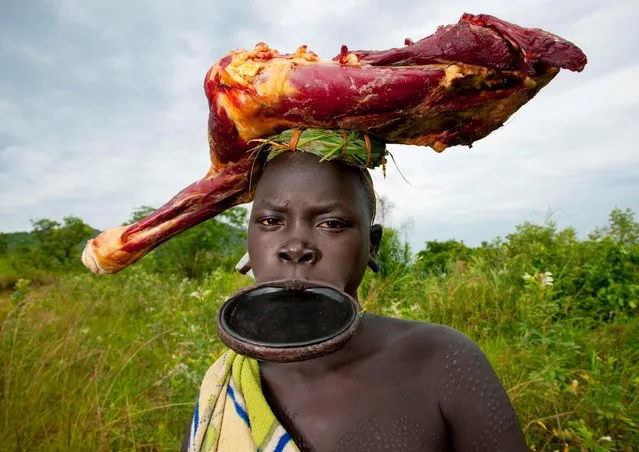
A tribeswoman sporting a huge lip plate and wearing a skinned animal carcass on her head. (Photo by Eric Lafforgue/Exclusivepix Media)

Warriors from the Suri tribe in Ethiopia still stage the savage “Donga” battles – even after many fighters have been died from their injuries. Donga stick fights take place after the harvests, the Surmas count days owing to knots on a long stem of grass or jags on the trunk of a tree dedicated to that specific use. Here: A tribeswoman sporting a huge lip plate and wearing a skinned animal carcass on her head. (Photo by Eric Lafforgue/Exclusivepix Media)
Details
22 Apr 2017 09:30:00
A picture made available on 13 May 2016 shows A Tiwa girl performing her traditional dance as they celebrated the Wanchuwa festival in Karbi Anglong District of Assam state, India, 11 May 2016. Wanchuwa is one of the most important festivals of the Tiwa tribal community living in the hills as it is related with agriculture which is the mainstay of their economy. Tiwas pray for a bountiful harvest during this festival and to protect their crops from pest and other natural calamities. (Photo by EPA/Stringer)

A picture made available on 13 May 2016 shows A Tiwa girl performing her traditional dance as they celebrated the Wanchuwa festival in Karbi Anglong District of Assam state, India, 11 May 2016. Wanchuwa is one of the most important festivals of the Tiwa tribal community living in the hills as it is related with agriculture which is the mainstay of their economy. Tiwas pray for a bountiful harvest during this festival and to protect their crops from pest and other natural calamities. Tiwa is a major tribe of Assam state who practice Jhum or shifting cultivation for their living in the hills. (Photo by EPA/Stringer)
Details
14 May 2016 11:45:00
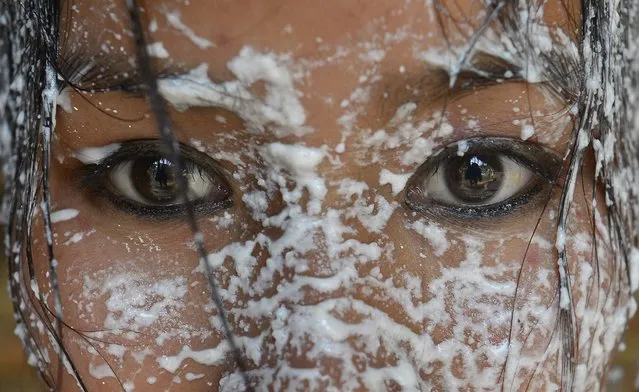
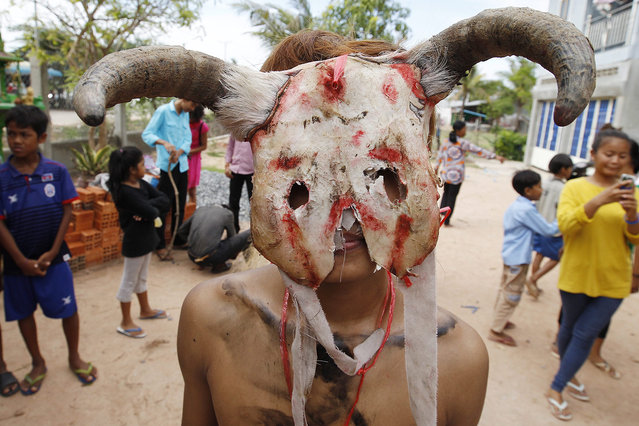
A Cambodian resident wearing a mask attends a ceremony at Pring Ka-Ek village on the outskirts of Phnom Penh, Cambodia, 09 June 2016. Villagers organized a ceremony to continue their local traditions by paying respect to the Neakta Pring Ka-Ek (Spirit house) to prevent them from diseases and to achieve abundant rice harvests and other agricultural yields. (Photo by Mak Remissa/EPA)

A Cambodian resident wearing a mask attends a ceremony at Pring Ka-Ek village on the outskirts of Phnom Penh, Cambodia, 09 June 2016. Villagers organized a ceremony to continue their local traditions by paying respect to the Neakta Pring Ka-Ek (Spirit house) to prevent them from diseases and to achieve abundant rice harvests and other agricultural yields. (Photo by Mak Remissa/EPA)
Details
11 Jun 2016 12:23:00