Loading...
Done
Tian Yi by Oliver Stalmans for Elle Vietnam May 2013

“Memoirs of a Geisha” – For its May 2013 cover story, Elle Vietnam gets inspired by the Japanese-influence of spring collections and Geisha beauty. Model Tian Yi evokes the theme perfectly in a series of images which juxtapose an urban backdrop with the ornate prints and sleek silhouettes of Prada, Dries van Noten, Dior, Thakoon and more selected by stylist Anna Katsanis. Photographer Oliver Stalmans captures the Chinese beauty in this elegant shoot. (Photo by Oliver Stalmans)
Details
15 May 2013 09:06:00
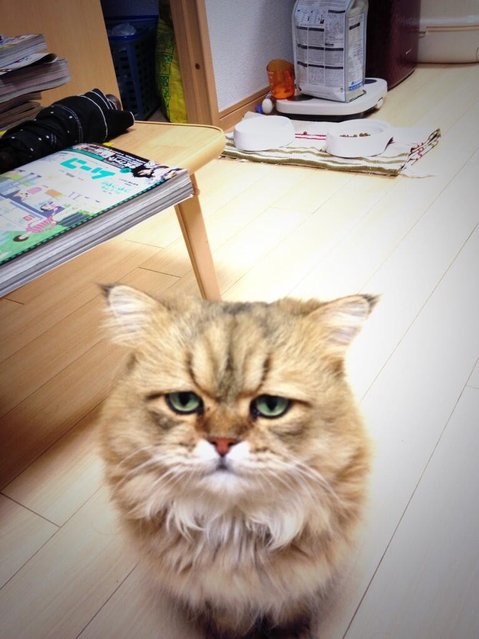
Disappointed Cat aka Foo-Chan

Disappointed Cat aka Foo-Chan is a three-year-old Chinchilla Golden has a heavy-set brow, causing him to appear depressed; his gloomy disposition has gone viral on a Japanese forum, where he's been praised as "cute, but troubled" or "worried all the time".

See also: Grumpy Cat
Details
03 Sep 2013 11:03:00
Makoto Tojiki's Light Sculptures

“Japanese artist and designer Makoto Tojiki innovatively uses light as his primary medium of expression. In his latest exhibition, No Shadow, Tojiki manipulates thousands of small hanging lights to create 3D images of a man and animals. I’m pretty amazed by how the artist is able to “see” the image while meticulously placing the lights. Makoto’s creativity doesn’t stop at light production; he is also involved in jewelry making and furniture design”. (Photos by Ryo Ishihara/Josh Rothman)
Details
10 Apr 2012 13:35:00
Auction Takes Place To Decide The Most Expensive Beef In Hyogo

A cow rests in a pen during the 93rd Hyogo Prefecture Livestock Industry Promoting Event on October 23, 2011 in Kobe, Japan. Hyogo is the center of producing fine beef such as Kobe beef and Tajima beef, and the highest hammer price of the auction was 5,001,000 Japanese yen (65,578.28 U.S. Dollars). Livestock Industry Promoting Event organizing official said, Fukushima nuclear accident and economy crises affected become les the price of Kobe and Tajima beef in this year. (Photo by Buddhika Weerasinghe/Getty Images)
Details
27 Oct 2011 12:01:00
Daruma Dolls

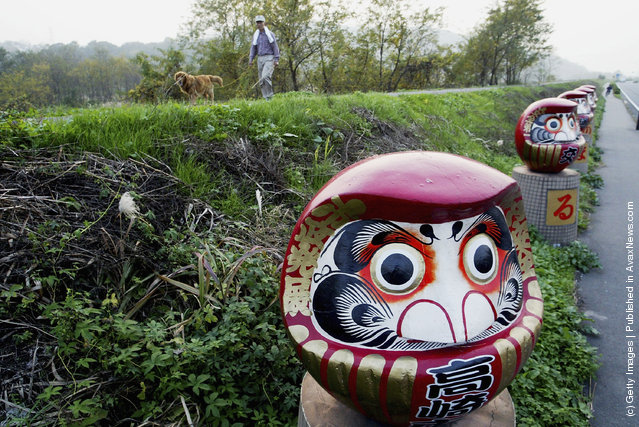
A series of Japanese good luck charms, called “Daruma”, are lined up ahead of the major national elections November 9, 2003 in Takasaki, Japan. The Daruma is said to bring exceptional good luck in all walks of life, but is used especially during election time by all candidates. People think that if they face a difficult situation, as symbolized by the doll that returns to its original position when knocked over, they will always bounce back. (Photo by Koichi Kamoshida/Getty Images)
Details
05 Dec 2011 13:09:00
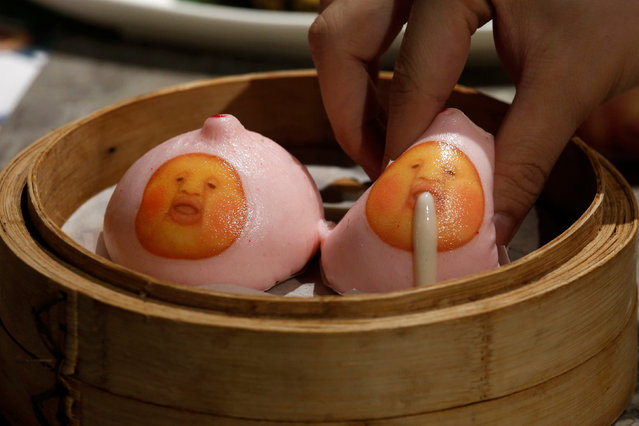
A milk custard bun made to resemble one of the popular Japanese “Kobitos” characters is squeezed during a display for the photographer at Dim Sum Icon restaurant in Hong Kong, China July 25, 2016. A dim sum restaurant in Hong Kong encourages diners to play with their food, and the result will either disgust or delight you. At Dim Sum Icon customers can squeeze a strange creature to poo or vomit on their plate before eating it. Hungry punters poke a hole into the mouth – or the rear – of the dim sum with a chopstick, squeeze it and watch the brown or white cream ooze out. (Photo by Bobby Yip/Reuters)

A milk custard bun made to resemble one of the popular Japanese “Kobitos” characters is squeezed during a display for the photographer at Dim Sum Icon restaurant in Hong Kong, China July 25, 2016. A dim sum restaurant in Hong Kong encourages diners to play with their food, and the result will either disgust or delight you. At Dim Sum Icon customers can squeeze a strange creature to poo or vomit on their plate before eating it. Hungry punters poke a hole into the mouth – or the rear – of the dim sum with a chopstick, squeeze it and watch the brown or white cream ooze out. The unique dim sums are made with a face to resemble Japanese Kobitos characters. (Photo by Bobby Yip/Reuters)
Details
31 Jul 2016 11:25:00
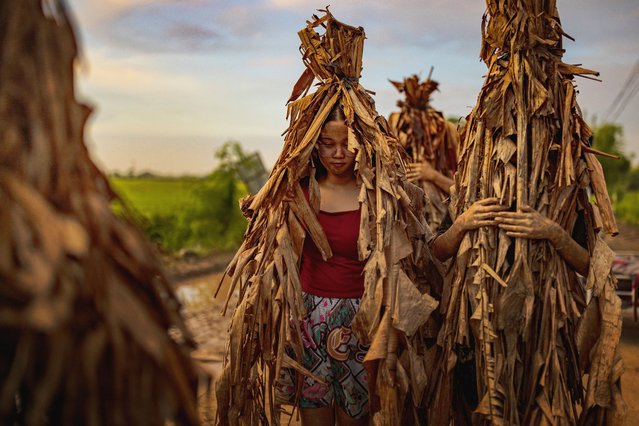
Devotees of the small farming village of Bibiclat celebrate the Feast of Saint John the Baptist while covered in banana leaves and mud on June 24, 2025 in Aliaga, Philippines. Known as the “Taong Putik” (mud people), the ritual happens yearly in this small farming village as their own version of expressing their faith and celebrating the feast of Saint John the Baptist whom the survivors of the Japanese occupation in 1944 in their area prayed to for rain to save their fellow villagers. A marker near the church entrance of the village tells a story of a heavy torrential rain that happened that day that forced the Japanese military to call off the execution of 14 villagers. The Philippines is the only predominantly Catholic country in Southeast Asia after more than 300 years of Spanish rule. (Photo by Ezra Acayan/Getty Images)

Devotees of the small farming village of Bibiclat celebrate the Feast of Saint John the Baptist while covered in banana leaves and mud on June 24, 2025 in Aliaga, Philippines. Known as the “Taong Putik” (mud people), the ritual happens yearly in this small farming village as their own version of expressing their faith and celebrating the feast of Saint John the Baptist whom the survivors of the Japanese occupation in 1944 in their area prayed to for rain to save their fellow villagers. (Photo by Ezra Acayan/Getty Images)
Details
29 Aug 2025 03:18:00
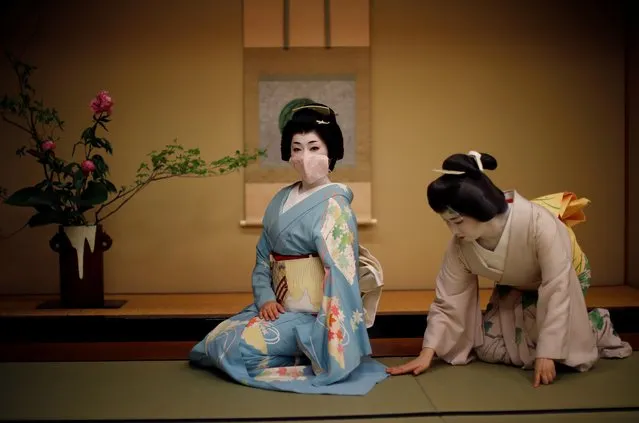
Mayu adjusts Koiku’s kimono, as Koiku wears a protective face mask while posing for a photograph, before they work at a party where they will entertain with other geisha at Japanese luxury restaurant Asada in Tokyo, Japan, June 23, 2020. The coronavirus pandemic has made Tokyo's geisha fear for their centuries-old profession as never before. Though the number of geisha - famed for their witty conversation, beauty and skill at traditional arts - has been falling for years, they were without work for months due to Japan's state of emergency and now operate under awkward social distancing rules. Engagements are down 95 percent, and come with new rules: no pouring drinks for customers or touching them even to shake hands, and sitting 2 meters apart. Masks are hard to wear with their elaborate wigs, so they mostly don't. “I was just full of anxiety”, said Mayu, 47. “I went through my photos, sorted my kimonos ... The thought of a second wave is terrifying”. (Photo by Kim Kyung-Hoon/Reuters)

Mayu adjusts Koiku’s kimono, as Koiku wears a protective face mask while posing for a photograph, before they work at a party where they will entertain with other geisha at Japanese luxury restaurant Asada in Tokyo, Japan, June 23, 2020. (Photo by Kim Kyung-Hoon/Reuters)
Details
23 Jul 2020 00:03:00