Loading...
Done
People in Mexico wave at U.S. Border Patrol agents on horseback patrolling the U.S.-Mexico border fence near San Diego, California, U.S., November 10, 2016. (Photo by Mike Blake/Reuters)

People in Mexico wave at U.S. Border Patrol agents on horseback patrolling the U.S.-Mexico border fence near San Diego, California, U.S., November 10, 2016. (Photo by Mike Blake/Reuters)
Details
12 Jan 2017 11:22:00
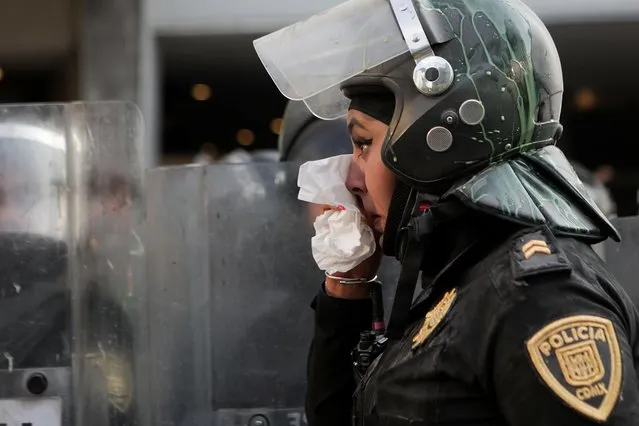
A policewoman uses a tissue during a protest to mark the International Day for the Elimination of Violence Against Women, in Mexico City, Mexico on November 25, 2021. (Photo by Raquel Cunha/Reuters)

A policewoman uses a tissue during a protest to mark the International Day for the Elimination of Violence Against Women, in Mexico City, Mexico on November 25, 2021. (Photo by Raquel Cunha/Reuters)
Details
26 Nov 2021 09:28:00
Members of the LGBT community kiss during a Kissathon to celebrate International Day Against Homophobia, outside Bellas Artes museum in Mexico City, Mexico, May 17, 2016. (Photo by Edgard Garrido/Reuters)

Members of the LGBT community kiss during a Kissathon to celebrate International Day Against Homophobia, outside Bellas Artes museum in Mexico City, Mexico, May 17, 2016. (Photo by Edgard Garrido/Reuters)
Details
19 May 2016 11:36:00
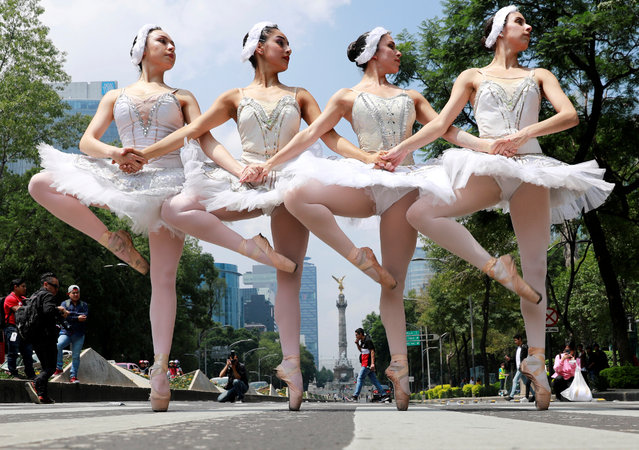
The classical ballet company “Ardentia” performs in the street of Mexico City on traffic lights, in an effort to highlight the city's fine arts in public spaces in Mexico, September 8, 2018. (Photo by Carlos Jasso/Reuters)

The classical ballet company “Ardentia” performs in the street of Mexico City on traffic lights, in an effort to highlight the city's fine arts in public spaces in Mexico, September 8, 2018. (Photo by Carlos Jasso/Reuters)
Details
12 Sep 2018 00:03:00
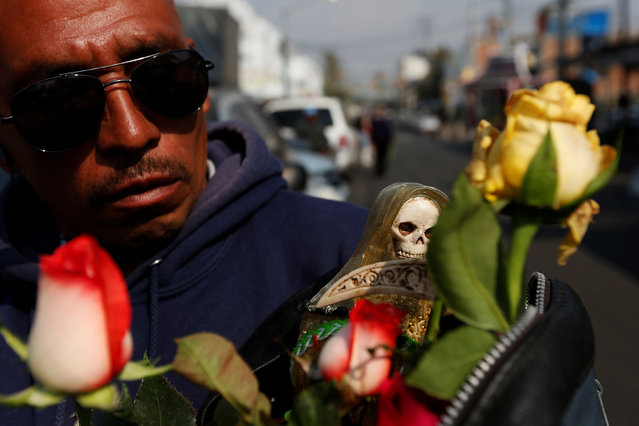
A man carries a figurine of Santa Muerte or The Saint of Death during the first prayer of the New Year in Mexico City, Mexico January 1, 2017. (Photo by Carlos Jasso/Reuters)

A man carries a figurine of Santa Muerte or The Saint of Death during the first prayer of the New Year in Mexico City, Mexico January 1, 2017. Nuestra Señora de la Santa Muerte is a female deity of Mexican folk religion, venerated primarily in Mexico and the Southwestern United States. (Photo by Carlos Jasso/Reuters)
Details
03 Jan 2017 11:23:00
An exotic model poses for photographs at a news conference to promote the “Expo s*x and Eroticism” adult exhibition in Mexico City, Mexico March 1, 2017. (Photo by Carlos Jasso/Reuters)

An exotic model poses for photographs at a news conference to promote the “Expo Sеx and Eroticism” adult exhibition in Mexico City, Mexico March 1, 2017. (Photo by Carlos Jasso/Reuters)
Details
04 Mar 2017 00:01:00
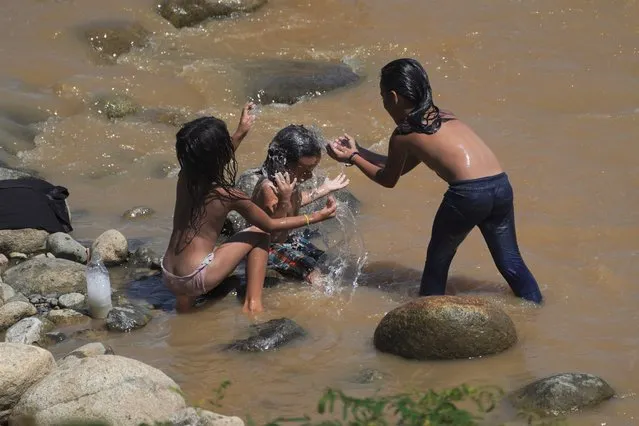
Migrants bathe in the Huixtla River, Chiapas state, Mexico, Tuesday, October 26, 2021, as they take a day of rest before continuing their trek across southern Mexico to the U.S. border. (Photo by Marco Ugarte/AP Photo)

Migrants bathe in the Huixtla River, Chiapas state, Mexico, Tuesday, October 26, 2021, as they take a day of rest before continuing their trek across southern Mexico to the U.S. border. (Photo by Marco Ugarte/AP Photo)
Details
27 Nov 2021 07:34:00
In this December 3, 2013 photo, an Aymara woman cops directs traffic on the streets of El Alto, Bolivia. The women wear the bright petticoats and shawls of indigenous women in the Andes, called cholitas in Bolivian slang, the main difference being that instead of bowler hats they wear khaki green police-style caps. Some don fluorescent traffic vests. (Photo by Juan Karita/AP Photo)

“This city in Bolivia's highlands has hired Aymara women dressed in traditional multilayered Andean skirts and brightly embroidered vests to work as traffic cops and bring order to its road chaos. About 20 of the “traffic cholitas” have been trained to direct cars and buses in El Alto, a teeming, impoverished sister city of La Paz in Bolivia's Andes mountains”. – El Alto via Associated Press. Photo: In this December 3, 2013 photo, an Aymara woman cops directs traffic on the streets of El Alto, Bolivia. The women wear the bright petticoats and shawls of indigenous women in the Andes, called cholitas in Bolivian slang, the main difference being that instead of bowler hats they wear khaki green police-style caps. Some don fluorescent traffic vests. (Photo by Juan Karita/AP Photo)
Details
25 Dec 2013 10:48:00