Loading...
Done
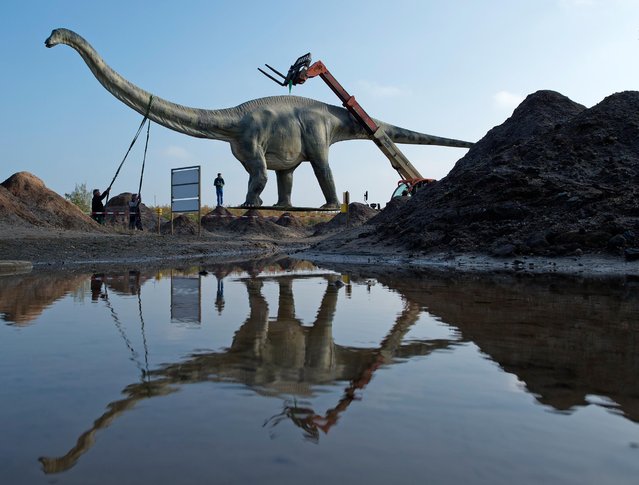
Workers transport a model of a dinosaur  at the exhibition “World of Dinosaurs” at a former lignite surface mining area  in Grosspoesna near Leipzig, central Germany, Wednesday, October 29, 2014. A 100-foot long statue of a dinosaur had to be moved Wednesday because German authorities had deemed it a safety risk. (Photo by Jens Meyer/AP Photo)

Workers transport a model of a dinosaur at the exhibition “World of Dinosaurs” at a former lignite surface mining area in Grosspoesna near Leipzig, central Germany, Wednesday, October 29, 2014. A 100-foot long statue of a dinosaur had to be moved Wednesday because German authorities had deemed it a safety risk. Officials feared the sculpture could cause traffic accidents by distracting drivers on a nearby highway. The reptile, one of 50 species on show in the World of Dinosaurs exhibit near Leipzig, was moved to a less conspicuous position further from the road. (Photo by Jens Meyer/AP Photo)
Details
31 Oct 2014 12:08:00
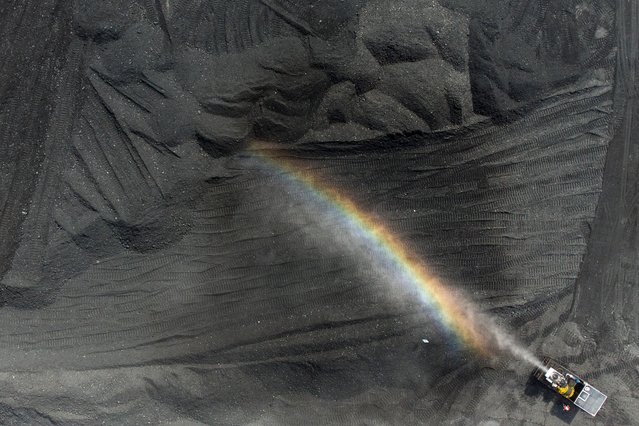
A rainbow forms on water from a spray machine used to suppress coal dust at the Krasnogorsky open pit coal mine, operated by Mechel PJSC, in Mezhdurechensk, Russia, on Monday, July 19, 2021. Russia’s government is betting that coal consumption will continue to rise in big Asian markets like China even as it dries up elsewhere. (Photo by Andrey Rudakov/Bloomberg)

A rainbow forms on water from a spray machine used to suppress coal dust at the Krasnogorsky open pit coal mine, operated by Mechel PJSC, in Mezhdurechensk, Russia, on Monday, July 19, 2021. Russia’s government is betting that coal consumption will continue to rise in big Asian markets like China even as it dries up elsewhere. (Photo by Andrey Rudakov/Bloomberg)
Details
06 Aug 2021 09:39:00
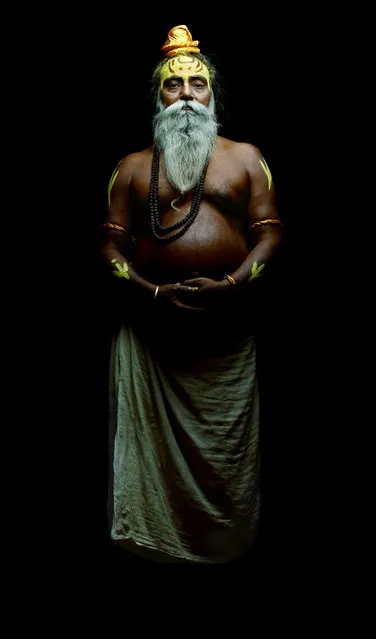
Sadhu Project by Photographer Denis Rouvre

“They’ve been obsessing me for years. I searched and found them in Benares, on the banks of the river Gange (India). They arrive here to get rid of everything and to wait for death. This existence can last for years, sometimes decades, almost a life. Opposite to mine, well organised and filled as a human life can be, to try in vain to push the limits of its end”. – Denis Rouvre. (Photo by Denis Rouvre)
Details
15 Dec 2013 11:12:00
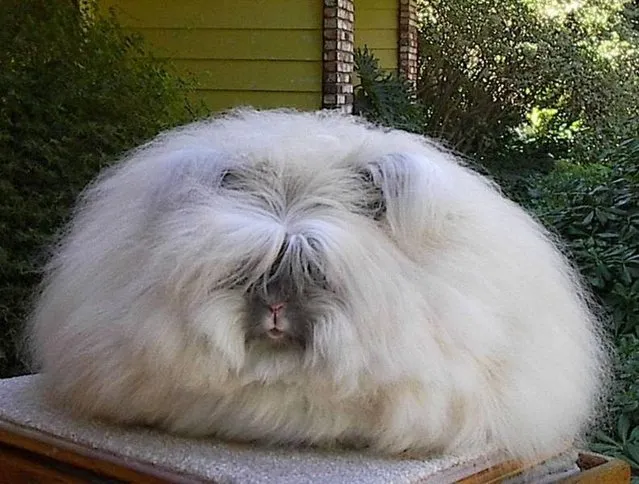
Angora Rabbit

The Angora rabbit is bred a multiplicity of house rabbits for its long, soft hair. The Angora is one of the oldest kinds of house rabbits, with origin in Ankara, Turkey.
Details
09 Oct 2012 08:55:00
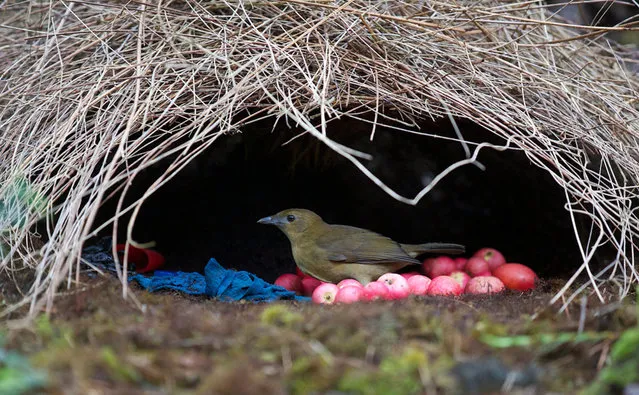
Animal Architects Bowerbirds Design

Turkeys strut, peacocks preen, and bowerbirds design. Of all the strange things that male birds do to attract a mate, the bowerbird's ritual is the only one that could make it into the MoMA. They use two distinct types of "architecture" and have a keen eye for color as well.
Details
05 Mar 2014 12:45:00
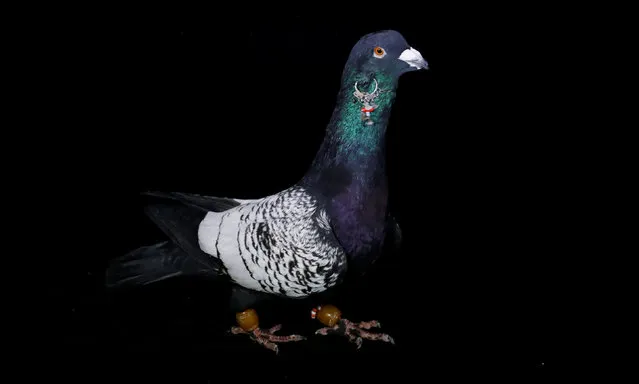
A pigeon, known as Siyah Kinifirli, with an approximate market value of 1000 Turkish Lira ($263), bred by 23-year-old Ismail Ozbek, is pictured in Sanliurfa, Turkey, December 23, 2016. As night-time approaches in Sanliurfa, southeastern Turkey, most of the alleyways of the city's old bazaar are emptying out of buyers and vendors, except for one. The bustle of daytime trading has died down, but on this little street, a stream of men carry cardboard boxes filled with pigeons to a cluster of three teahouses. Here, they sell the birds at Sanliurfa's famed auctions to a dedicated band of pigeon keepers and breeders, a pastime that has been thriving for hundreds of years across the region and over the nearby border into war-torn Syria. In a country where the minimum wage is about 1,400 Liras ($367) a month, enthusiasts regularly easily spend hundreds of dollars for one bird. “I once sold a pair of pigeons for 35,000 Turkish Lira”, says auctioneer Imam Dildas. “This is a passion, a hobby you cannot quit. I've been known to sell the fridge and my wife's gold bracelets to pay for pigeons”. (Photo by Umit Bektas/Reuters)

A pigeon, known as Siyah Kinifirli, with an approximate market value of 1000 Turkish Lira ($263), bred by 23-year-old Ismail Ozbek, is pictured in Sanliurfa, Turkey, December 23, 2016. As night-time approaches in Sanliurfa, southeastern Turkey, most of the alleyways of the city's old bazaar are emptying out of buyers and vendors, except for one. (Photo by Umit Bektas/Reuters)
Details
17 Jan 2017 12:05:00
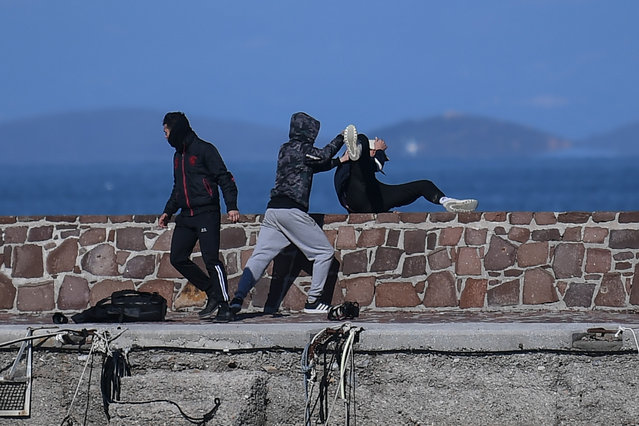
A journalist (R) is attacked by residents who are trying to prevent migrants from disembarking on the Greek island of Lesbos, on March 1, 2020. The United Nation called on March 1 for calm and urged states to refrain from “excessive” force, as thousands of migrants have flooded to Turkey's border with Greece in a bid to enter the EU. A massive influx of migrants swelled along the border over the weekend after Turkey's President Recep Tayyip Erdogan threatened to open its frontier to Europe as tensions mount over its deepening conflict in Syria. (Photo by AFP Photo/Stringer)

A journalist (R) is attacked by residents who are trying to prevent migrants from disembarking on the Greek island of Lesbos, on March 1, 2020. The United Nation called on March 1 for calm and urged states to refrain from “excessive” force, as thousands of migrants have flooded to Turkey's border with Greece in a bid to enter the EU. A massive influx of migrants swelled along the border over the weekend after Turkey's President Recep Tayyip Erdogan threatened to open its frontier to Europe as tensions mount over its deepening conflict in Syria. (Photo by AFP Photo/Stringer)
Details
03 Mar 2020 00:07:00
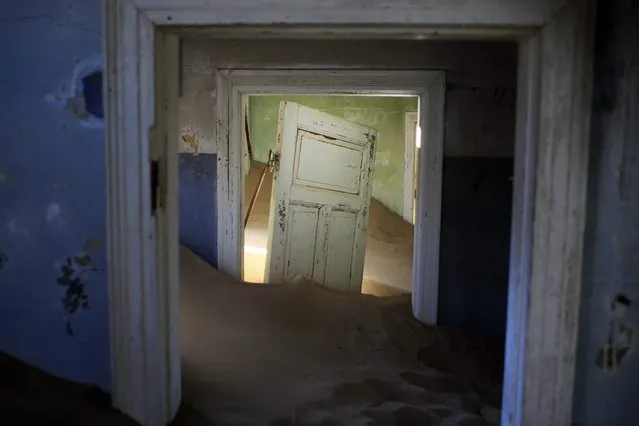
In this July 23, 2013 photo, sand fills an abandoned house in Kolmanskop, Namibia. Kolmanskop, was a diamond mining town south of Namibia, build in 1908 and deserted in 1956. SInce then, the desert slowly reclaims its territory, with sand invading the buildings where 350 German colonists and more than 800 local workers lived during its hay-days of the 1920s. (Photo by Jerome Delay/AP Photo)

In this July 23, 2013 photo, sand fills an abandoned house in Kolmanskop, Namibia. Kolmanskop, was a diamond mining town south of Namibia, build in 1908 and deserted in 1956. SInce then, the desert slowly reclaims its territory, with sand invading the buildings where 350 German colonists and more than 800 local workers lived during its hay-days of the 1920s. (Photo by Jerome Delay/AP Photo)
Details
14 Nov 2014 14:34:00