Loading...
Done
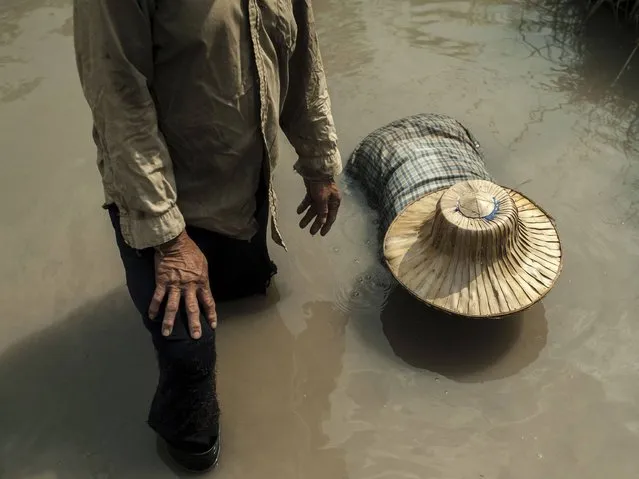
The workers begin to search for gold at 10 am and work until sunset, often working second jobs in the day in order to survive. (Photo by Borja Sanchez-Trillo/Getty Images)

Two workers shovel mud from the river as they look for gold on March 25, 2014 in Lampang, Thailand. Thai villagers from Wang Nuea, North of Thailand, look for gold in the river every year during the drought season. They are able to make an average around USD 15 per day, however two years ago they reached USD 200 in one day due to the river level dropping so much. The workers begin to search for gold at 10 AM and work until sunset, often working second jobs in the day in order to survive. (Photo by Borja Sanchez-Trillo/Getty Images)
Details
27 Mar 2014 06:09:00
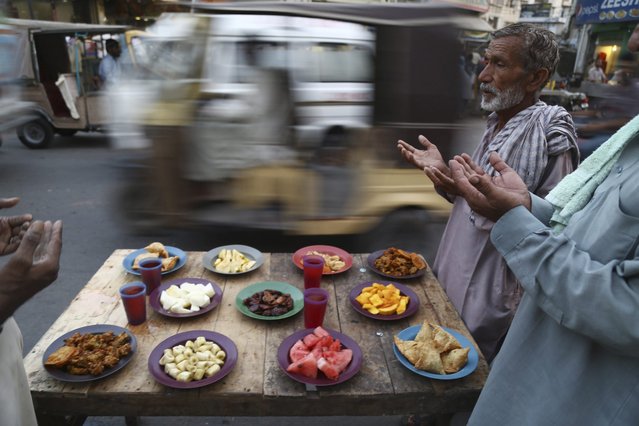
A picture made available on 20 June 2016 shows people praying as they wait to break the fast during the Muslim holy month of Ramadan, in Karachi, Pakistan, 19 June 2016. Muslims around the world celebrate the holy month of Ramadan by praying during the night time and abstaining from eating and drinking during the period between sunrise and sunset. Ramadan is the ninth month in the Islamic calendar and it is believed that the Koran's first verse was revealed during its last 10 nights. (Photo by Shahzaib Akber/EPA)

A picture made available on 20 June 2016 shows people praying as they wait to break the fast during the Muslim holy month of Ramadan, in Karachi, Pakistan, 19 June 2016. Muslims around the world celebrate the holy month of Ramadan by praying during the night time and abstaining from eating and drinking during the period between sunrise and sunset. Ramadan is the ninth month in the Islamic calendar and it is believed that the Koran's first verse was revealed during its last 10 nights. (Photo by Shahzaib Akber/EPA)
Details
01 Jul 2016 12:21:00
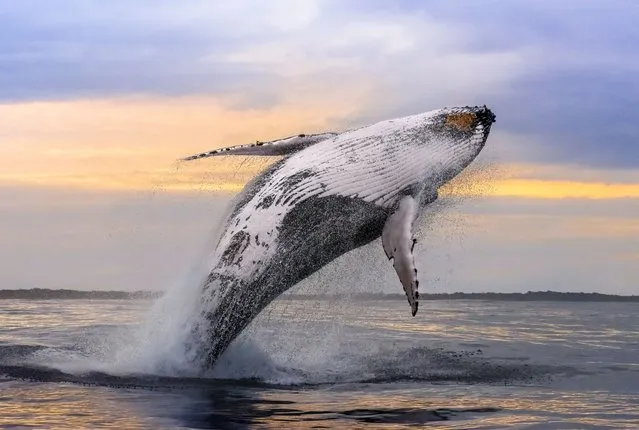
A 40-tonne humpback launching out of the water in an incredible breach in New South Wales, Australia on October 2022 in front of a sunset. The humpback whale can grow up to 56 feet long and typically covers 9,900 miles a year as it travels through the oceans of the world. Humpback whales are a species of Baleen whale, meaning they don't have teeth. Instead, they have baleen which helps them to filter feed. Their main source of food is krill or tiny bait fish. (Photo by Jodie Lowe/Media Drum Images)

A 40-tonne humpback launching out of the water in an incredible breach in New South Wales, Australia on October 2022 in front of a sunset. The humpback whale can grow up to 56 feet long and typically covers 9,900 miles a year as it travels through the oceans of the world. Humpback whales are a species of Baleen whale, meaning they don't have teeth. Instead, they have baleen which helps them to filter feed. Their main source of food is krill or tiny bait fish. (Photo by Jodie Lowe/Media Drum Images)
Details
30 Oct 2022 04:28:00
Olga Conover of Palm Bay, Fla., walks down the bridge at sunset carrying her merged American-Ukraine flag near the end of a march marking the one-year anniversary of Russia invading Ukraine,  late Thursday afternoon, February 23, 2022, in Melbourne, Fla. A small but passionate group of Ukraine supporters took the Melbourne Causeway to show their support, organized by the Ukrainian Space Coast group. (Photo by Malcolm Denemark/Florida Today via AP Photo)

Olga Conover of Palm Bay, Fla., walks down the bridge at sunset carrying her merged American-Ukraine flag near the end of a march marking the one-year anniversary of Russia invading Ukraine, late Thursday afternoon, February 23, 2022, in Melbourne, Fla. A small but passionate group of Ukraine supporters took the Melbourne Causeway to show their support, organized by the Ukrainian Space Coast group. (Photo by Malcolm Denemark/Florida Today via AP Photo)
Details
28 Feb 2023 05:08:00
“Cassowaries are large, flightless birds related to emus and (more distantly) to ostriches, rheas, and kiwis”, writes Olivia Judson in the September issue of National Geographic magazine. (Photo by Christian Ziegler/National Geographic)

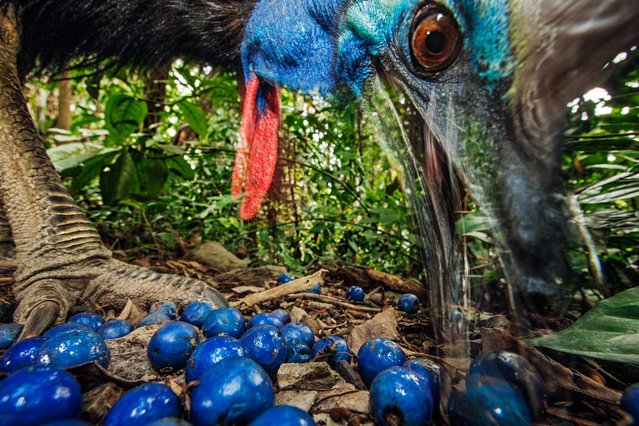
“Cassowaries are large, flightless birds related to emus and (more distantly) to ostriches, rheas, and kiwis”, writes Olivia Judson in the September issue of National Geographic magazine. How large? People-size: Adult males stand well over five foot five and top 110 pounds. Females are even taller, and can weigh more than 160 pounds. Dangerous when roused, they’re shy and peaceable when left alone. But even birds this big and tough are prey to habitat loss. The dense New Guinea and Australia rain forests where they live have dwindled. Today cassowaries might number 1,500 to 2,000. And because they help shape those same forests – by moving seeds from one place to another – “if they vanish”, Judson writes, “the structure of the forest would gradually change” too. (Photo by Christian Ziegler/National Geographic)
Details
06 Jan 2014 12:21:00
Floods Continue To Ravage Parts Of Thailand

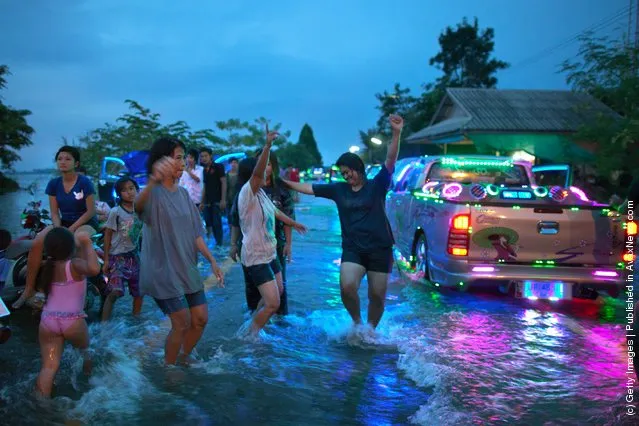
Thai residents party after sunset in the water on a flooded street along the swollen Yom river August 24, 2011 Phinchit, Thailand. The death toll has climbed to over 37 as 13 provinces remain flooded with 1.5 million affected. In Phinchit 110,000 people's homes have been flooded by nearby overflowing rivers. (Photo by Paula Bronstein /Getty Images)
Details
25 Aug 2011 12:37:00
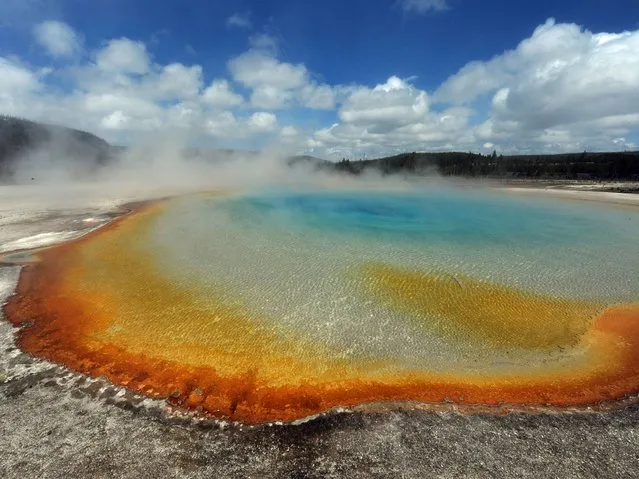
View of the “Sunset Lake” hot spring with it's unique colors caused by brown, orange and yellow algae-like bacteria called Thermophiles, that thrive in the cooling water turning the vivid aqua-blues to a murkier greenish brown, in the Yellowstone National Park, Wyoming on June 1, 2011. (Photo by Mark Ralston/AFP Photo)

View of the “Sunset Lake” hot spring with it's unique colors caused by brown, orange and yellow algae-like bacteria called Thermophiles, that thrive in the cooling water turning the vivid aqua-blues to a murkier greenish brown, in the Yellowstone National Park, Wyoming on June 1, 2011. Yellowstone National Park, was established by the U.S. Congress and signed into law by President Grant on March 1, 1872. The park is located primarily in the U.S. state of Wyoming, though it also extends into Montana and Idaho and was the first national park in the world. It is known for its wildlife and its many geothermal features, especially the Old Faithful Geyser. (Photo by Mark Ralston/AFP Photo)
Details
06 Apr 2014 08:02:00
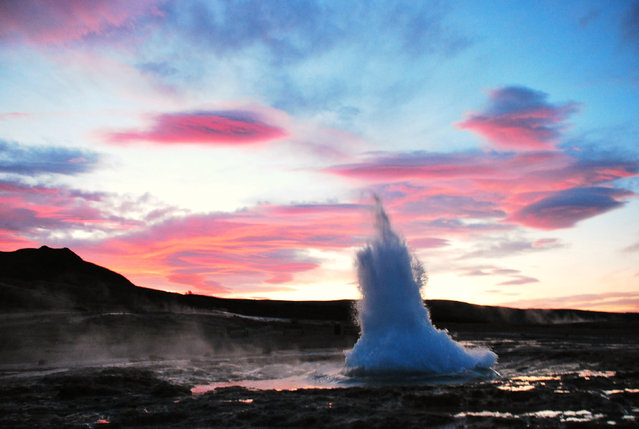
Strokkur geyser against cloudy sky at sunset. Strokkur is a fountain geyser located in a geothermal area beside the Hvítá River in Iceland in the southwest part of the country, east of Reykjavík. It is one of Iceland's most famous geysers, erupting once every 6–10 minutes. Its usual height is 15–20 m, although it can sometimes erupt up to 40 m high. (Photo by Teatsche Dijkhuis/Getty Images/EyeEm)

Strokkur geyser against cloudy sky at sunset. Strokkur is a fountain geyser located in a geothermal area beside the Hvítá River in Iceland in the southwest part of the country, east of Reykjavík. It is one of Iceland's most famous geysers, erupting once every 6–10 minutes. Its usual height is 15–20 m, although it can sometimes erupt up to 40 m high. (Photo by Teatsche Dijkhuis/Getty Images/EyeEm)
Details
18 Oct 2016 12:43:00