Loading...
Done
An Okinawan woman in a kimono checks her phone before attending a ceremony on Coming of Age Day on January 13, 2019 in Okinawa City, Japan. Coming of Age Day is a Japanese holiday held every January to celebrate people who have reached 20 – the official age of adulthood in Japan. Despite being a solemn affair in some parts of Japan, Okinawans have become known for their flamboyant and occasionally boisterous celebrations. (Photo by Carl Court/Getty Images)

An Okinawan woman in a kimono checks her phone before attending a ceremony on Coming of Age Day on January 13, 2019 in Okinawa City, Japan. Coming of Age Day is a Japanese holiday held every January to celebrate people who have reached 20 – the official age of adulthood in Japan. Despite being a solemn affair in some parts of Japan, Okinawans have become known for their flamboyant and occasionally boisterous celebrations. (Photo by Carl Court/Getty Images)
Details
15 Jan 2019 00:05:00
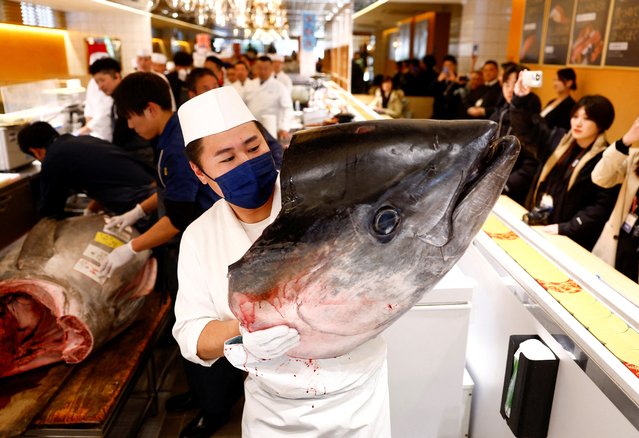
The head of a 276-kilogram bluefin tuna that was auctioned for 207 million Japanese yen (about 1.3 million U.S. dollars), which was bought jointly by sushi restaurant operator Onodera Group and wholesaler Yamayuki, is carried by a sushi chef at an Onodera sushi restaurant after the first tuna auction of the New Year in Tokyo, Japan on January 5, 2025. (Photo by Issei Kato/Reuters)

The head of a 276-kilogram bluefin tuna that was auctioned for 207 million Japanese yen (about 1.3 million U.S. dollars), which was bought jointly by sushi restaurant operator Onodera Group and wholesaler Yamayuki, is carried by a sushi chef at an Onodera sushi restaurant after the first tuna auction of the New Year in Tokyo, Japan on January 5, 2025. (Photo by Issei Kato/Reuters)
Details
08 Jan 2025 03:59:00


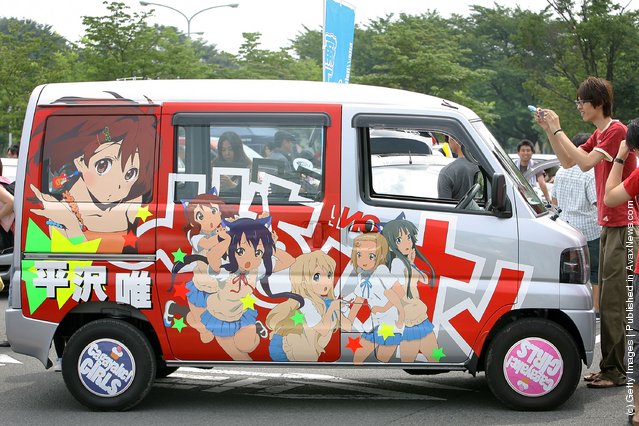
“Itasha (痛車), literally “painmobile”, is a Japanese term for an otaku fad of individuals decorating the bodies of their cars with fictional characters of anime, manga, or video games (especially bishōjo game or eroge). These characters are predominately “cute” female. The decorations usually involve paint schemes and stickers. Automobiles are called Itasha, while similar motorcycles and bicycles are called itansha (痛単車) and itachari (痛チャリ), respectively”. – Wikipedia


Photo: A visitor takes pictures of an anime-decorated «Itasha» car displayed during the “Moe Fes in Washimiya” at Washimiya Town Hall on July 18, 2009 in Washimiya, Saitama, Japan. Itasha, a word derived from “itai” (painful) and “sha” (car), are vehicles decorated with mostly female characters from Japanese manga, anime and video games. (Photo by Kiyoshi Ota/Getty Images)
Details
02 May 2011 08:38:00
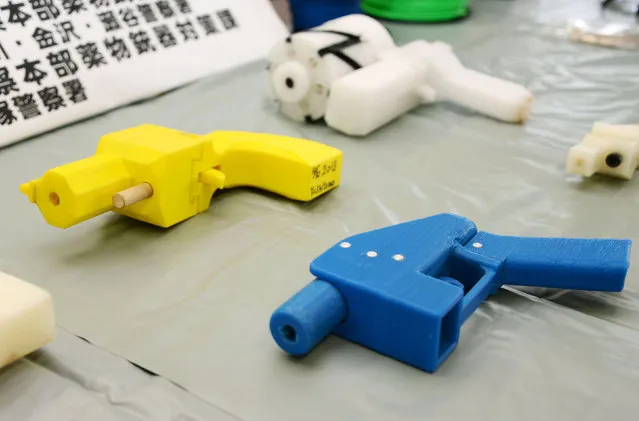
Seized plastic handguns which were created using 3D printing technology are displayed at Kanagawa police station in Yokohama, south of Tokyo, in this photo taken by Kyodo May 8, 2014. (Photo by Reuters/Kyodo)

Seized plastic handguns which were created using 3D printing technology are displayed at Kanagawa police station in Yokohama, south of Tokyo, in this photo taken by Kyodo May 8, 2014. Yoshimoto Imura became the first man to be arrested in Japan for illegal possession of two guns he created himself using 3D printing technology, Japanese media said on Thursday. The 27-year-old, a college employee in the city of Kawasaki, was arrested after police found video online posted by Imura claiming to have produced his own guns. Gun possession is strictly regulated in Japan. Police raided Imura's home and found five guns, two of which could fire real bullets, Japanese media said. (Photo by Reuters/Kyodo)
Details
12 May 2014 10:46:00
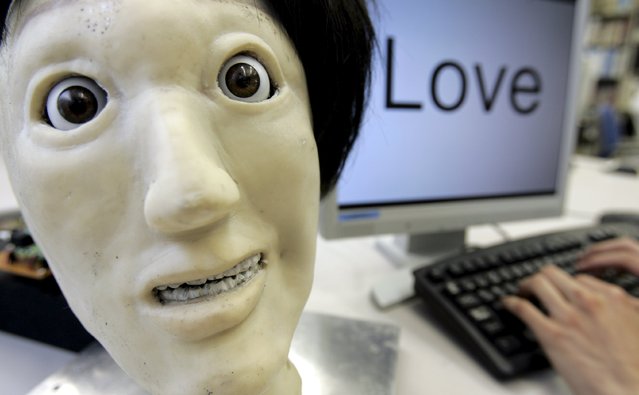
A humanoid robot named Kansei, meaning “sensibility” in Japanese, makes a facial expression depicting “happiness”, next to the word “Love” during a demonstration at a laboratory of Meiji University's Robot and Science Institute in Kawasaki, south of Tokyo in this June 4, 2007 file photo. (Photo by Yuriko Nakao/Reuters)

A humanoid robot named Kansei, meaning “sensibility” in Japanese, makes a facial expression depicting “happiness”, next to the word “Love” during a demonstration at a laboratory of Meiji University's Robot and Science Institute in Kawasaki, south of Tokyo in this June 4, 2007 file photo. Three-fourths of robot installations over the next decade are expected to be concentrated in four areas: transportation equipment, including the automotive sector; computer and electronic products; electrical equipment and machinery. Labor costs have climbed in countries such as China that have been popular for outsourcing production, while technological advances for robots allow them to be more flexible and perform more tasks. (Photo by Yuriko Nakao/Reuters)
Details
17 Apr 2015 09:39:00
Winton Elementary fifth graders Juliana Ragan, from left, Chloe Windsor and Paisley Ganske wait backstage for their turn to perform as the Andrew Sisters during the Pearl Harbor/Veterans assembly at the school on Monday, December 7, 2015, in Coeur d'Alene, Idaho. Dec. 7 is the 74th anniversary of the Japanese bombing of Pearl Harbor. (Photo by Kathy Plonka/The Spokesman-Review via AP Photo)

Winton Elementary fifth graders Juliana Ragan, from left, Chloe Windsor and Paisley Ganske wait backstage for their turn to perform as the Andrew Sisters during the Pearl Harbor/Veterans assembly at the school on Monday, December 7, 2015, in Coeur d'Alene, Idaho. Dec. 7 is the 74th anniversary of the Japanese bombing of Pearl Harbor. (Photo by Kathy Plonka/The Spokesman-Review via AP Photo)
Details
08 Dec 2015 11:00:00
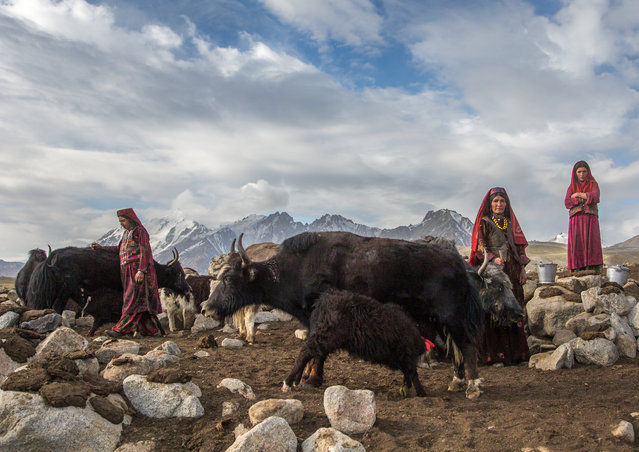
Wakhi nomad women milk yaks in Wakhan, Afghanistan. About 12,000 villagers live at an altitude of 4,500 metres in the harsh, desolate terrain. The Wakhi people live a simple, relaxed life with their livestock. (Photo by Eric Lafforgue/Barcroft Images)

Wakhi nomad women milk yaks in Wakhan, Afghanistan. About 12,000 villagers live at an altitude of 4,500 metres in the harsh, desolate terrain. The Wakhi people live a simple, relaxed life with their livestock. (Photo by Eric Lafforgue/Barcroft Images)
Details
12 Oct 2016 10:13:00
Factory landlord Lawrence Taylor (L), portraying a Colour Sergeant from the King's Royal Rifle Corps, part of the Rifles Living History Society, performs a drill with Connor Young (R) of the Queen's Own Royal West Kent Regiment Living History Group as they recreate the life of a First World War soldier at the Eden Valley Museum in Edenbridge in southeast England May 10, 2014. (Photo by Luke MacGregor/Reuters)

Factory landlord Lawrence Taylor (L), portraying a Colour Sergeant from the King's Royal Rifle Corps, part of the Rifles Living History Society, performs a drill with Connor Young (R) of the Queen's Own Royal West Kent Regiment Living History Group as they recreate the life of a First World War soldier at the Eden Valley Museum in Edenbridge in southeast England May 10, 2014. Lawrence has always had an interest in military history and specifically “The Rifles” – his veteran father's WWII regiment. When he became a re-enactor he chose not to re-enact WWII as many of the veterans are still alive, and he felt uncomfortable as he remembers his father would have flashbacks and nightmares about the war. United by a fascination with military history and a fondness for dressing up, groups such as the Rifles Living History Society and the Queen's Own Royal West Kent Regiment Living History Group get together to recreate aspects of life during the First World War. Reuters photographer Luke MacGregor photographed members of the groups, both as they took part in living history events and at their day jobs. (Photo by Luke MacGregor/Reuters)
Details
26 Aug 2014 10:12:00