Hundreds of hardy swimmers across Britain braved jumping into freezing cold waters for a annual Christmas Day dip on December 25, 2017. (Photo by Dave Nelson/The Sun)
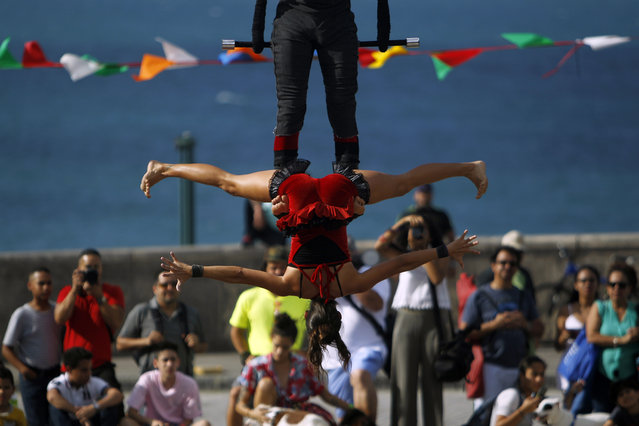
Members of the SubCielo company perform during the fifth annual Puerto Rico Circo Fest in San Juan, Puerto Rico, Saturday, March 10, 2018. The festival is held simultaneously in several spots on the streets of the Old San Juan city on March 10–11. (Photo by Ricardo Arduengo/AFP Photo)
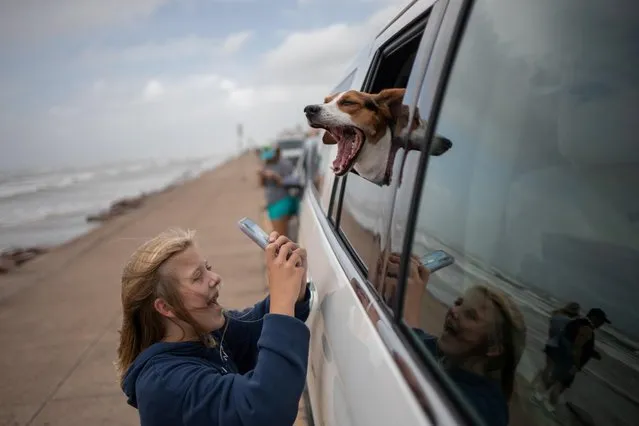
Galveston resident Charlotte, 12, photographs her two-year-old beagle Sunny who reacts to high wind ahead of Hurricane Laura in Galveston, Texas, U.S., August 26, 2020. (Photo by Adrees Latif/Reuters)
A man carries away an injured girl while walking through debris past in the Achrafiyeh district in the centre of Lebanon's capital Beirut on August 4, 2020, following an explosion at the nearby port of Beirut. (Photo by The Mega Agency/Stringer)
An OV-10 Bronco aircraft, decorated with World War One commemoration motifs, flies over Flanders international airport, ahead of the world's first Short Take Off & Landing competition on sand, in Wevelgem, Belgium May 8, 2018. (Photo by Francois Lenoir/Reuters)
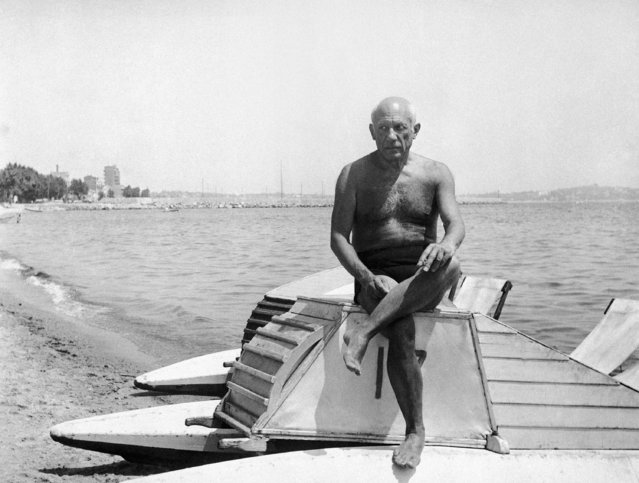
Pablo Picasso, famed 66-year-old Spanish artist who has lived most of his life in France, suns himself on a boat on the beach at Golfe Juan in Vallauris on the French Riviera on March 10, 1948. Entering a new period in his varied artistic career, Picasso has turned to painting pottery at the nearby town of Vallauris. (Photo by AP Photo)
Television personality Farrah Abraham (C) enjoys adult entertainment as she hosts the VIP Back Door Key party at the Crazy Horse III Gentlemen's Club on August 4, 2017 in Las Vegas, Nevada. The newly launched VIP membership program offers patrons exclusive entrance to the club through the back door. (Photo by Bryan Steffy/WireImage)
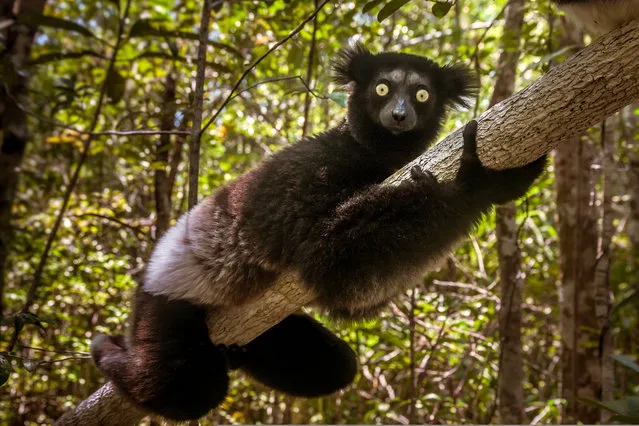
The secretive indri (Indri indri) of Madagascar, the largest living lemur. It is also critically endangered and highly evolutionarily distinct with no close relatives, which makes its branch one of most precarious on the mammal evolutionary tree. In the likely event that the indri goes extinct, we will lose 19m years of unique evolutionary history from the mammal tree of life. (Photo by Pierre-Yves Babelon/Aarhus University)