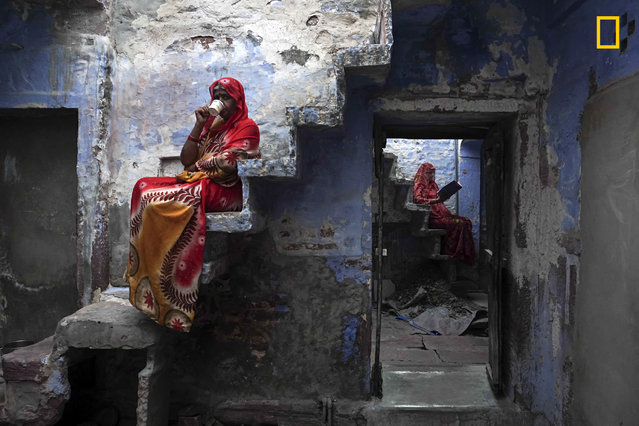
“These Rajasthani sisters were sitting on the staircase inside their house relaxing and enjoy a cup of masala chai”. (Photo by Firdaus Hadzri/National Geographic Travel Photographer of the Year Contest)
Dressed a Royal Canadian Mounted Police officer, Stephane Delage carries a Canadian flag while on stilts as he entertains the crowd during Canada Day festivities in Vancouver, B.C., on Monday, July 1, 2013. (Photo by Darryl Dyck/The Canadian Press)
An unmanned Falcon 9 SpaceX rocket lifts off from launch complex 40 at the Cape Canaveral Air Force Station, Wednesday, February 11, 2015, in Cape Canaveral, Fla. On board is the Deep Space Climate Observatory, which will head toward a solar-storm lookout point a million miles away. (Photo by John Raoux/AP Photo)
Animal rights activists covered with fake blood sit on the floor during a protest against the use of animals in research to mark World Day for Animals in Laboratories in central Madrid April 24, 2014. The sign reads, “How many rabbits do your shampoo kill?”. (Photo by Andrea Comas/Reuters)
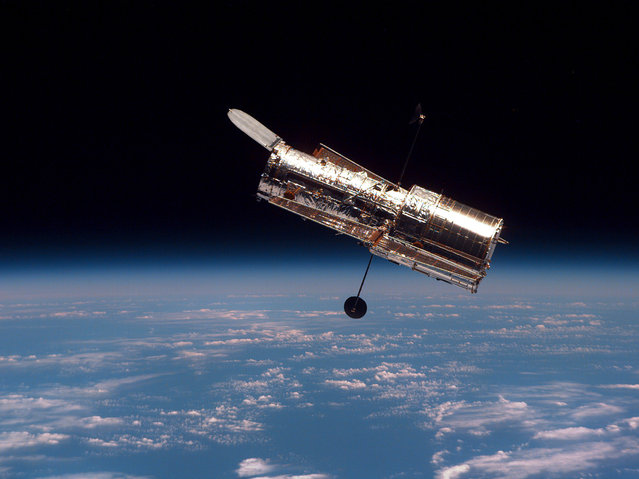
The Hubble Space Telescope is shown following its release from the space shuttle Discovery Wednesday, February 19, 1997. The Hubble Space Telescope, one of NASA'S crowning glories, marks its 25th anniversary on Friday, April 24, 2015. With more than 1 million observations, including those of the farthest and oldest galaxies ever beholden by humanity, no man-made satellite has touched as many minds or hearts as Hubble. (Photo by AP Photo/NASA)
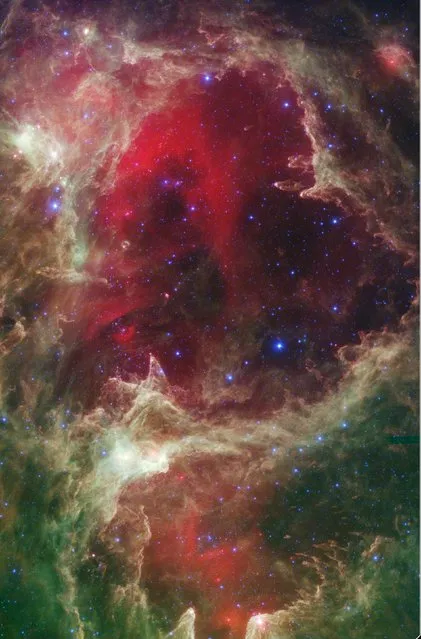
An infrared portrait from NASA's Spitzer Space Telescope which shows generations of stars is seen in this undated NASA handout image released February 14, 2013. In this wispy star-forming region, called W5, the oldest stars can be seen as blue dots in the centers of the two hollow cavities (other blue dots are background and foreground stars not associated with the region). Red shows heated dust that pervades the region's cavities, while green highlights dense clouds. (Photo by NASA/Reuters/JPL-Caltech/Harvard-Smithsonian/Handout)
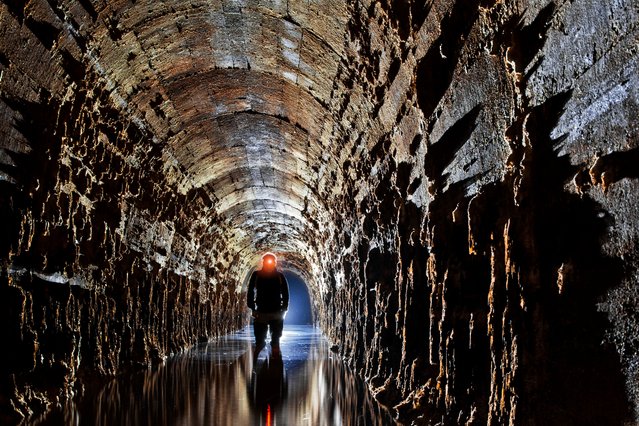
Stunning silhouettes under European cities reveal the size and splendor of the continent’s urban foundations. Photographer and content-manager Anna Arinova, 28, from Moscow, captured the awe-inspiring labyrinths in Russia and Germany. Here: Regenwurmlager, Poland. The Regenwurmlager is an extensive underground fortification area constructed by Germany in 1920s-1940s, now in western Poland, near the city of Międzyrzecz. (Photo by Anna Arinova/Caters News)
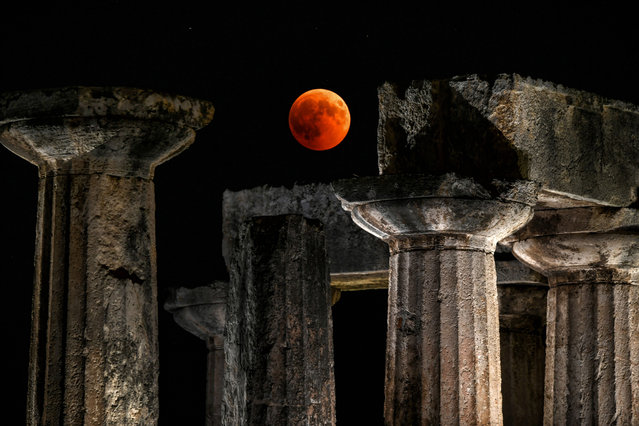
A picture shows the full moon during a “blood moon” eclipse over the temple of Apollo in Corinth on July 27, 2018. The longest “blood moon” eclipse this century began on July 27, coinciding with Mars' closest approach in 15 years to treat skygazers across the globe to a thrilling celestial spectacle. (Photo by Valerie Gache/AFP Photo)