Loading...
Done
The “Lost” Steve Jobs Time Capsule

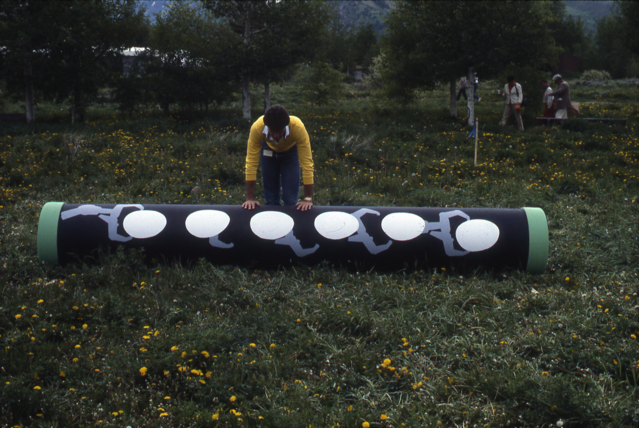
In 1983, Steve Jobs and his team who were attending a conference in Aspen, decided to bury a capsule that could be opened by future generations or roughly twenty years later. However, they forgot where the capsule was buried and therefore could not follow through with this plan. Recently, National Geographic’s TV Show, “Diggers” inadvertently discovered the capsule.
Details
24 Sep 2013 10:58:00
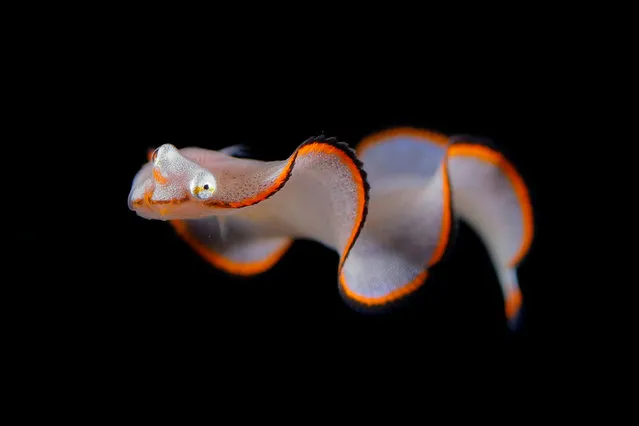
Batesian mimicry by a Soleichthys fish larva. (Photo by Ryo Minemizu/The Guardian)

Ryo Minemizu, one of Japan’s emerging stars in the field of marine life photography and the 2017 winner of the Nikkei National Geographic photography prize, captures the beauty and complexity of plankton that drift in our planet’s oceans and other bodies of water in meticulous detail. Here: Batesian mimicry by a Soleichthys fish larva. (Photo by Ryo Minemizu/The Guardian)
Details
21 Aug 2018 00:05:00
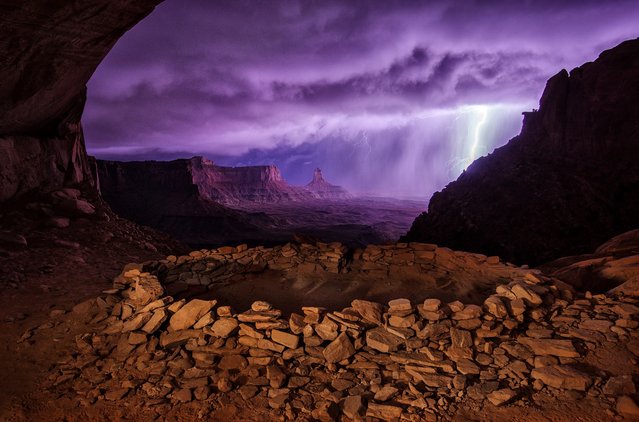
Second Place Winner: “Thunderstorm at False Kiva”. I hiked out to these ruins at night hoping to photograph them with the Milky Way, but instead a thunderstorm rolled through, creating this dramatic image. – Max Seigal. (Photo and caption by Max Seigal/National Geographic Traveler Photo Contest)

Second Place Winner: “Thunderstorm at False Kiva”. I hiked out to these ruins at night hoping to photograph them with the Milky Way, but instead a thunderstorm rolled through, creating this dramatic image. – Max Seigal. National Geographic Traveler Director of Photography Dan Westergren, one of this year's judges, shares his thoughts on the second place winner: “This photo combines two different scenes into one: the small kiva in a cliff dwelling and the grand vista of Canyonlands National Park across the valley. I really like the two different color palettes – warm inside and purple outside. This two-for-one scene was caused by the lightning storm outside the dwelling, which lit up the landscape like it was a huge electronic flash. Looking at this picture I can imagine what a wonderful sight it must have been for the ancient people who lived here. It doesn't seem too amazing now in our modern world, but might have been mind-blowing for the prehistoric residents”. Location: Utah. (Photo and caption by Max Seigal/National Geographic Traveler Photo Contest)

Details
02 Aug 2013 06:16:00
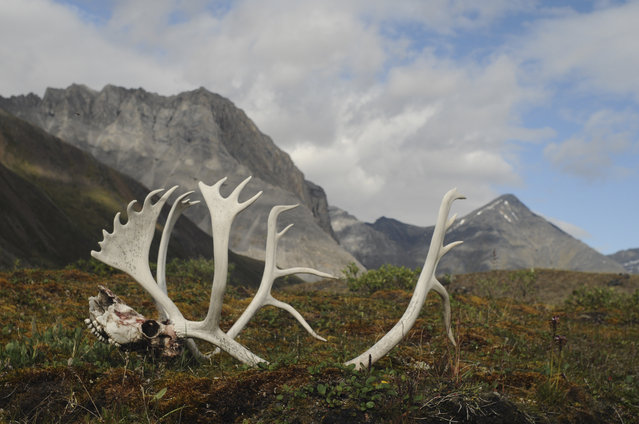
In this August 1, 2014 photo provided by the National Park Service are male caribou antlers in the Oolah Valley, likely the result of a grizzly kill as he migrated south for the winter at the Arctic National Park and Preserve in Alaska. The nation's northernmost national park says its new management plan will have to consider the effects of a new industrial road to the mining district of Ambler, the first road that would be constructed within its Maryland-sized boundaries. (Photo by Cadence Cook/AP Photo/National Park Service)

In this August 1, 2014 photo provided by the National Park Service are male caribou antlers in the Oolah Valley, likely the result of a grizzly kill as he migrated south for the winter at the Arctic National Park and Preserve in Alaska. The nation's northernmost national park says its new management plan will have to consider the effects of a new industrial road to the mining district of Ambler, the first road that would be constructed within its Maryland-sized boundaries. (Photo by Cadence Cook/AP Photo/National Park Service)
Details
03 Sep 2016 09:54:00
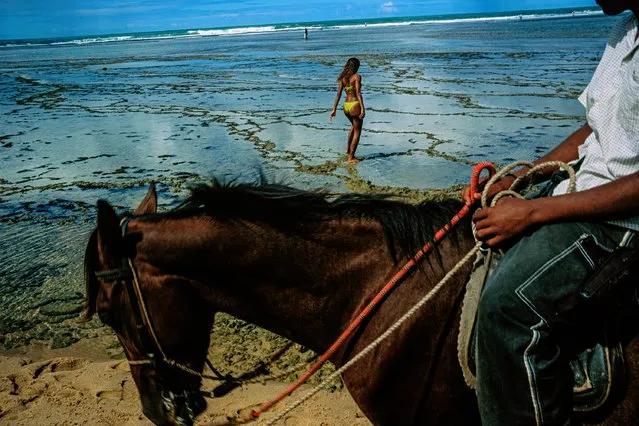
Praia du Forte, Bahia. “This was the lead picture for a National Geographic story on Bahia, because it was both mysterious as well as a “geography” picture showing where the slaves arrived from Nigeria. Beach pictures seem like they should be easy to take, but for me they are actually quite difficult. Too easy to fall into cliche. When I saw the kid coming on the horse, I quickly ran to see if I could make something with a woman in a bikini that was not a bikini shot”. (Photo by David Alan Harvey/The Guardian)

Praia du Forte, Bahia. “This was the lead picture for a National Geographic story on Bahia, because it was both mysterious as well as a “geography” picture showing where the slaves arrived from Nigeria. Beach pictures seem like they should be easy to take, but for me they are actually quite difficult. Too easy to fall into cliche. When I saw the kid coming on the horse, I quickly ran to see if I could make something with a woman in a bikini that was not a bikini shot”. (Photo by David Alan Harvey/The Guardian)
Details
20 Aug 2016 11:35:00
Ingrid Landmark Tandrevold of Norway in the finish during the women´s biathlon pursuit during the Beijing 2022 Winter Olympics at National Biathlon Centre on February 13, 2022 in Zhangjiakou, China. (Photo by Hannah Mckay/Reuters)

Ingrid Landmark Tandrevold of Norway in the finish during the women´s biathlon pursuit during the Beijing 2022 Winter Olympics at National Biathlon Centre on February 13, 2022 in Zhangjiakou, China. (Photo by Hannah Mckay/Reuters)
Details
17 Feb 2022 05:42:00
Egg Sculptures By Franc Grom

Slovenian artist Franc Grom, aged 72, makes unbelievably intricate egg sculptures using just a tiny electric drill and enormous patience. According to National Geographic, when finished, each egg contains approximately 2,500 to 3,500 holes. While Slovene artisans usually paint their eggs using a technique called drsanka by lightly scratching intricate patterns into the surfaces of colored eggs, carving them was solely Grom’s idea.
Details
24 Nov 2016 08:00:00
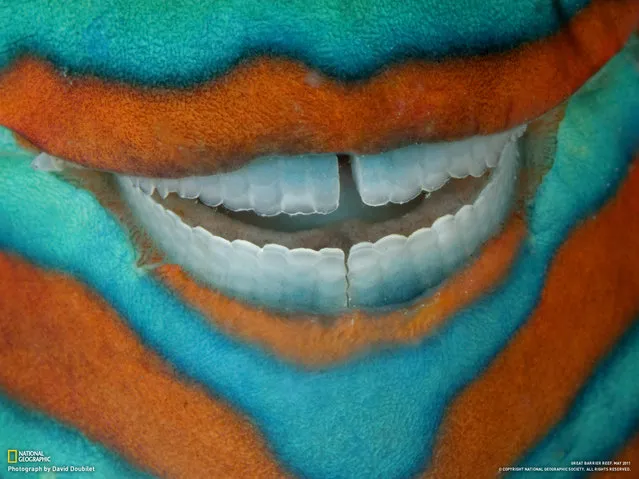
Photographers: David Doubilet

“David Doubilet (born 28 November 1946) is a well known underwater photographer known primarily for his work published in National Geographic Magazine. He was born in New York and started taking photos underwater at the young age of 12. He started with a Brownie Hawkeye in a rubber anesthesiologist's bag to keep the water out of the camera. During his summer holidays, he spent his time along the New Jersey coast. He later worked as a diver and photographer for the Sandy Hook Marine Laboratories in New Jersey. He also spent much time in the Caribbean. While a dive instructor in the Bahamas he found his motivation to capture the beauty of the sea and everything in it”. – Wikipedia. (Photo by David Doubilet/National Geographic)
Details
16 May 2012 12:21:00