Loading...
Done
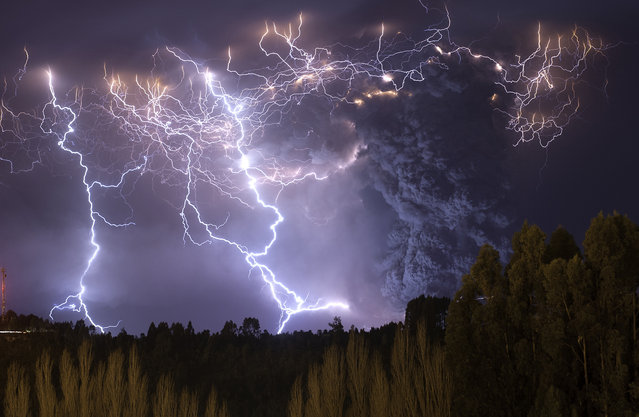
The eruption of Cordon Caulle began on June 4, 2011, located in the Region of Los Rios in Chile. For about 12 months, people and animals became accustomed to living with the daily fall of ash, which also caused problems in the air traffic in South America. The explosions and lightning during first days of the eruption could be seen from hundreds of miles around. This photograph was taken on the second night of eruption from the town of Lago Ranco. (Photo and caption by Francisco Negroni/National Geographic Traveler Photo Contest)

The eruption of Cordon Caulle began on June 4, 2011, located in the Region of Los Rios in Chile. For about 12 months, people and animals became accustomed to living with the daily fall of ash, which also caused problems in the air traffic in South America. The explosions and lightning during first days of the eruption could be seen from hundreds of miles around. This photograph was taken on the second night of eruption from the town of Lago Ranco. (Photo and caption by Francisco Negroni/National Geographic Traveler Photo Contest)

ATTENTION! All pictures are presented in high resolution. To see Hi-Res images – just TWICE click on any picture. In other words, click small picture – opens the BIG picture. Click BIG picture – opens VERY BIG picture.
Details
23 Jun 2013 11:24:00
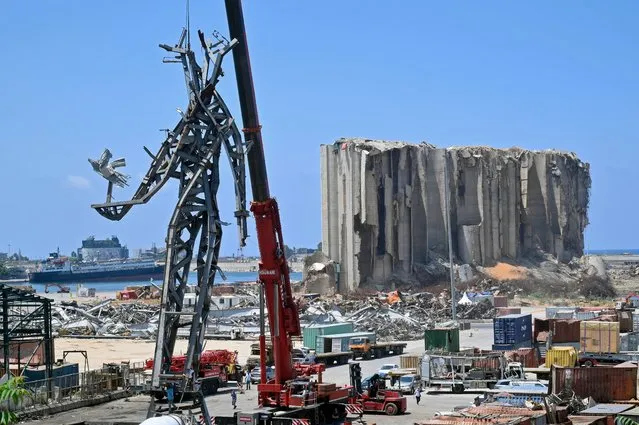
Workers install a monument inside Beirut port as a remembrance for the victims of the 04 August harbor blast in Beirut, Lebanon, 27 July 2021. A massive blast on 04 August 2020 rocked Beirut's port in which at least 200 people were killed and more than 6,000 injured, believed to have been caused by an estimated 2,750 tons of ammonium nitrate stored in a warehouse, devastated the port area of Beirut and several parts of the city. (Photo by Wael Hamzeh/EPA/EFE)

Workers install a monument inside Beirut port as a remembrance for the victims of the 04 August harbor blast in Beirut, Lebanon, 27 July 2021. A massive blast on 04 August 2020 rocked Beirut's port in which at least 200 people were killed and more than 6,000 injured, believed to have been caused by an estimated 2,750 tons of ammonium nitrate stored in a warehouse, devastated the port area of Beirut and several parts of the city. (Photo by Wael Hamzeh/EPA/EFE)
Details
30 Jul 2021 09:22:00
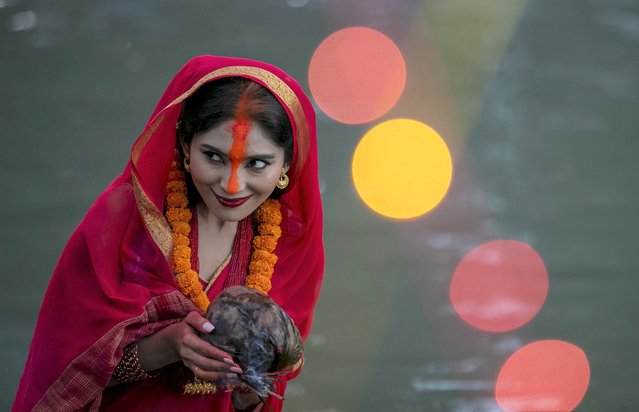
A Nepalese woman offers prayers to the setting Sun on the bank of Bagmati River during the Chhath Puja festival in Kathmandu, Nepal, Wednesday, November 10, 2021. During Chhath, an ancient Hindu festival, rituals are performed to thank the Sun God for sustaining life on earth. (Photo by Niranjan Shrestha/AP Photo)

A Nepalese woman offers prayers to the setting Sun on the bank of Bagmati River during the Chhath Puja festival in Kathmandu, Nepal, Wednesday, November 10, 2021. During Chhath, an ancient Hindu festival, rituals are performed to thank the Sun God for sustaining life on earth. (Photo by Niranjan Shrestha/AP Photo)
Details
14 Dec 2021 06:24:00
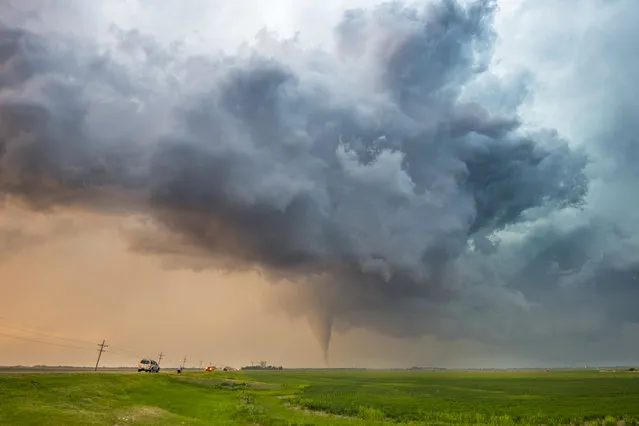
“The Sunsetter”. An EF-4 tornado rips through the open space of farmland near Rozel, Kansas. This tornado moves slowly but powerful towards the setting sun an gets its beautiful color right before sunset. Storm Chasers are spotting on the left side. Photo location: Rozel, Kansas. (Photo and caption by Dennis Oswald/National Geographic Photo Contest)

“The Sunsetter”. An EF-4 tornado rips through the open space of farmland near Rozel, Kansas. This tornado moves slowly but powerful towards the setting sun an gets its beautiful color right before sunset. Storm Chasers are spotting on the left side. Photo location: Rozel, Kansas. (Photo and caption by Dennis Oswald/National Geographic Photo Contest)

ATTENTION! All pictures are presented in high resolution. To see Hi-Res images – just TWICE click on any picture. In other words, click small picture – opens the BIG picture. Click BIG picture – opens VERY BIG picture.
Details
01 Dec 2013 11:03:00
Alphajet aircraft draw a heart-shaped message in the sky during the 2010 presentation show of the French aerobatics team Patrouille de France, over the French city of Salon-de-Provence. (Photo by Gerard Julien/AFP Photo)

Alphajet aircraft draw a heart-shaped message in the sky during the 2010 presentation show of the French aerobatics team Patrouille de France, over the French city of Salon-de-Provence. (Photo by Gerard Julien/AFP Photo)
Details
13 Feb 2014 12:30:00
Children walk amid a mirror installation titled “Sea of Mirrors”, featuring digital images of fish in the ocean during a preview tour the day before the show's public opening at the AquaRio aquarium in Rio de Janeiro, Brazil, Wednesday, June 14, 2023. (Photo by Silvia Izquierdo/AP Photo)

Children walk amid a mirror installation titled “Sea of Mirrors”, featuring digital images of fish in the ocean during a preview tour the day before the show's public opening at the AquaRio aquarium in Rio de Janeiro, Brazil, Wednesday, June 14, 2023. (Photo by Silvia Izquierdo/AP Photo)
Details
19 Jul 2023 02:50:00
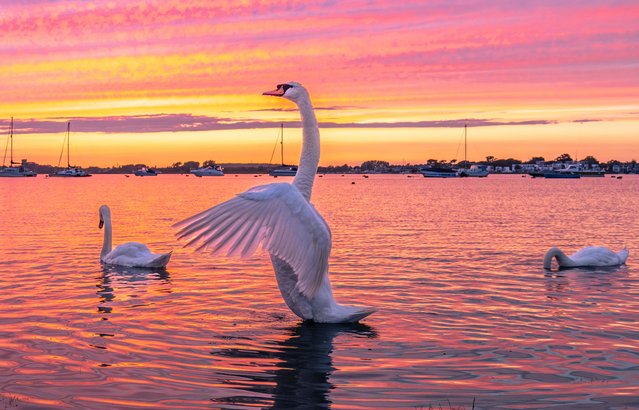
Sunset on Monday evening, June 17, 2024 at Mudeford in Dorset, UK with a swan stretching it's wings. (Photo by Cenk Albayrak-Touye/Picture Exclusive)

Sunset on Monday evening, June 17, 2024 at Mudeford in Dorset, UK with a swan stretching it's wings. (Photo by Cenk Albayrak-Touye/Picture Exclusive)
Details
21 Aug 2024 02:59:00
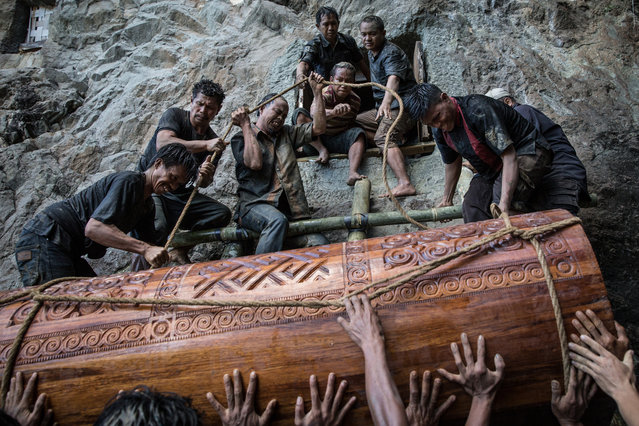
It is said that Torajans are people who “live to die”. For this Indonesian ethnic group, funerals are such extravagant events that they sometimes attract tourists. Families can postpone burials years (and the deceased are considered sick and hosted at home until the funeral) until the family can raise enough money and gather as many relatives as possible. And then it’s a jubilant multiday social event with a parade, dances and animal sacrifices. Agung Parameswara photographed these funerary practices when he traveled to South Sulawesi province, where the Torajans live. But often, their funeral isn’t the last time the dead are seen. In August, crypts are opened, coffins are slid back out and bodies delicately unsheathed. This tender ritual is known as Ma’Nene, which is customarily performed every few years. (Photo by Agung Parameswara/The Washington Post)

It is said that Torajans are people who “live to die”. For this Indonesian ethnic group, funerals are such extravagant events that they sometimes attract tourists. Families can postpone burials years (and the deceased are considered sick and hosted at home until the funeral) until the family can raise enough money and gather as many relatives as possible. And then it’s a jubilant multiday social event with a parade, dances and animal sacrifices. Agung Parameswara photographed these funerary practices when he traveled to South Sulawesi province, where the Torajans live. (Photo by Agung Parameswara/The Washington Post)
Details
06 Oct 2016 09:15:00