Loading...
Done
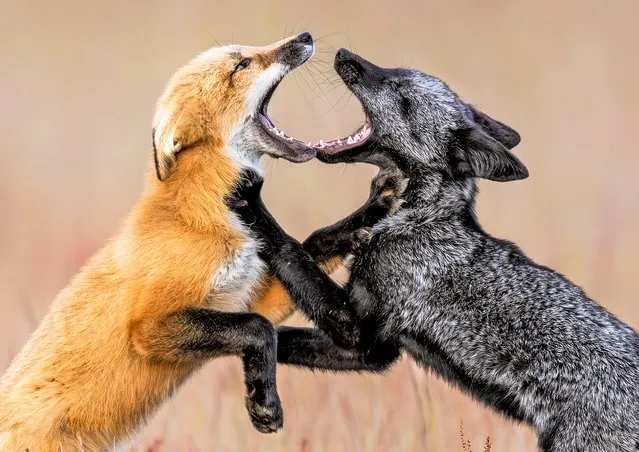
The rabbit population of San Juan Island, brought in to feed lighthouse keepers, got so big that in the 1930s foxes were introduced to kill them. Although they are red foxes, their coats can be orange, silver, black or multi-coloured. Picture date: September 2023. (Photo by Jun Zuo/Solent News)

The rabbit population of San Juan Island, brought in to feed lighthouse keepers, got so big that in the 1930s foxes were introduced to kill them. Although they are red foxes, their coats can be orange, silver, black or multi-coloured. Picture date: September 2023. (Photo by Jun Zuo/Solent News)
Details
08 Oct 2023 04:03:00
NASAs Desert Research and Technology Studies (Desert RATS) team members practice with a Moon rover prototype for future Artemis missions at the Black Point Lava Flow near Flagstaff, Arizona, on October 24, 2022. (Photo by Olivier Touron/AFP Photo)

NASAs Desert Research and Technology Studies (Desert RATS) team members practice with a Moon rover prototype for future Artemis missions at the Black Point Lava Flow near Flagstaff, Arizona, on October 24, 2022. (Photo by Olivier Touron/AFP Photo)
Details
20 Dec 2023 22:31:00
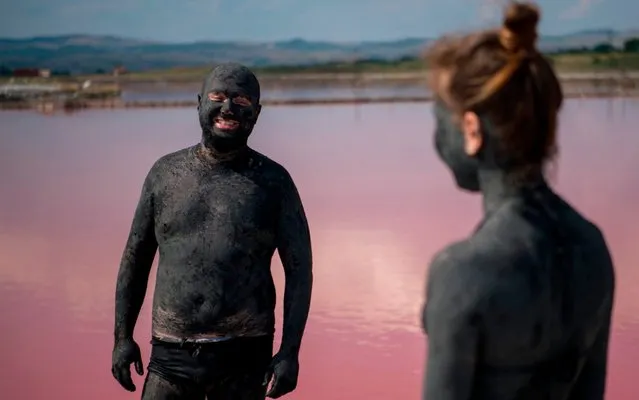
A couple covered in mud wait for it to dry at the Salt-works lakes near the Black Sea town of Burgas in Bulgaria on July 25, 2019. Thousands of tourists visit the red salt lakes for mud baths, which are believed to help the healing of muscular disorders and rheumatism. (Photo by Nikolay Doychinov/AFP Photo)

A couple covered in mud wait for it to dry at the Salt-works lakes near the Black Sea town of Burgas in Bulgaria on July 25, 2019. Thousands of tourists visit the red salt lakes for mud baths, which are believed to help the healing of muscular disorders and rheumatism. (Photo by Nikolay Doychinov/AFP Photo)
Details
28 Jul 2019 00:07:00
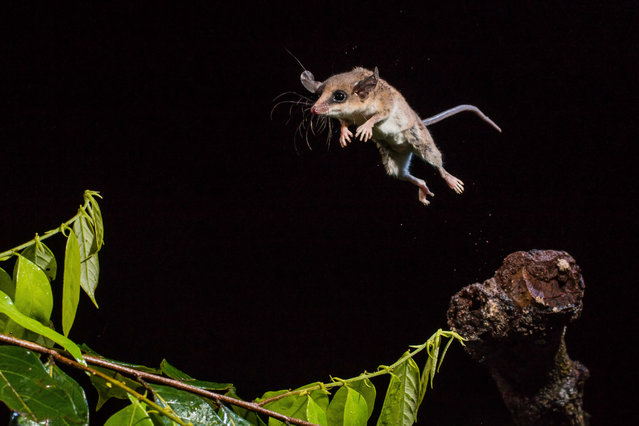
Tropical acrobatics by Adrià López Baucells in Manaus, Brazil. An unidentified South American marsupial, although the characteristic black markings on its face indicate it may be a mouse opossum. These small creatures are nocturnal and feed on bugs, fruit and bird eggs. (Photo by Adrià López Baucells/2019 Royal Society of Biology Photography Competition)

Tropical acrobatics by Adrià López Baucells in Manaus, Brazil. An unidentified South American marsupial, although the characteristic black markings on its face indicate it may be a mouse opossum. These small creatures are nocturnal and feed on bugs, fruit and bird eggs. (Photo by Adrià López Baucells/2019 Royal Society of Biology Photography Competition)
Details
10 Oct 2019 00:03:00
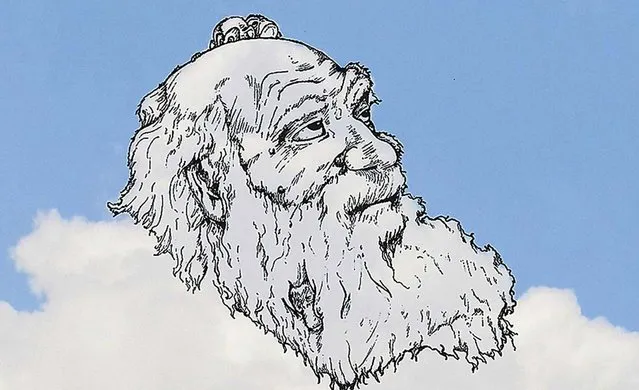
Illustrations Out Of Clouds By Martin Feijoo

Few things are more beautiful than puffy white clouds floating in the bright blue sky. Do you remember the time when you would lay on the soft green grass, look up at the sky, and try to recognize shapes in the clouds floating overhead? Wasn’t it wonderful, just lying there, letting the wind caress your skin, as you imagine that the clouds in the sky are actually mystical or not-so-mystical creatures? Dragons, ducks, teddy bears, dinosaurs, everything was up there. It was good old times. As adults we forget about simple pleasures of life. However, an Argentinian artist Martin Feijoo didn’t forget those times, and took them a step further. After imagining what a particular cloud looks like, he draws that particular shape over the picture of the cloud, allowing the entire world to see what goes on in his mind. (Photo by Martin Feijoo)

Details
02 Nov 2014 10:44:00
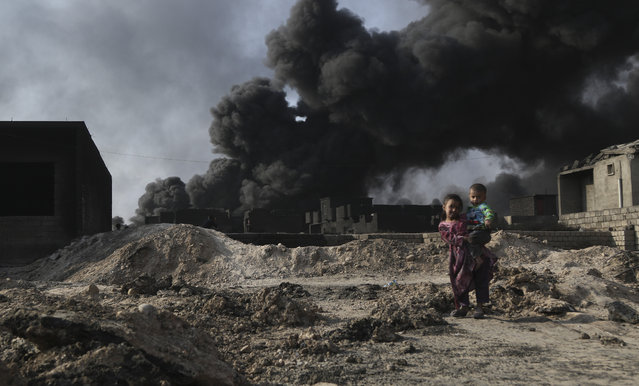
A girl holds her brother in her arm as black smoke rises after an oil well set on fire in the center of al-Kayyara town to the south of Daesh terror organization-held Mosul in Iraq on October 25, 2016. The oil well in the center of al-Kayyara town, which was set alight by retreating Daesh militants in advance of the Iraqi army's takeover of the town on August 24, 2016 has still not entirely been put out. The raw petrol which is still alight is creating black clouds above the city. The residents and wildlife beneath this polluting smoke cloud may find their health at risk. The effects of the fire in the town center on unprotected civilians' health can easily be seen on the hands and faces of children playing on the street. (Photo by dris Okuducu/Anadolu Agency/Getty Images)

A girl holds her brother in her arm as black smoke rises after an oil well set on fire in the center of al-Kayyara town to the south of Daesh terror organization-held Mosul in Iraq on October 25, 2016. The oil well in the center of al-Kayyara town, which was set alight by retreating Daesh militants in advance of the Iraqi army's takeover of the town on August 24, 2016 has still not entirely been put out. The raw petrol which is still alight is creating black clouds above the city. The residents and wildlife beneath this polluting smoke cloud may find their health at risk. The effects of the fire in the town center on unprotected civilians' health can easily be seen on the hands and faces of children playing on the street. (Photo by dris Okuducu/Anadolu Agency/Getty Images)
Details
27 Oct 2016 11:54:00
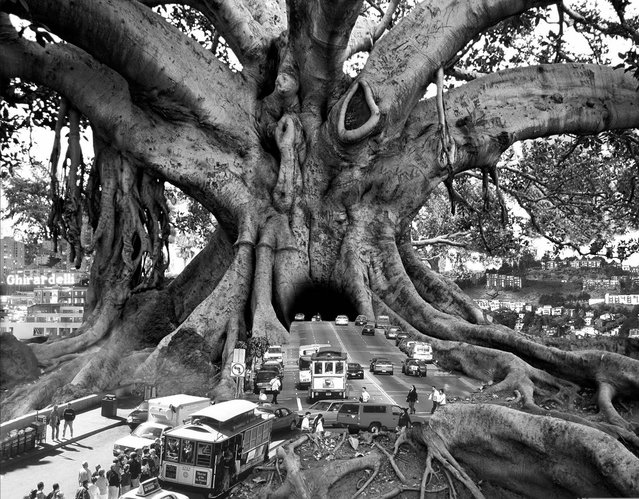
Art By Thomas Barbey

Thomas Barbèy grew up in Geneva, Switzerland, across the street from the “Caran D’ache” factory, the largest manufacturer of art supplies. He started drawing seriously at the age of 13, using black “encre de Chine” and gouaches for color.
Details
04 Feb 2013 11:36:00
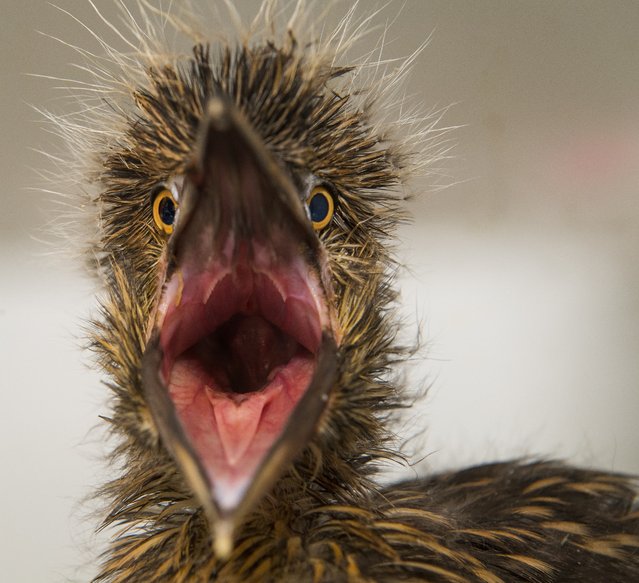
A baby Black-crowned Night Heron squawks in its incubator while being cared for at City Wildlife rescue and rehabilitation center in Washington, DC on May 31, 2017. The heron is one of several that have been brought to CW by the staff at The National Zoo over the past few years. The heron is a native bird and has made an established rookery inside the zoo grounds over a hundred years ago.  Every year at this time, some of the chicks get pushed or fall out of the nest and require human care.  Because the birds are native and not part of the Smithsonian collection, they partnered with CW to rehabilitate the herons for re-release back to the flock inside Zoo. They're reintroduced back to their flock so that they can migrate together in the Fall. The Black-crowned heron usually migrates from the DC area down to southeast North Carolina, some going as far as Jacksonville, FL in winter. The Black-crowned heron is the species of greatest conservation need in the District of Columbia because their numbers are in such rapid decline due to habitat loss. (Photo Linda Davidson/The Washington Post)

A baby Black-crowned Night Heron squawks in its incubator while being cared for at City Wildlife rescue and rehabilitation center in Washington, DC on May 31, 2017. The heron is one of several that have been brought to CW by the staff at The National Zoo over the past few years. (Photo Linda Davidson/The Washington Post)
Details
04 Jun 2017 08:04:00