Woman enjoying the sun on one of Maui's black sand beaches, Hawaii, United States of America, North America on February 25, 2022. (Photo by Laura Grier/Robert Harding RF via AFP Photo)
“DC3 Wreck”. A capture of a US military DC3 plane wreck at the southern black beach in Iceland. Photo location: Iceland. (Photo and caption by Naian Feng/National Geographic Photo Contest)
A Black and Tan Coonhound named Harbor has the longest ears of any living dog, with measurements of 12.25 (31,12 cm) inches for the left ear and 13.5 (34,29 cm) inches for the right. (Photo by Ryan Schude/Guinness World Records via AP)
Women perform under black fabric during a street performance in Pristina on October 6, 2017 against sexual harassments in Kosovo. (Photo by Armend Nimani/AFP Photo)
Kandy Freeman participates in a Black Lives Matter protest in front of Trump Tower in New York City, U.S. January 14, 2017. (Photo by Stephanie Keith/Reuters)
American model Angela Renee White, professionally known as Blac Chyna arrives in a sheer black dress at Project LA Nightclub in Los Angeles, CA on August 16, 2018. (Photo by Headlinephoto/Splash News and Pictures)
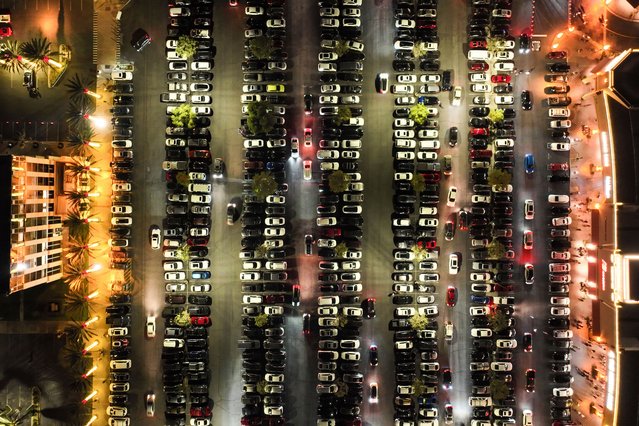
An aerial view shows a packed parking lot at Citadel Outlets in Commerce, Calif., Thursday, November 28, 2024, as early Black Friday shoppers arrive at the mall. (Photo by Jae C. Hong/AP Photo)
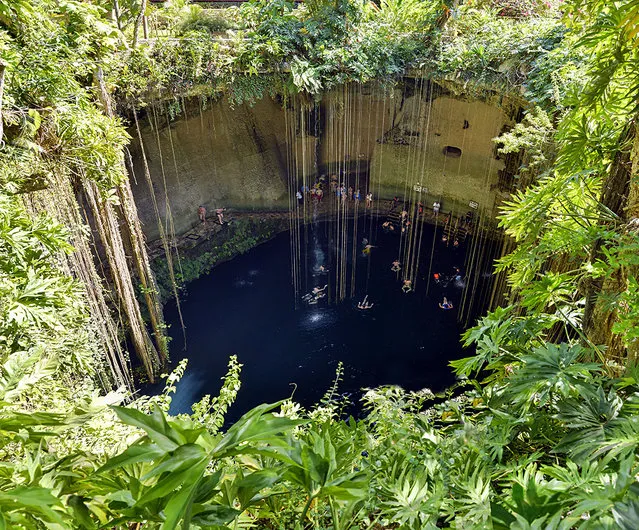
A cenote is a natural phenomenon, a sinkhole in the Earth’s surface. The Yucatan Peninsula in Mexico has an estimated 7,000 cenotes because it is primarily made up of porous limestone. For millions of years, rainfall slowly ate away at the limestone and a huge system of underground caves and caverns was formed. Many filled with water from rain or from the underground water table. When the roof of a water filled cave collapses, a cenote is born. The water found in a cenote may be fresh water, salt water, or both. Structurally it may be completely open, like a lake, almost completely closed with just a small opening at the top, or somewhere in between.