Loading...
Done
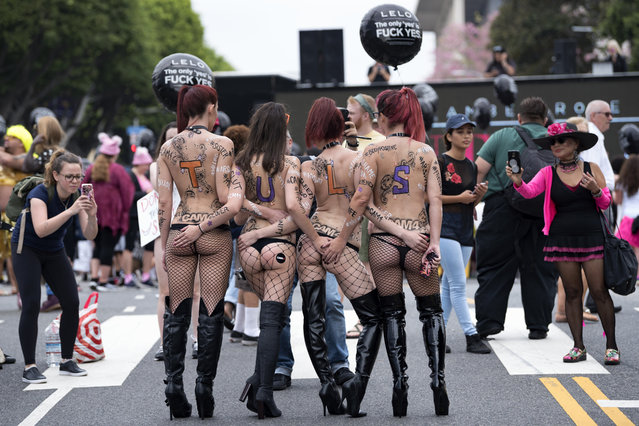
Participants in the 3rd Annual Amber Rose SlutWalk in Los Angeles, California. October 1, 2017. The event seeks to highlight issues such as: gender equality, ending rape culture, victim blaming and body shaming. (Photo by Ronen Tivony/NurPhoto via Getty Images)

Participants in the 3rd Annual Amber Rose SlutWalk in Los Angeles, California. October 1, 2017. The event seeks to highlight issues such as: gender equality, ending rape culture, victim blaming and body shaming. (Photo by Ronen Tivony/NurPhoto via Getty Images)
Details
03 Oct 2017 07:08:00
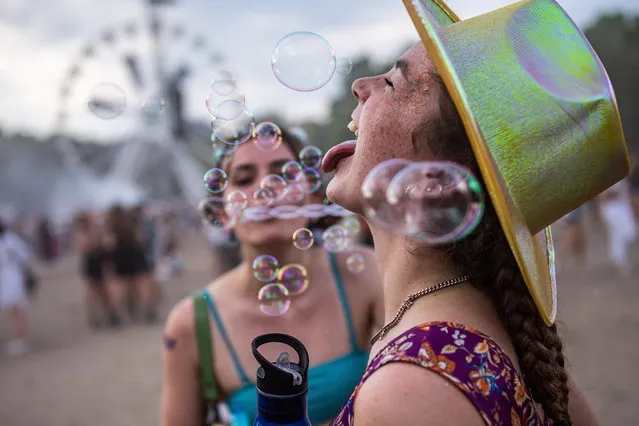
Festival goers blow soap-bubbles at the 28th Sziget (Island) Festival on Shipyard Island, Northern Budapest, Hungary, 15 August 2022. The festival is one of the biggest cultural events of Europe offering art exhibitions, theatrical and circus performances and above all music concerts. (Photo by Marton Monus/EPA/EFE)

Festival goers blow soap-bubbles at the 28th Sziget (Island) Festival on Shipyard Island, Northern Budapest, Hungary, 15 August 2022. The festival is one of the biggest cultural events of Europe offering art exhibitions, theatrical and circus performances and above all music concerts. (Photo by Marton Monus/EPA/EFE)
Details
25 Aug 2022 05:05:00
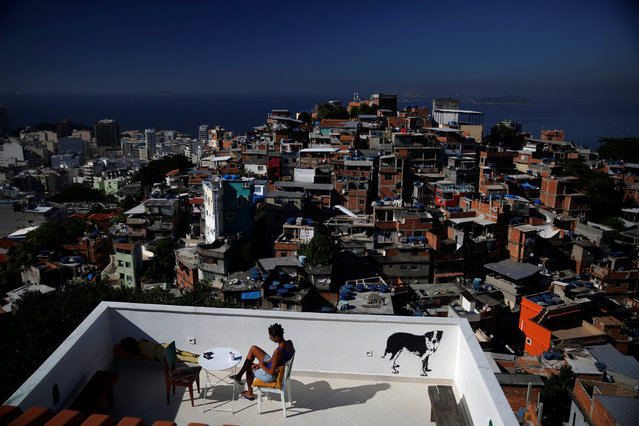
A woman sits on a terrace at Tiki hostel in Cantagalo favela, in Rio de Janeiro, Brazil, April 16, 2016. (Photo by Pilar Olivares/Reuters)

A woman sits on a terrace at Tiki hostel in Cantagalo favela, in Rio de Janeiro, Brazil, April 16, 2016. Hostels in a few of Rio's more than 1,000 slums serve not only as a cheap housing alternative for the more adventurous among the estimated 500,000 foreign tourists expected to arrive for the Olympics in August. The establishments also open up the rich culture of the city's shantytowns for travellers, giving them a glimpse into once “no-go” areas where about one-fifth of Rio's population lives. (Photo by Pilar Olivares/Reuters)
Details
04 May 2016 12:18:00
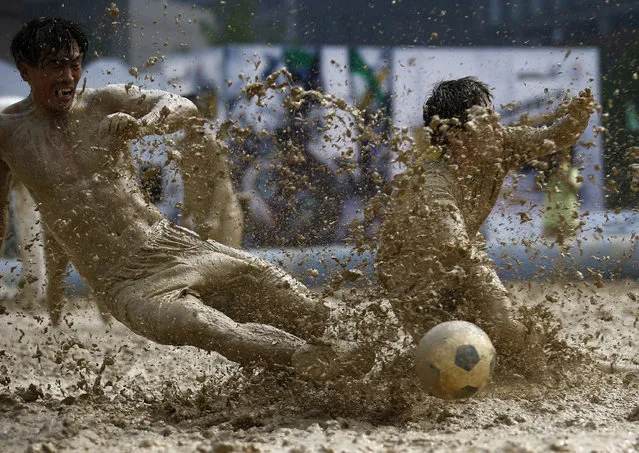
Players battle for the ball during their match at the swamp soccer China tournament in Beijing, June 26, 2014. The 32 teams from across the country participated in the soccer event to celebrate the 2014 World Cup in Brazil. (Photo by Kim Kyung-Hoon/Reuters)

Players battle for the ball during their match at the swamp soccer China tournament in Beijing, June 26, 2014. The 32 teams from across the country participated in the soccer event to celebrate the 2014 World Cup in Brazil. (Photo by Kim Kyung-Hoon/Reuters)
Details
29 Jun 2014 11:58:00
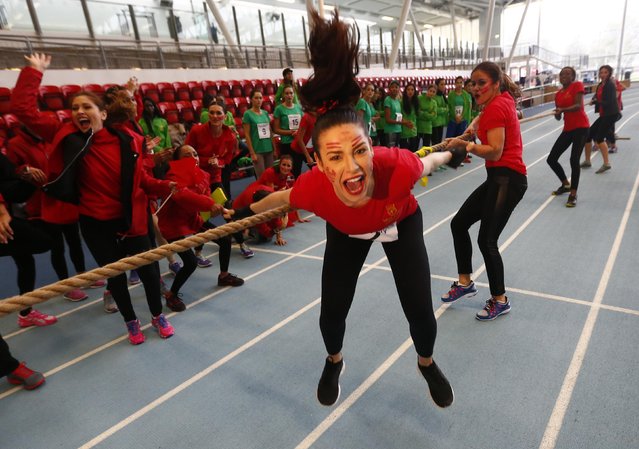
Miss Brazil Julia Gama reacts after her team won the tug of war event during the Miss World sports competition at the Lee Valley sports complex in north London, November 26, 2014. Contestants from 126 countries are in London to compete in the 2014 Miss World competition. (Photo by Andrew Winning/Reuters)

Miss Brazil Julia Gama reacts after her team won the tug of war event during the Miss World sports competition at the Lee Valley sports complex in north London, November 26, 2014. Contestants from 126 countries are in London to compete in the 2014 Miss World competition. (Photo by Andrew Winning/Reuters)
Details
27 Nov 2014 15:20:00
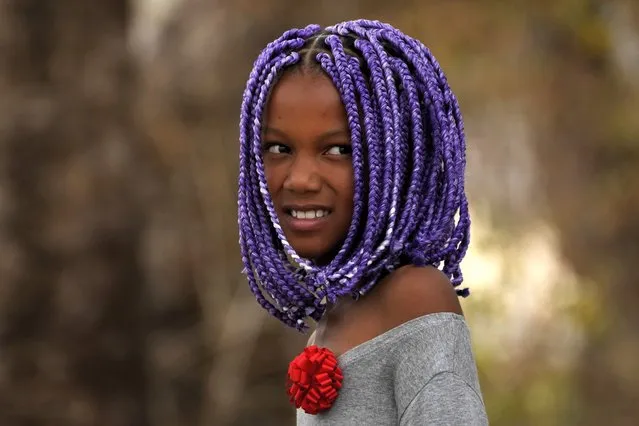
Sophia Fernandes, a member of the Kalunga quilombo, the descendants of runaway slaves, dons traditional afro braids, during the culmination of the week-long pilgrimage and celebration for the patron saint “Nossa Senhora da Abadia” or Our Lady of Abadia, in the rural area of Cavalcante in Goias state, Brazil, Saturday, August 13, 2022.  Devotees celebrate Our Lady of Abadia at this time of the year with weddings, baptisms and by crowning distinguished community members, as they maintain cultural practices originating from Africa that mix with Catholic traditions. (Photo by Eraldo Peres/AP Photo)

Sophia Fernandes, a member of the Kalunga quilombo, the descendants of runaway slaves, dons traditional afro braids, during the culmination of the week-long pilgrimage and celebration for the patron saint “Nossa Senhora da Abadia” or Our Lady of Abadia, in the rural area of Cavalcante in Goias state, Brazil, Saturday, August 13, 2022. Devotees celebrate Our Lady of Abadia at this time of the year with weddings, baptisms and by crowning distinguished community members, as they maintain cultural practices originating from Africa that mix with Catholic traditions. (Photo by Eraldo Peres/AP Photo)
Details
21 Aug 2022 03:48:00
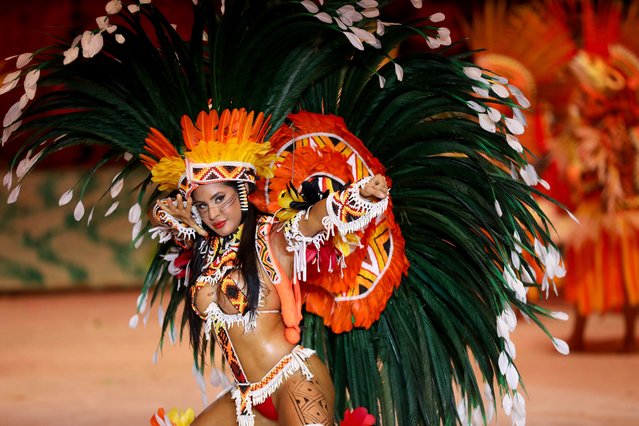
A member of the Boi Bumba Garantido association performs during the Boi Bumba folklore festival at the Bumbodromo in Parintins, Amazonas State, Brazil, on June 28, 2024. Parintins is well-known internationally for its Boi Bumba folklore festival, which lasts for three days in late June and whose themes, costumes, and songs are based on indigenous cultures of the Amazon rainforest. (Photo by Michael Dantas/AFP Photo)

A member of the Boi Bumba Garantido association performs during the Boi Bumba folklore festival at the Bumbodromo in Parintins, Amazonas State, Brazil, on June 28, 2024. Parintins is well-known internationally for its Boi Bumba folklore festival, which lasts for three days in late June and whose themes, costumes, and songs are based on indigenous cultures of the Amazon rainforest. (Photo by Michael Dantas/AFP Photo)
Details
23 Oct 2025 04:17:00
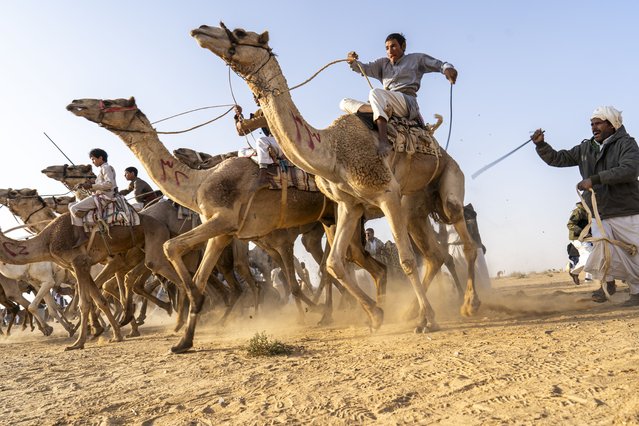
The start of the Al-Sirr camel race on November 19, 2025 in El Hassana, Egypt. The Al-Sirr camel race is one of the most culturally significant and widely celebrated sporting events among the Bedouin communities of Sinai. Every year, Bedouin tribes gather here to hold this traditional race, an event that preserves its authentic heritage. Unlike modern camel races elsewhere, the Bedouin here do not use robotic jockeys or advanced racing technologies. Instead, the camels are ridden by young boys aged approximately 5 to 16, maintaining a long-standing cultural practice. (Photo by Ali Moustafa/Getty Images)

The start of the Al-Sirr camel race on November 19, 2025 in El Hassana, Egypt. The Al-Sirr camel race is one of the most culturally significant and widely celebrated sporting events among the Bedouin communities of Sinai. Every year, Bedouin tribes gather here to hold this traditional race, an event that preserves its authentic heritage. Unlike modern camel races elsewhere, the Bedouin here do not use robotic jockeys or advanced racing technologies. Instead, the camels are ridden by young boys aged approximately 5 to 16, maintaining a long-standing cultural practice. (Photo by Ali Moustafa/Getty Images)
Details
03 Jan 2026 12:49:00