Loading...
Done
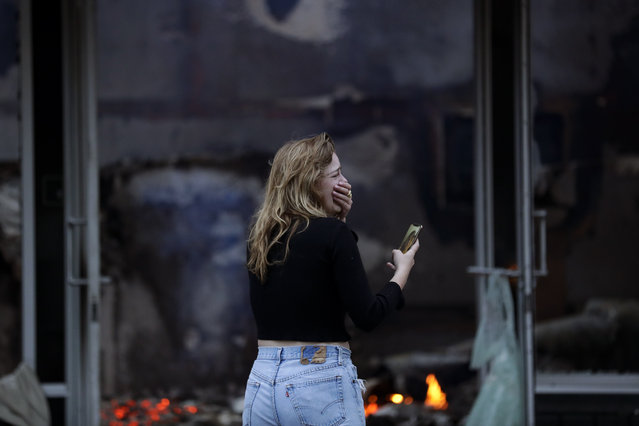
A woman cries as she watches a building burn after a protest over the death of George Floyd, Sunday, May 31, 2020, in La Mesa, Calif. Protests were held in U.S. cities over the death of Floyd, a black man who died after being restrained by Minneapolis police officers on May 25. (Photo by Gregory Bull/AP Photo)

A woman cries as she watches a building burn after a protest over the death of George Floyd, Sunday, May 31, 2020, in La Mesa, Calif. Protests were held in U.S. cities over the death of Floyd, a black man who died after being restrained by Minneapolis police officers on May 25. (Photo by Gregory Bull/AP Photo)
Details
02 Jun 2020 00:03:00
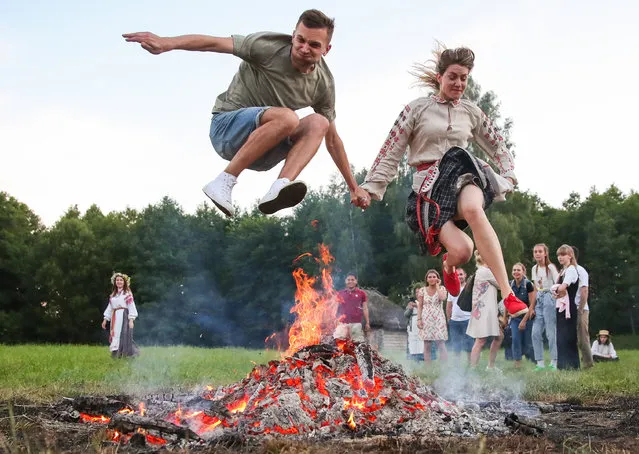
A man and a woman jump over a bonfire during Ivan Kupala Day celebrations held by the Belarusian State Museum of Folk Architecture and Rural Lifestyle in the village of Ozertso near Minsk, Belarus on July 4, 2020. Ivan Kupala Day, also known as Ivana-Kupala or Kupala Night, is a traditional pagan holiday celebrated in eastern Slavic cultures. Various rituals are traditionally performed on Kupala Night, including making flower wreaths, fortune-telling, jumping over bonfires, and burning a wheel-like effigy symbolizing the sun. (Photo by Natalia Fedosenko/TASS)

A man and a woman jump over a bonfire during Ivan Kupala Day celebrations held by the Belarusian State Museum of Folk Architecture and Rural Lifestyle in the village of Ozertso near Minsk, Belarus on July 4, 2020. Ivan Kupala Day, also known as Ivana-Kupala or Kupala Night, is a traditional pagan holiday celebrated in eastern Slavic cultures. Various rituals are traditionally performed on Kupala Night, including making flower wreaths, fortune-telling, jumping over bonfires, and burning a wheel-like effigy symbolizing the sun. (Photo by Natalia Fedosenko/TASS)
Details
07 Jul 2020 00:07:00
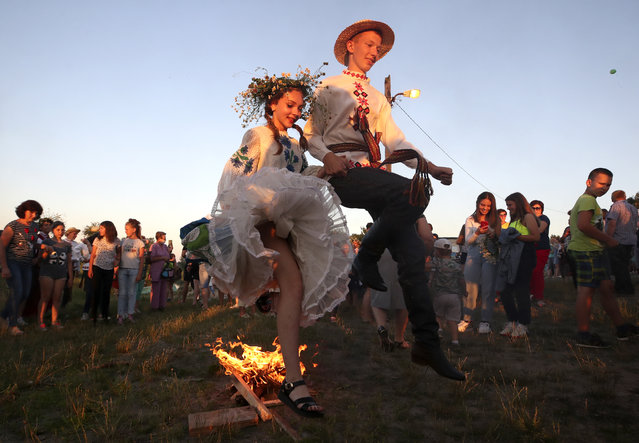
People in ethnic costumes jump over a bonfire during Ivan Kupala Day celebrations held by the Pripyat River in the town of Turauin Gomel Region, Belarus on July 6, 2020. Ivan Kupala Day, also known as Ivana-Kupala or Kupala Night, is a traditional pagan holiday celebrated in eastern Slavic cultures. Various rituals are traditionally performed on Kupala Night, including making flower wreaths, fortune-telling, jumping over bonfires, and burning a wheel-like effigy symbolizing the sun. (Photo by Natalia Fedosenko/TASS)

People in ethnic costumes jump over a bonfire during Ivan Kupala Day celebrations held by the Pripyat River in the town of Turauin Gomel Region, Belarus on July 6, 2020. Ivan Kupala Day, also known as Ivana-Kupala or Kupala Night, is a traditional pagan holiday celebrated in eastern Slavic cultures. Various rituals are traditionally performed on Kupala Night, including making flower wreaths, fortune-telling, jumping over bonfires, and burning a wheel-like effigy symbolizing the sun. (Photo by Natalia Fedosenko/TASS)
Details
19 Jul 2020 00:01:00
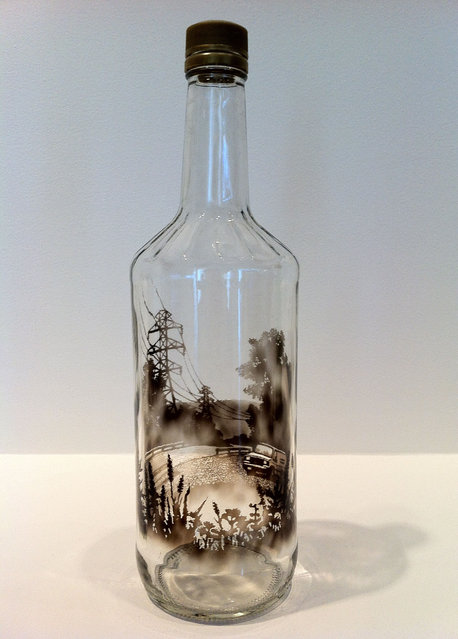
The Bottled Smoke Artworks By Jim Dingilian

Jim Dingilian’s incredible bottle art is much more complex than the traditional building of ships inside of bottles. The detailed scenes trapped inside recycled glass bottles are made with just candle smoke. The artist burns the inside, then carefully etches away the residue, revealing imagery of trees, cars, and industrial landscapes within the confines of each bottle.
Details
27 Jan 2014 12:39:00
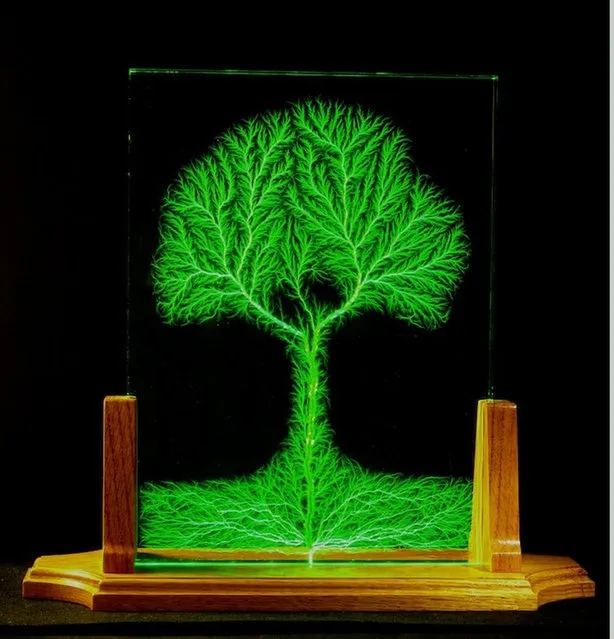
A Flash of Lightning by Bert Hickman

Hickman's experimental art, which reflects the vein-like extensions that electrical charges burn into surfaces they come in contact with, are referred to as Lichtenberg figures. The diverging patterns present in each of the artist's "paintings" are natural occurrences from subjecting the panels to tiny lightning storms through a handy device known as a particle accelerator. Hickman is like a modern-day Zeus, painting with lightning bolts.
Details
26 Nov 2012 14:15:00
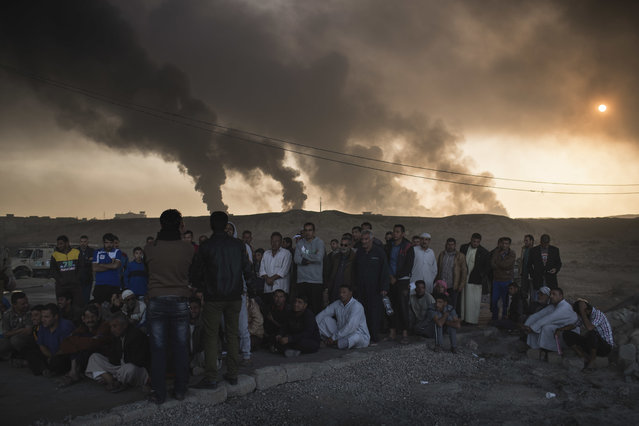
Men are held by Iraqi national security agents, to be interrogated at a checkpoint, as oil fields burn in Qayara, south of Mosul, Iraq, Saturday, November 5, 2016. Islamic State fighters launch counterattacks in the thin strip of territory Iraqi special forces have recaptured in eastern Mosul, highlighting the challenges ahead as the battle moves into more densely populated neighborhoods where coalition air power must be used more selectively. (Photo by Felipe Dana/AP Photo)

Men are held by Iraqi national security agents, to be interrogated at a checkpoint, as oil fields burn in Qayara, south of Mosul, Iraq, Saturday, November 5, 2016. Islamic State fighters launch counterattacks in the thin strip of territory Iraqi special forces have recaptured in eastern Mosul, highlighting the challenges ahead as the battle moves into more densely populated neighborhoods where coalition air power must be used more selectively. (Photo by Felipe Dana/AP Photo)
Details
06 Nov 2016 11:27:00
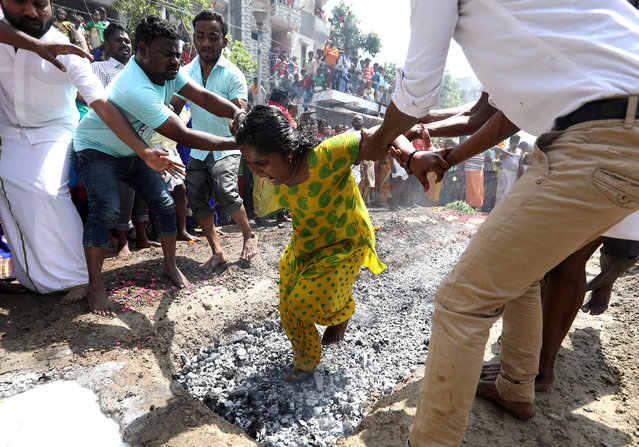
A Hindu devotee is helped by other people as she walks on burning coals during a religious procession Vel Festival of the Hindu goddess Maha Mariamman (Sheetla Mata), in New Delhi, India, 06 April 2017. People get their bodies pierced with different kinds of metal needles and rods and participate in a religious procession as thanks giving gesture to the goddess in return of their fulfilled wishes during the annual procession. (Photo by Rajat Gupta/EPA)

A Hindu devotee is helped by other people as she walks on burning coals during a religious procession Vel Festival of the Hindu goddess Maha Mariamman (Sheetla Mata), in New Delhi, India, 06 April 2017. People get their bodies pierced with different kinds of metal needles and rods and participate in a religious procession as thanks giving gesture to the goddess in return of their fulfilled wishes during the annual procession. (Photo by Rajat Gupta/EPA)
Details
10 Apr 2017 08:59:00
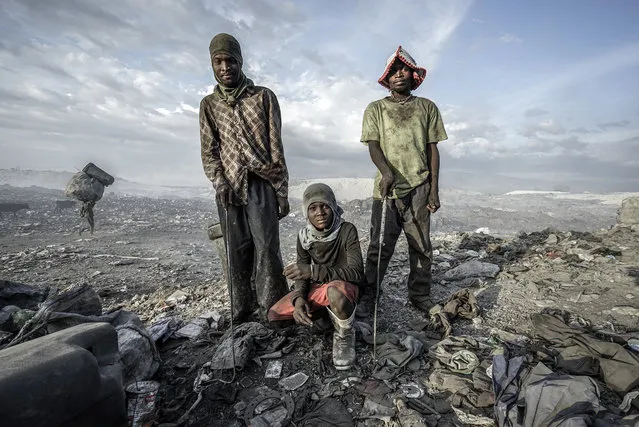
In a 200-acre-plus dump 5 kilometers north of Haiti’s capital, Port-au-Prince, hundreds of men, women and children scavenge day and night through the burning wasteland. They earn $12 to $15 a day – on a good day – for recycling plastics as well as clothing, household items and aluminum (for smelting). Some 5,000 tons of waste is created each day in the Port-au-Prince area. (Photo and caption by Giles Clarke/Getty Images Reportage)

In a 200-acre-plus dump 5 kilometers north of Haiti’s capital, Port-au-Prince, hundreds of men, women and children scavenge day and night through the burning wasteland. They earn $12 to $15 a day – on a good day – for recycling plastics as well as clothing, household items and aluminum (for smelting). Some 5,000 tons of waste is created each day in the Port-au-Prince area. (Photo and caption by Giles Clarke/Getty Images Reportage)
Details
02 Feb 2015 11:21:00