Loading...
Done
What 200 Calories Looks Like In Different Foods Part 2

Some foods have significantly more Calories than others but what does the difference actually look like. Each of the photographs below represents 200 Calories of the particular type of food; the images are sorted from low to high calorie density. When you consider that an entire plate of broccoli contains the same number of Calories as a small spoonful of peanut butter, you might think twice the next time you decide what to eat. According to the U.S. Department of Agriculture, the average adult needs to consume about 2000 – 2500 Calories to maintain their weight. In other words, you have a fixed amount of Calories to “spend” each day; based on the following pictures, which would you eat?


See Also: Ppart 1 _ Part 3
Details
01 Aug 2014 11:30:00
In this Tuesday, July 29, 2014, photo, Syrian refugee Samah, 5, poses for a picture at Zaatari refugee camp, near the Syrian border, in Mafraq, Jordan. More than 2.8 million Syrian children inside and outside the country – nearly half the school-aged population – cannot get an education because of the devastation from the civil war, according to the U.N. children's agency, UNICEF. (Photo by Muhammed Muheisen/AP Photo)

In this Tuesday, July 29, 2014, photo, Syrian refugee Samah, 5, poses for a picture at Zaatari refugee camp, near the Syrian border, in Mafraq, Jordan. More than 2.8 million Syrian children inside and outside the country – nearly half the school-aged population – cannot get an education because of the devastation from the civil war, according to the U.N. children's agency, UNICEF. That number is likely higher, as UNICEF can't count the children whose parents didn't register with the United Nations refugee agency. (Photo by Muhammed Muheisen/AP Photo)
Details
03 Aug 2014 07:46:00
Riot police scuffle with pro-democracy students after hundreds of protesters stormed into a restricted area at the government headquarters, after a rally ahead of the October 1 “Occupy Central” civil disobedience movement in Hong Kong September 27, 2014. (Photo by Tyrone Siu/Reuters)

Riot police scuffle with pro-democracy students after hundreds of protesters stormed into a restricted area at the government headquarters, after a rally ahead of the October 1 “Occupy Central” civil disobedience movement in Hong Kong September 27, 2014. Hong Kong riot police used pepper spray on Saturday to disperse dozens of students who had stormed government headquarters, but an equal number held their ground in protests against Beijing's tightening grip on the city. (Photo by Tyrone Siu/Reuters)
Details
01 Oct 2014 11:10:00
Kenyan women protest for the right to wear whichever clothes they want, at a demonstration in downtown Nairobi, Kenya Monday, November 17, 2014. (Photo by Ben Curtis/AP Photo)

Kenyan women protest for the right to wear whichever clothes they want, at a demonstration in downtown Nairobi, Kenya Monday, November 17, 2014. A recent incident in which a mob of men surrounded a woman and tore her clothes off, leaving her naked on the street in front of a bus stop after alleging that she was improperly dressed, is one of several such videos that have surfaced online in recent days leading to a groundswell of anger that on Monday prompted around 1000 demonstrators, including a number of men supporting the women's cause, to march through the capital and protest online using the hashtag #MyDressMyChoice. (Photo by Ben Curtis/AP Photo)
Details
18 Nov 2014 11:50:00
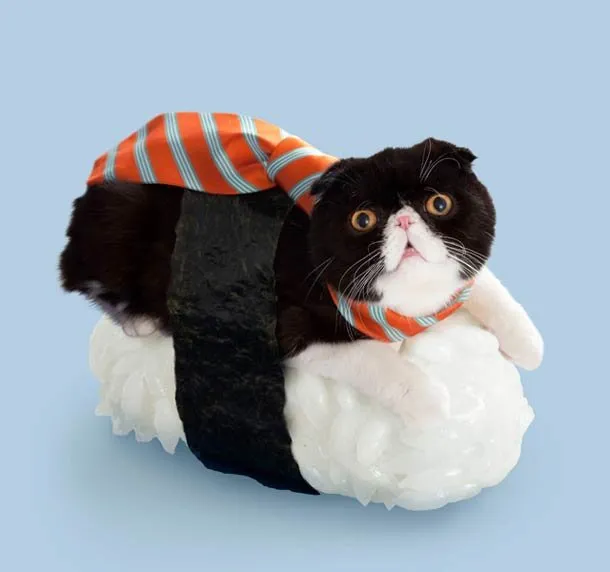
Sushi Cats By Tange & Nakimushi Peanuts

Sushi Cats (originally branded as Neko-Sushi) is a series of photographs created by the Japan-based company Tange & Nakimushi Peanuts. In this series the creators have dressed up a number of cats and placed them on top of oversized balls of sushi rice. The kitties don’t look too happy with what is going on, though they do look adorable in their little outfits. Tange & Nakimushi Peanuts didn’t think that making a set of photos was enough, so they’ve also created an Android and iPhone apps featuring Sushi Cats. Moreover, people living in Japan can visit their website, if they wish to order photo prints, postcards, and other items. (Photo by Tange & Nakimushi Peanuts)
Details
08 Jan 2015 14:14:00
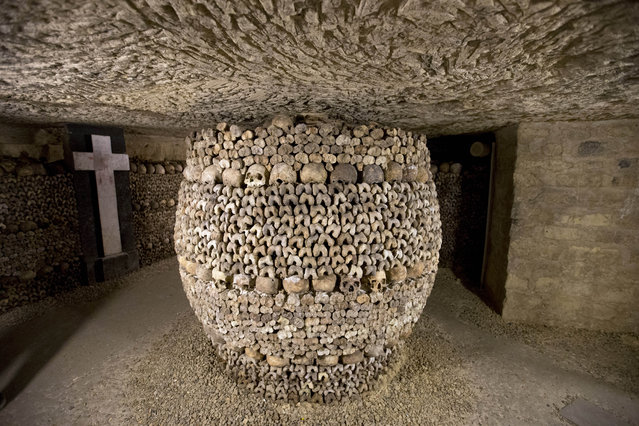
In this photo taken Tuesday, October 14, 2014, skulls and bones are stacked at the Catacombs in Paris, France. (Photo by Francois Mori/AP Photo)

In this photo taken Tuesday, October 14, 2014, skulls and bones are stacked at the Catacombs in Paris, France. The subterranean tunnels, stretching 2 kilometers (1.24 miles), cradle the bones of some 6 million Parisians from centuries past and once gave refuge to smugglers. The site used to close at 5 p.m., but is now staying open until 8 p.m. The change is mainly aimed at allowing more people to visit and reducing long lines, since it can only hold a limited number of people at a time and visits can't be reserved in advance. (Photo by Francois Mori/AP Photo)
Details
17 Oct 2014 13:27:00
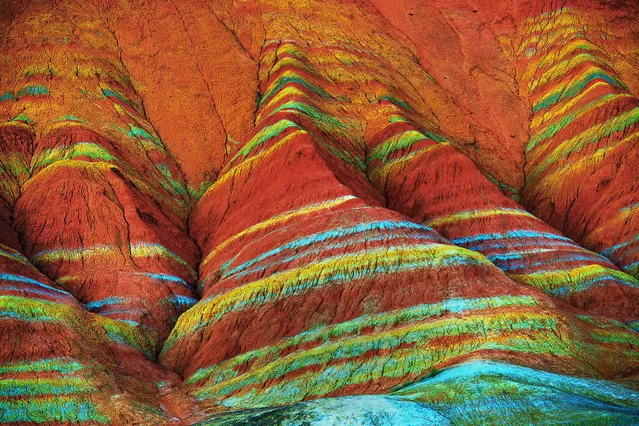
View of colourful rock formations at the Zhangye Danxia Landform Geological Park in Gansu Province, China. The Zhangye Danxia Landform Geological Park is 40km from Zhangye city. The park spans more than 400 square kilometers in Gansu. The unusual terrain is the result of red sandstone and mineral deposits carved over the years by natural forces. A number of boardwalks have been built to encourage visitors to explore the rock formations. (Photo by ImagineChina/The Grosby Group)

View of colourful rock formations at the Zhangye Danxia Landform Geological Park in Gansu Province, China. The Zhangye Danxia Landform Geological Park is 40km from Zhangye city. The park spans more than 400 square kilometers in Gansu. The unusual terrain is the result of red sandstone and mineral deposits carved over the years by natural forces. (Photo by ImagineChina/The Grosby Group)
Details
02 Dec 2013 09:12:00


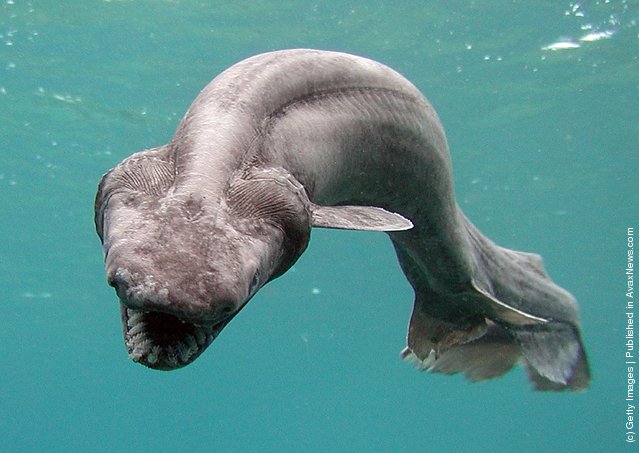
“The frilled shark (Chlamydoselachus anguineus) is one of two extant species of shark in the family Chlamydoselachidae, with a wide but patchy distribution in the Atlantic and Pacific Oceans. This uncommon species is found over the outer continental shelf and upper continental slope, generally near the bottom though there is evidence of substantial upward movements. It has been caught as deep as 1,570 m (5,150 ft), whereas in Suruga Bay, Japan it is most common at depths of 50–200 m (160–660 ft). Exhibiting several “primitive” features, the frilled shark has often been termed a «living fossil»”. – Wikipedia

Photo: A 1.6 meter long Frill shark swims in a tank after being found by a fisherman at a bay in Numazu, on January 21, 2007 in Numazu, Japan. The frill shark, also known as a Frilled shark usually lives in waters of a depth of 600 meters and so it is very rare that this shark is found alive at sea-level. It's body shape and the number of gill are similar to fossils of sharks which lived 350,000,000 years ago. (Photo by Awashima Marine Park/Getty Images)
Details
05 May 2011 10:01:00