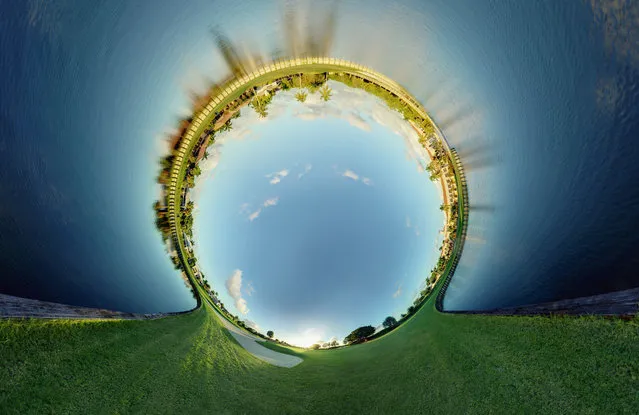
Randy Scott Slavin's photography is surrealism based in reality. His work portrays land and cityscapes in a 360 degree view, a perspective closer to that of the human eye than a 2D photograph, he says. Slavin's "Alternate Perspectives" is a series of photographs of a single location or landmark pieced together to create a 360 degree perspective in a flat image. The results are whimsical, and occasionally eerie, scenes that reflect the portion and scale of Slavin's surroundings when he took the photo.
Underwater photographer of the year – winner. Dancing Octopus by Gabriel Barathieu (France). Location: Island of Mayotte, off the coast of south-east Africa. “Balletic and malevolent”, one judge said of this octopus, hunting in a lagoon. Barathieu waited until spring tides when there was just 30cm of water on the flats and plenty of light in the shallows. (Photo by Gabriel Barathieu/UPY2017)
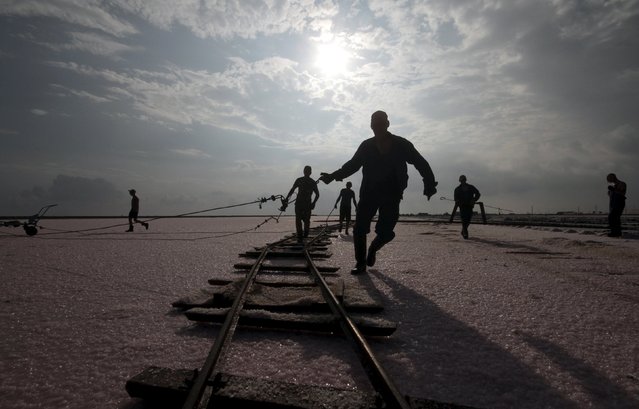
Workers adjust rails at the bed of a drained area of a lake used for the production of salt at the Sasyk-Sivash lake near the city of Yevpatoria, Crimea, September 25, 2015. The area has a long tradition of salt production, prepared from salt flats flooded with water from the Black Sea. (Photo by Pavel Rebrov/Reuters)
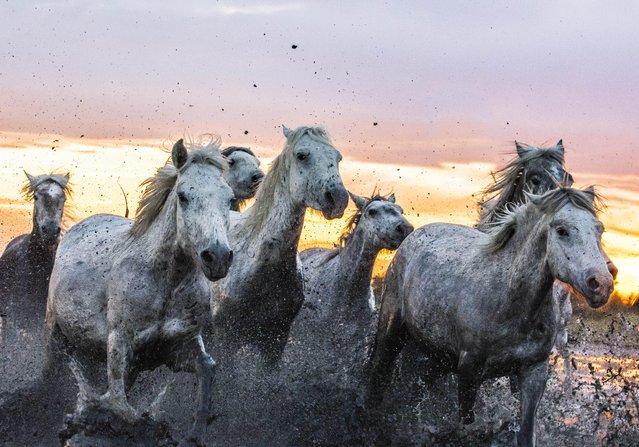
White horses of the Camargue thunder through the shallow salt flats at sunset on December 8, 2022. Known as Horses of the Sea, the breed native to the wetlands in southern France is one of the oldest in the world. (Photo by Nathalie Mountain/Media Drum Images)
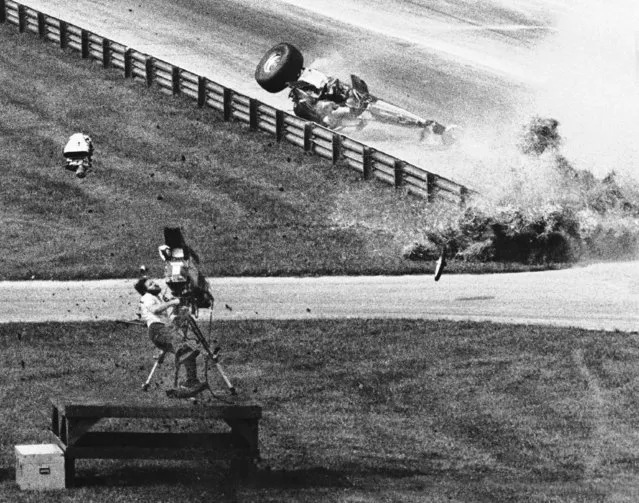
A dragster supercharger hits cameraman Joe Rooks of Bowling Green, Ohio, in the back at the U.S. Nationals N.H.R.A. drag races in Indianapolis, Indiana, on Saturday, September 1, 1979. Rooks was knocked flat by the heavy blower from a dragster that turned over and disintegrated near Rooks. Rooks died en route to the hospital. (Photo by Chuck Robinson/AP Photo)
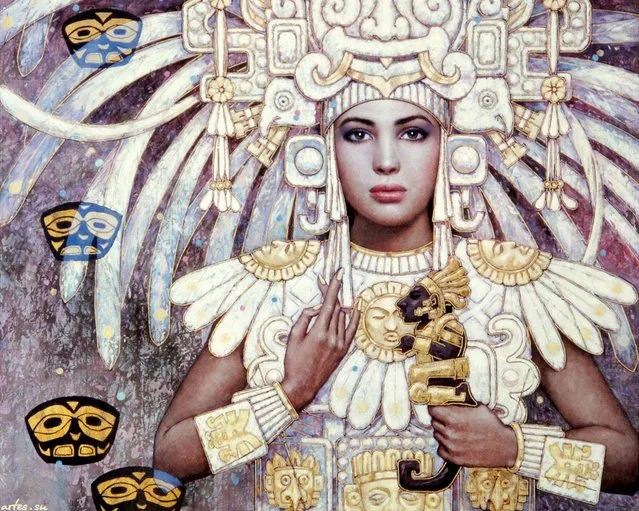
Karl Bang's paintings are unique because he combines totally different styles of painting within the same format. It is very difficult to design a balanced composition with realistic elements that are juxtaposed with flat colors and patterns. The faces of his subjects are painted realistically in the Western tradition with subtle gradations of color; while, his figures and costumes vignette into abstracted shapes, lines, flat colors and patterns that reflect Karl's background in China. It is as though there are different visual languages being spoken within his paintings.