Loading...
Done
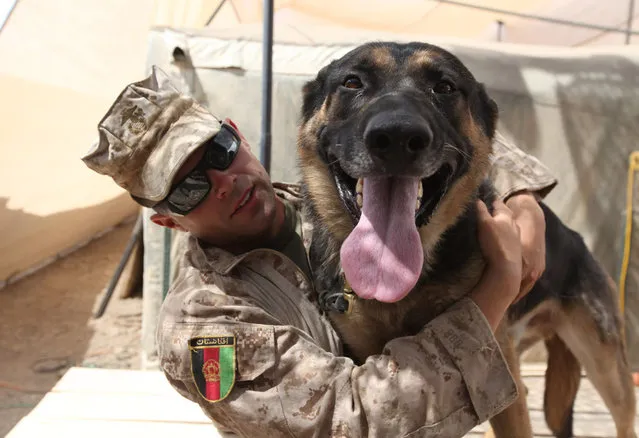
Afghanistan: Dogs of War Part 1

Throughout the course of the long war in Afghanistan, Coalition troops have relied on thousands of military working dogs to help keep them safe, and make their jobs easier. The dogs are trained to detect explosives, to find illegal drugs, to search for missing comrades, or target enemy combatants. Not only are they active on the front lines, but behind the lines they serve as therapy dogs, service dogs, and loyal companions. They also share the same risks as the ground troops, suffering injuries and sometimes death on the battlefields. Gathered here are images of these dogs and their handlers in Afghanistan and back home, from over the past several years, part of the ongoing series here on Afghanistan.
Details
03 Jun 2014 21:02:00
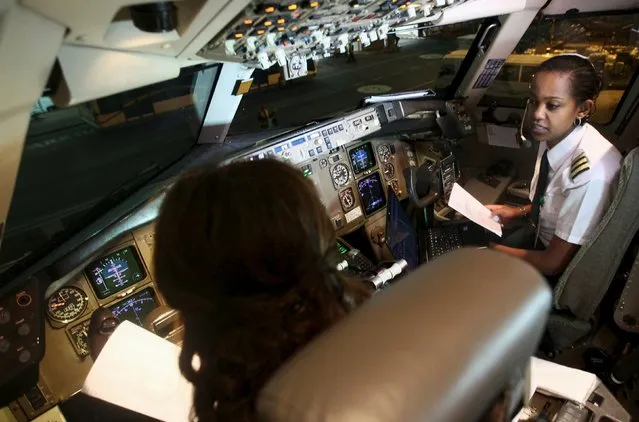
Ethiopian Airlines female pilots prepare the plane before takeoff at Bole international airport in the capital Addis Ababa, November 19, 2015. (Photo by Tiksa Negeri/Reuters)

Ethiopian Airlines female pilots prepare the plane before takeoff at Bole international airport in the capital Addis Ababa, November 19, 2015. Ethiopia Airlines on Thursday, dispatched its first ever all-female operated flight. Every aspect of the journey was handled by women, from the ground crew, aircraft maintenance to traffic controllers. Gualu and her co-pilot were charged with flying the crew and passengers to Bangkok, Thailand. (Photo by Tiksa Negeri/Reuters)
Details
21 Nov 2015 08:00:00
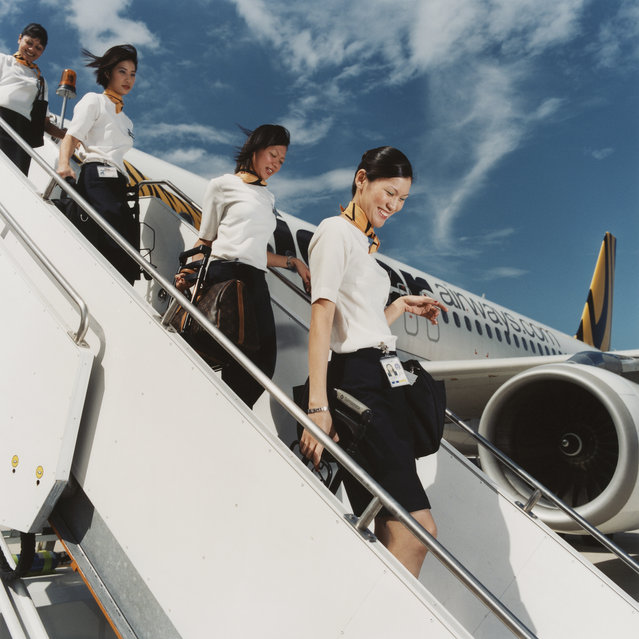
Tiger Airways, Singapore, 2006. (Photo by Brian Finke/The Washington Post)

Photographer Brian Finke spent nearly two years traversing the friendly skies, following the life of flight attendants in the air and on the ground, from Delta and Hawaiian Air, to Hooters Air, Southwest, Air France, British Airways, Air Asia, and dozens more. His images of flight attendants waving, applying makeup and deboarding plans while smiling appear as if they were ripped from an advertisement in a glossy magazine. Here: Tiger Airways, Singapore, 2006. (Photo by Brian Finke/The Washington Post)
Details
30 Sep 2015 08:02:00
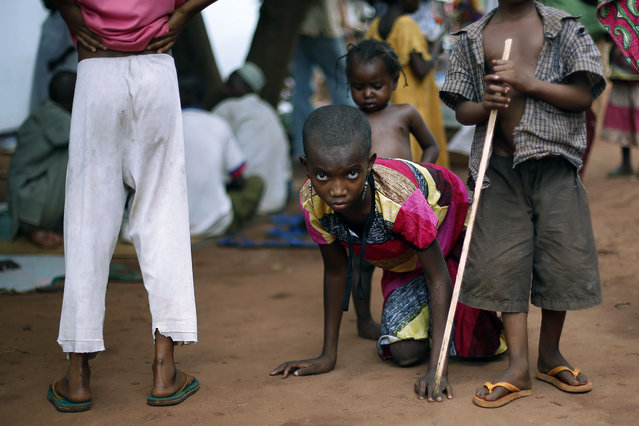
In this April 14, 2014 file photo, Hamamatou Harouna, 10, who lost the use of her legs to polio, crawls to the restroom on the grounds of the Catholic Church where she and hundreds of others found refuge after fleeing violence in her village, in Carnot, Central African Republic. Health authorities on Tuesday, August 25, 2020 are expected to declare the African continent free of the wild poliovirus after decades of effort, though cases of vaccine-derived polio are still sparking outbreaks of the paralyzing disease in more than a dozen countries. (Photo by Jerome Delay/AP Photo/File)

In this April 14, 2014 file photo, Hamamatou Harouna, 10, who lost the use of her legs to polio, crawls to the restroom on the grounds of the Catholic Church where she and hundreds of others found refuge after fleeing violence in her village, in Carnot, Central African Republic. Health authorities on Tuesday, August 25, 2020 are expected to declare the African continent free of the wild poliovirus after decades of effort, though cases of vaccine-derived polio are still sparking outbreaks of the paralyzing disease in more than a dozen countries. (Photo by Jerome Delay/AP Photo/File)
Details
15 Sep 2020 00:03:00
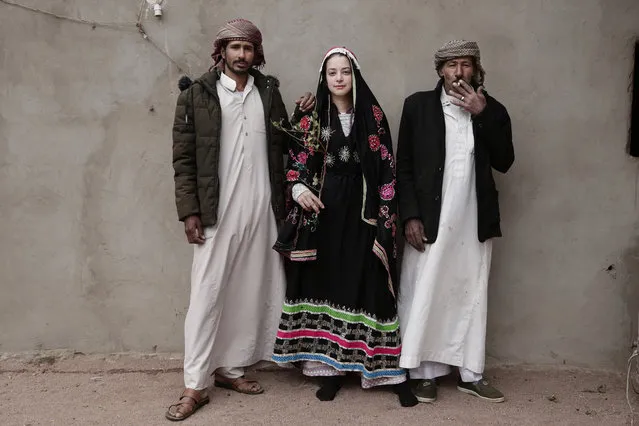
In this March 31, 2019 photo, an Egyptian student borrows a Bedouin wedding dress to pose for a photograph with Bedouin men from the Hamada tribe, in Wadi Sahw, Abu Zenima, in South Sinai, Egypt. Four Bedouin women are for the first time leading tours in Egypt’s Sinai Peninsula, breaking new ground in their deeply conservative community, where women almost never work outside the home or interact with outsiders.  The tourists can only be women, and the tours can’t go overnight. Each day before the sun sets, the group returns to the Hamada’s home village in Wadi Sahu, a narrow desert valley. (Photo by Nariman El-Mofty/AP Photo)

In this March 31, 2019 photo, an Egyptian student borrows a Bedouin wedding dress to pose for a photograph with Bedouin men from the Hamada tribe, in Wadi Sahw, Abu Zenima, in South Sinai, Egypt. Four Bedouin women are for the first time leading tours in Egypt’s Sinai Peninsula, breaking new ground in their deeply conservative community, where women almost never work outside the home or interact with outsiders. The tourists can only be women, and the tours can’t go overnight. Each day before the sun sets, the group returns to the Hamada’s home village in Wadi Sahu, a narrow desert valley. (Photo by Nariman El-Mofty/AP Photo)
Details
11 Apr 2019 00:01:00
Masooma Alizada (L) and Frozan Rasooli (R), members of Afghanistan's Women's National Cycling Team prepare a bicycle before training on the outskirts of Kabul February 20, 2015. (Photo by Mohammad Ismail/Reuters)

Masooma Alizada (L) and Frozan Rasooli (R), members of Afghanistan's Women's National Cycling Team prepare a bicycle before training on the outskirts of Kabul February 20, 2015. Afghanistan's Women's National Cycling Team has been breaking new ground for women's sports and pushing the boundaries of what is – and is not – acceptable for young women in the conservative Muslim country. (Photo by Mohammad Ismail/Reuters)
Details
15 Mar 2015 05:58:00
In Extremis By Sandro Giordano

There is something strangely appealing about the set of pictures created by Sandro Giordano in a series “In Extremis (Bodies With No Regret)”. Could it be the absurdity of the situation? Or the fact that our brain tries to make up some bizarre story to justify what is happening in the pictures? Of course it is impossible to explain why a pair of tennis players ended up lying flat on the ground with a pack of bananas hanging on the net, even if we forget about the tennis racket lodged in the neck of one of the players. Nevertheless, it is fun to recreate these scenes in your mind just seconds before the tragedy took place. (Photo by Sandro Giordano)
Details
18 Oct 2014 07:09:00
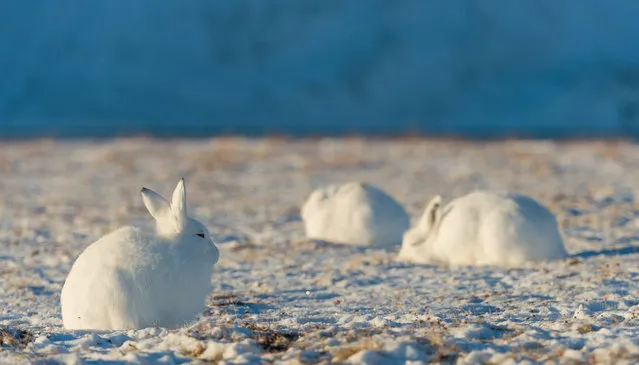
Arctic Hare

The arctic hare, or polar rabbit, is a species of hare which is adapted largely to polar and mountainous habitats. The arctic hare survives with a thick coat of fur and usually digs holes in the ground or under snow to keep warm and sleep. Arctic hares look like rabbits but have shorter ears, are taller when standing, and, unlike rabbits, can thrive in cold climates. They can travel together with many other hares, sometimes huddling with dozens or more, but are usually found alone, taking, in some cases, more than one partner. The arctic hare can run up to 60 kilometres per hour (40 mph). Its predators include the arctic wolf, arctic fox, and ermine.
Details
17 Mar 2014 13:56:00