Dancers perform during the Navam Perahera at the Gangaramaya Temple in Colombo, Sri Lanka, on February 15, 2022. (Photo by Xinhua News Agency/Rex Features/Shutterstock)
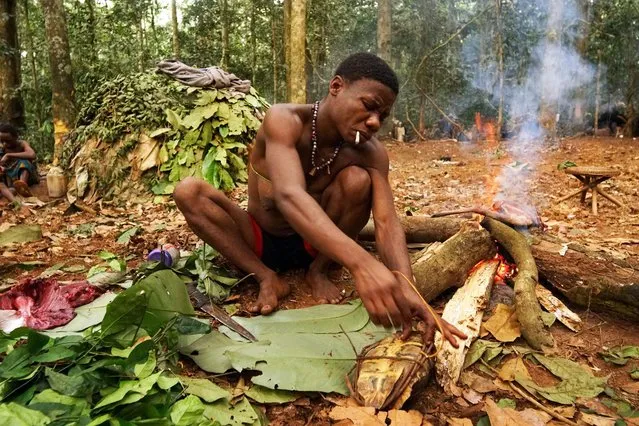
Baka pygmies in their forest home preparing food in, Sangha Forest, Central African Republic, February 2016. Here, in their forest home, traditional life continues in the face of multiplying challenges ranging from poachers, to ill health. Deep in the rainforests of central Africa lives one of the world’s most mysterious tribes. (Photo by Susan Schulman/Barcroft Images)
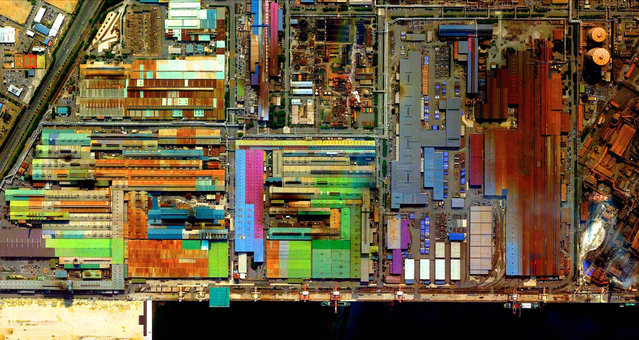
This series of pictures shot by satellite, show the man-made world as astronauts see it. Artist Benjamin Grant uses Google Earth to find the most compelling satellite images of human civilization. The stunning pictures of sprawling metropolises and vast reservoirs are sometimes unidentifiable until zoomed in. In order to find an extraordinary picture in the practically endless supply of satellite data, Benjamin focuses on the themes of current events or environmental issues. Here: Industrial Sector, Tokai, Japan. (Photo by Benjamin Grant/Digital Globe/Caters News)
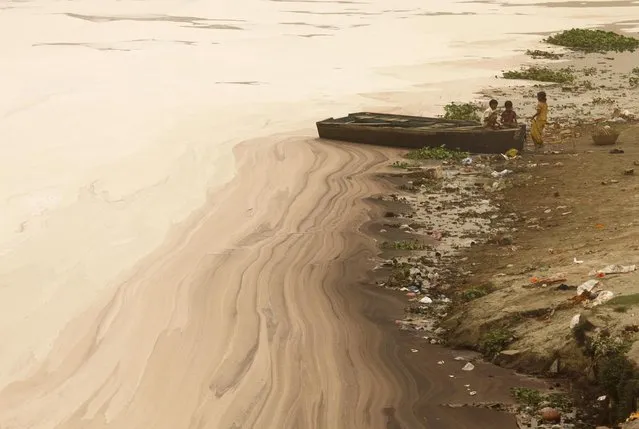
Children stand in a boat at the banks of the polluted Yamuna River during a dust haze as they wait to give a ride to worshippers in New Delhi during World Environment Day June 5, 2010. (Photo by Reinhard Krause/Reuters)
An Indian artist gives the finishing touches to a figure of the elephant-headed Hindu god Ganesha at a workshop ahead of the Ganesh Chaturthi festival in New Delhi on September 15, 2015. The idol is meant for the forthcoming festival Ganesha Chaturthi, a ten-day long event which is celebrated all over India. During the Ganpati festival, that is celebrated as the birthday of Lord Ganesha, idols of the Hindu deity are worshipped at hundreds of pandals or makeshift tents before they are immersed into water bodies. This year, the festival starts on 17 September 2015. (Photo by Sajjad Hussain/AFP Photo)
A reveller takes part in an annual block party known as “Cordao de Prata Preta”, one of the many carnival parties to take place in the neighbourhoods of Rio de Janeiro, February 6, 2016. (Photo by Pilar Olivares/Reuters)
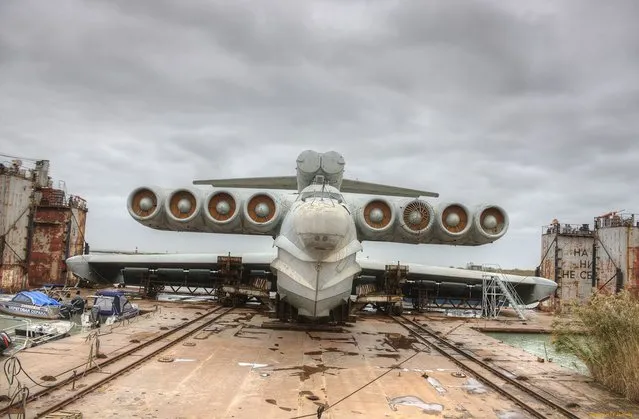
“The Lun-class ekranoplan (NATO reporting name Duck) was a ground effect vehicle (GEV) designed by Rostislav Evgenievich Alexeev and used by the Soviet and Russian navies from 1987 until sometime in the late 1990s. It “flew” using the lift generated by the ground effect of its large wings when close to the surface of the water – about four metres or less. Although they might look similar and/or have related technical characteristics, ekranoplans like the Lun are not aircraft, seaplanes, hovercraft, or hydrofoils – ground effect is a separate technology altogether. The International Maritime Organization classifies these vehicles as maritime ships. The name Lun comes from the Russian for harrier”. – Wikipedia (Photo by Igor113)
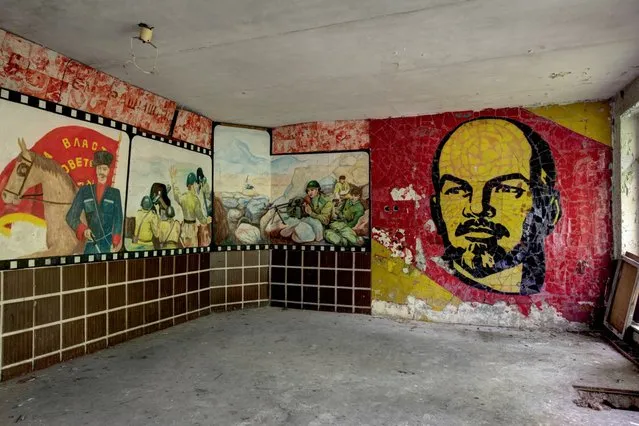
Only the most intrepid urban explorers cross the tattered ruins of the old Iron Curtain to endure the excessive bureaucracy, military paranoia and freezing winds of the East to hunt for the ghosts of an empire. Rebecca Litchfield is one who couldn’t resist the haunting allure of the ruins of the Soviet Union.