Loading...
Done
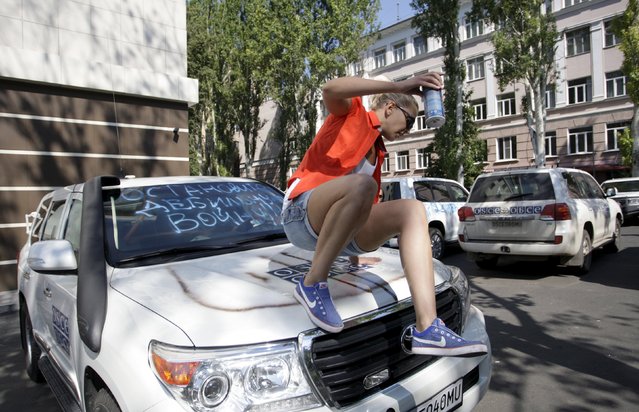
A demonstrator jumps from a vehicle of the Organisation for Security and Co-operation in Europe (OSCE) during a protest to demand what protesters say is true information from the OSCE about the shelling in Donetsk, Ukraine, July 23, 2015. The graffiti reads, “Stop moronic war!”. (Photo by Alexander Ermochenko/Reuters)

A demonstrator jumps from a vehicle of the Organisation for Security and Co-operation in Europe (OSCE) during a protest to demand what protesters say is true information from the OSCE about the shelling in Donetsk, Ukraine (since April 2014, the city is the administrative centre of the Donetsk People's Republic), July 23, 2015. The graffiti reads, “Stop moronic war!”. (Photo by Alexander Ermochenko/Reuters)
Details
24 Jul 2015 12:13:00
Street Art By DALeast

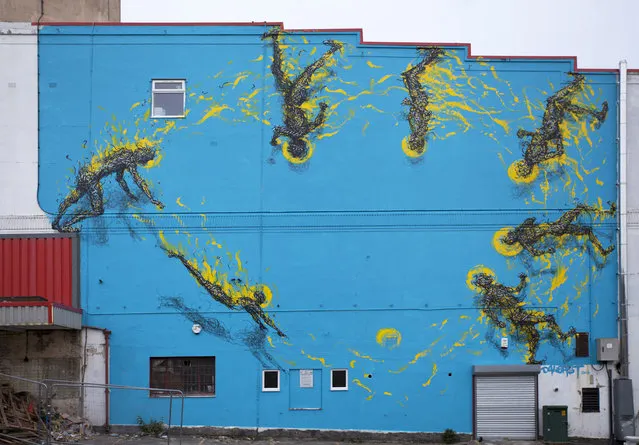
Chinese-born street artist DALeast, whose work is recognizable for its unique style anywhere he paints, has left a trail of stunning 3D graffiti spanning several continents. Based in South Africa with his wife, the 29-year-old artist spends around half a year traveling around the world and painting his graffiti artworks in different cities. Each piece of his street art looks as it’s made out of thousands of metal shards, which all come together beautifully to shape different animals, birds or humans in action.
Details
23 Sep 2014 12:34:00
Microphones are seen in front of Frida, a female Chihuahua, after the San Francisco Board of Supervisors issued a special commendation naming Frida “Mayor of San Francisco for a Day” in San Francisco, California November 18, 2014. (Photo by Stephen Lam/Reuters)

Microphones are seen in front of Frida, a female Chihuahua, after the San Francisco Board of Supervisors issued a special commendation naming Frida “Mayor of San Francisco for a Day” in San Francisco, California November 18, 2014. Frida, a previously unknown female Chihuahua, has won her first political office, being named Mayor of San Francisco for the day as part of a campaign to support the city's animal shelter. (Photo by Stephen Lam/Reuters)
Details
20 Nov 2014 12:35:00
Dressed Cats By  Alfred Mainzer

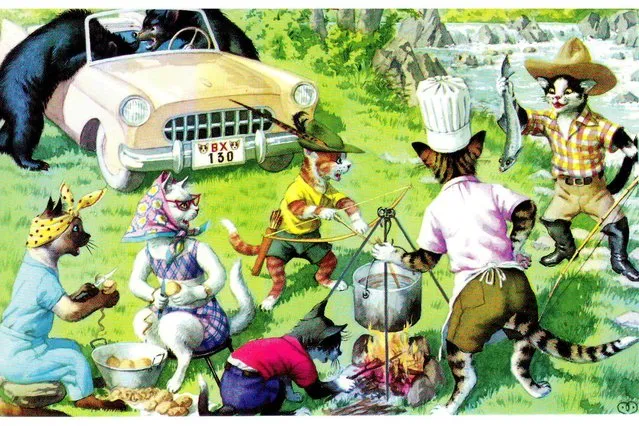
From the 1940s through the 1960s, the Alfred Mainzer Company of Long Island City, NY published a series of linen and photochrome humorous cat postcards illustrated by Eugen Hartung (or Hurtong) (1897–1973), sometimes referred to as “Mainzer Cats”. These postcards normally illustrate settings that are filled with action, often with a minor disaster just about to occur. While the dressed cats were by far the most popular and most plentiful cards, Hartung also painted other dressed animals – primarily mice, dogs, and hedgehogs.
Details
31 Jan 2014 13:57:00


Zivert – Life
Details
23 Apr 2019 00:03:00
A young girl makes a “tomato angel” on a tomato covered street during the traditional tomato fight “Tomatina” during the fiestas in Bunol, Spain, 28 August 2013. This year's Tomatina is the first pay festival after Bunol's City Hall sold 15,000 tickets to take part in the tomato throwing. A total of 20,000 people, including 5,000 residents, will throw over 130,000 kg tomatoes. Local authorities decided to sell tickets this year to avoid the overcrowding in previous years in which over 50,000 people took part in the event. (Photo by Biel Alino/EPA)

A young girl makes a “tomato angel” on a tomato covered street during the traditional tomato fight “Tomatina” during the fiestas in Bunol, Spain, 28 August 2013. This year's Tomatina is the first pay festival after Bunol's City Hall sold 15,000 tickets to take part in the tomato throwing. A total of 20,000 people, including 5,000 residents, will throw over 130,000 kg tomatoes. Local authorities decided to sell tickets this year to avoid the overcrowding in previous years in which over 50,000 people took part in the event. (Photo by Biel Alino/EPA)
Details
29 Aug 2013 11:24:00
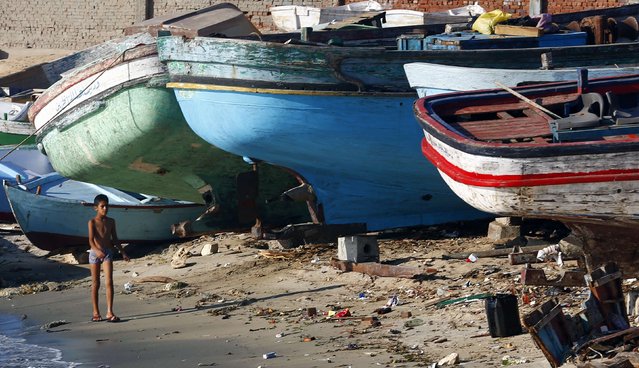
A boy walks past boats docked at the entrance gate of the fishermen's village in the El Max area of the Mediterranean city of Alexandria September 12, 2014.  El Max, where hundreds of boats dart through the canals, has been called the “Venice of Egypt” for its waterways and relaxed atmosphere. Its fishermen, however, worry about how they will make ends meet on meagre earnings they  say are being reduced further by polluted waters that are making fishing more difficult. (Photo by Amr Abdallah Dalsh/Reuters)

A boy walks past boats docked at the entrance gate of the fishermen's village in the El Max area of the Mediterranean city of Alexandria September 12, 2014. El Max, where hundreds of boats dart through the canals, has been called the “Venice of Egypt” for its waterways and relaxed atmosphere. Its fishermen, however, worry about how they will make ends meet on meagre earnings they say are being reduced further by polluted waters that are making fishing more difficult. While the government has tried to fix the state's bloated finances by cutting subsidies and reining in spending, some argue the reforms hurt Egypt's most vulnerable who have long relied on a generous system of fuel and food subsidies to supplement low incomes. (Photo by Amr Abdallah Dalsh/Reuters)
Details
12 Dec 2014 12:42:00
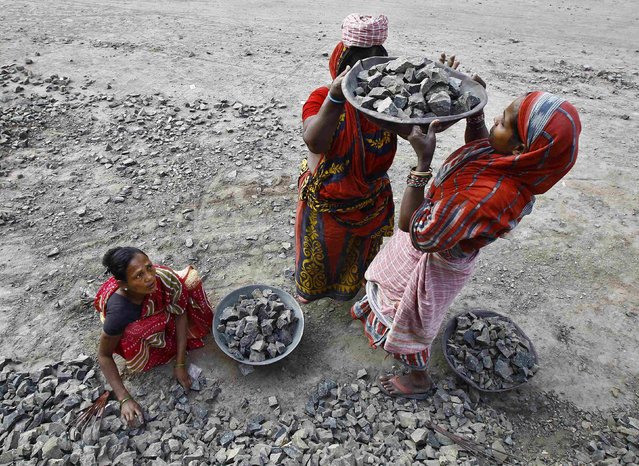
Women labourers work at the construction site of a road in Kolkata January 8, 2015. Across towns and cities in India, it is not uncommon to see women cleaning building sites, carrying bricks and or shoveling gravel - helping construct the infrastructure necessary for the country's economic and social development. (Photo by Rupak De Chowdhuri/Reuters)

Women labourers work at the construction site of a road in Kolkata January 8, 2015. Across towns and cities in India, it is not uncommon to see women cleaning building sites, carrying bricks and or shoveling gravel – helping construct the infrastructure necessary for the country's economic and social development. They help build roads, railway tracks, airports, and offices. They lay pipes for clean water supplies, cables for telecommunications, and dig the drains for sewage systems. But although women make up at least 20 percent of India's 40 million construction workers, they are less recognized than male workers with lower pay and often prone to safety hazards and sexual harassment. They are often unaware of their rights or scared to complain, say activists now trying to campaign for better treatment of women in the construction industry. (Photo by Rupak De Chowdhuri/Reuters)
Details
15 Jan 2015 13:47:00