Loading...
Done
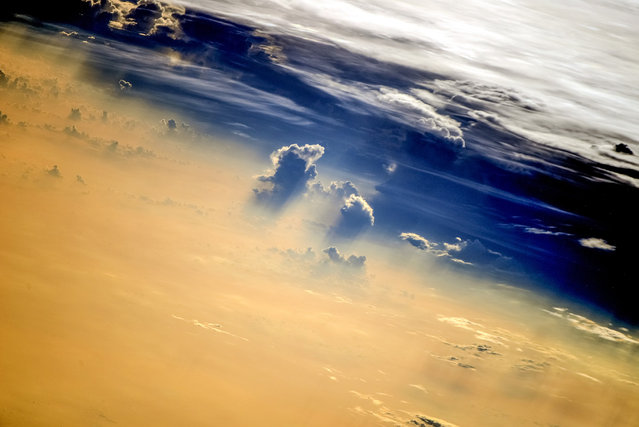
Image of the Clouds taken in August 2014 by astronauts on board the International Space Station (ISS).  A year from space photographs of hurricanes, typhoons and meteorite craters show an astronauts-eye view of our planet from hundreds of miles above the earth. The illuminating images were taken by astronauts onboard the International Space Station (ISS) over the course of 2014. (Photo by NASA/SPL/Barcroft Media)

Image of the Clouds taken in August 2014 by astronauts on board the International Space Station (ISS). A year from space photographs of hurricanes, typhoons and meteorite craters show an astronauts-eye view of our planet from hundreds of miles above the earth. The illuminating images were taken by astronauts onboard the International Space Station (ISS) over the course of 2014. (Photo by NASA/SPL/Barcroft Media)
Details
31 Dec 2014 14:47:00
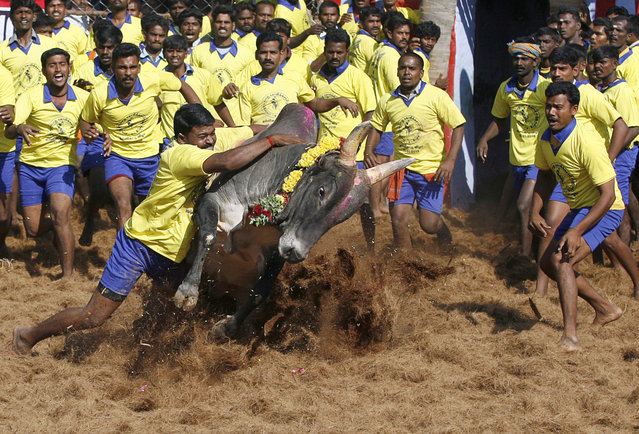
Bull tamers try to control a bull during the bull-taming sport called Jallikattu, in Palamedu, about 575 kilometers (359 miles) south of Chennai, India, Tuesday, Jan. 15, 2013. (Photo by Arun Sankar K./AP Photo)

“Jallikattu is a bull taming sport played in Tamil Nadu as a part of Pongal celebrations on Mattu Pongal day. Annually, jallikattu is held from January to July, played first in world-famous Palamedu, near Madurai on January 15 followed by “Alanganallur-jallikattu” in Alanganallur, near Madurai on 16 January. There is a specific breed of cattle bred for this purpose known as Jellicut and from the place of a big breeder Pulikulam”. – Wikipedia. Photo: Bull tamers try to control a bull during the bull-taming sport called Jallikattu, in Palamedu, about 575 kilometers (359 miles) south of Chennai, India, Tuesday, January 15, 2013. (Photo by Arun Sankar K./AP Photo)
Details
17 Jan 2014 10:06:00
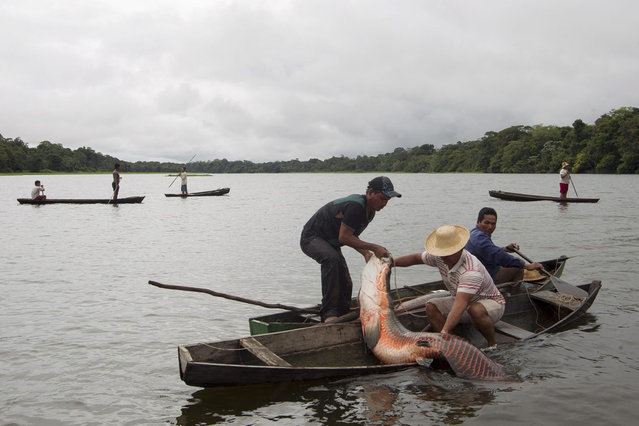
Villagers from the Porto Novo community load into their canoes arapaima or pirarucu, the largest freshwater fish species in South America and one of the largest in the world, while fishing in Poco Fundo lake along a branch of the Solimoes river, one of the main tributaries of the Amazon, in the Mamiraua nature reserve near Fonte Boa about 600 km (373 miles) west of Manaus, November 26, 2013. (Photo by Bruno Kelly/Reuters)

Villagers from the Porto Novo community load into their canoes arapaima or pirarucu, the largest freshwater fish species in South America and one of the largest in the world, while fishing in Poco Fundo lake along a branch of the Solimoes river, one of the main tributaries of the Amazon, in the Mamiraua nature reserve near Fonte Boa about 600 km (373 miles) west of Manaus, November 26, 2013. Catching the arapaima, a fish that is sought after for its meat and is considered by biologists to be a living fossil, is only allowed once a year by Brazil's environmental protection agency. The minimum size allowed for a fisherman to keep an arapaima is 1.5 meters (4.9 feet). (Photo by Bruno Kelly/Reuters)
Details
17 Dec 2013 08:03:00
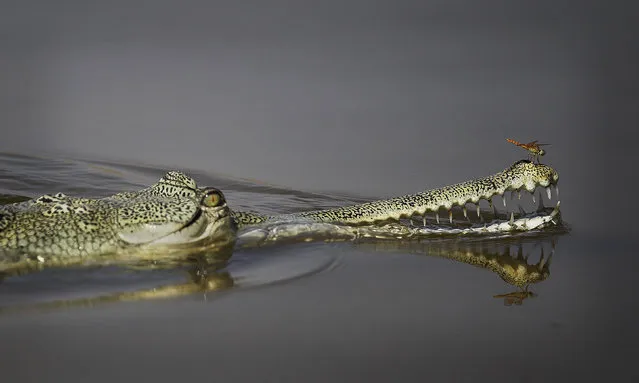
In this photo taken Wednesday, April 30, 2014, a dragonfly sits on the nose of a Gharial, rare crocodile-like creatures, in the River Chambal near Bhopepura village in the northern Indian state of Uttar Pradesh. The narrow 250-mile stretch of the Chambal is a place of crocodiles and jackals, of river dolphins and the occasional wolf. Hundreds of species of birds, storks, geese, babblers, larks, falcons and so many more, nest along the river. (Photo by Altaf Qadri/AP Photo)

In this photo taken Wednesday, April 30, 2014, a dragonfly sits on the nose of a Gharial, rare crocodile-like creatures, in the River Chambal near Bhopepura village in the northern Indian state of Uttar Pradesh. The narrow 250-mile stretch of the Chambal is a place of crocodiles and jackals, of river dolphins and the occasional wolf. Hundreds of species of birds, storks, geese, babblers, larks, falcons and so many more, nest along the river. Endangered birds lay small speckled eggs in tiny pits they dig in the sandbars. Gharials, rare crocodile-like creatures that look like they swaggered out of the Mesozoic Era, are commonplace here and nowhere else. (Photo by Altaf Qadri/AP Photo)
Details
23 Feb 2015 12:55:00
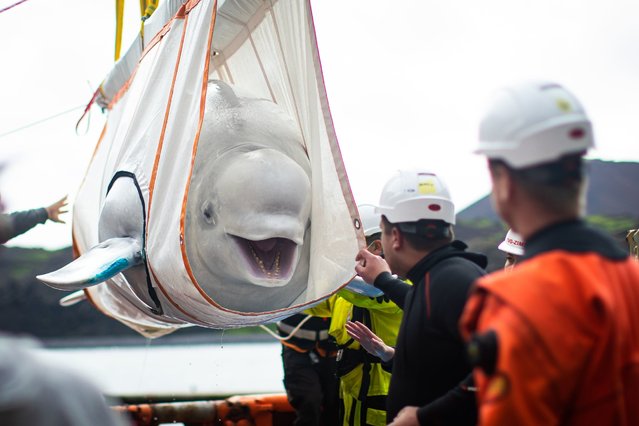
The Sea Life Trust team move Beluga Whale Little Gray from a tugboat during transfer to the bayside care pool where they will be acclimatised to the natural environment of their new home at the open water sanctuary in Klettsvik Bay in Iceland on August 7, 2020. The two Beluga whales, named Little Grey and Little White, are being moved to the world's first open-water whale sanctuary after travelling from an aquarium in China 6,000 miles away in June 2019. (Photo by Aaron Chown/PA Images via Getty Images)

The Sea Life Trust team move Beluga Whale Little Gray from a tugboat during transfer to the bayside care pool where they will be acclimatised to the natural environment of their new home at the open water sanctuary in Klettsvik Bay in Iceland on August 7, 2020. The two Beluga whales, named Little Grey and Little White, are being moved to the world's first open-water whale sanctuary after travelling from an aquarium in China 6,000 miles away in June 2019. (Photo by Aaron Chown/PA Images via Getty Images)
Details
28 Aug 2020 00:03:00
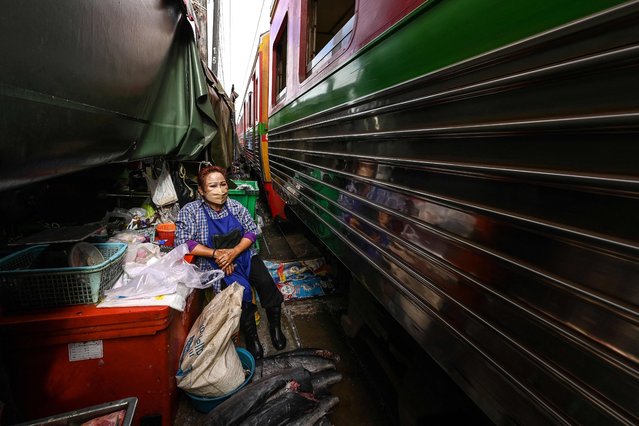
This photograph taken on June 4, 2022 shows fish vendor Somporn Thathom sitting at her stall as a passenger train passes through the Mae Klong railway market in Samut Songkhram province, around 80 kms (50 miles) southwest of Bangkok. Six times a day at the market, local customers and foreign tourists scramble into nooks and crannies while vendors calmly move their woven baskets of goods away from the tracks and close their umbrellas. (Photo by Manan Vatsyayana/AFP Photo)

This photograph taken on June 4, 2022 shows fish vendor Somporn Thathom sitting at her stall as a passenger train passes through the Mae Klong railway market in Samut Songkhram province, around 80 kms (50 miles) southwest of Bangkok. Six times a day at the market, local customers and foreign tourists scramble into nooks and crannies while vendors calmly move their woven baskets of goods away from the tracks and close their umbrellas. (Photo by Manan Vatsyayana/AFP Photo)
Details
29 Jun 2022 04:38:00
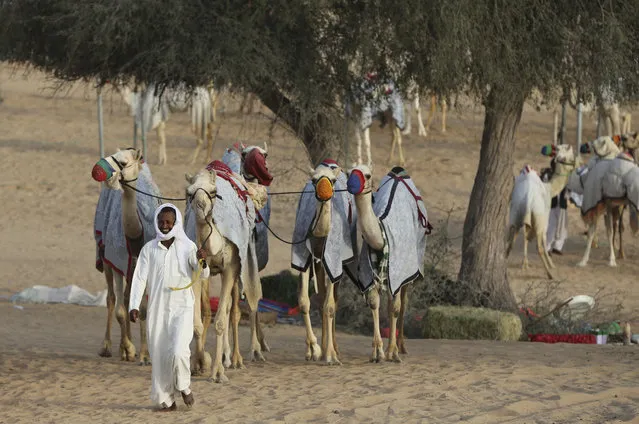
In this Saturday, April 8, 2017 photo, a keeper walks camels to the Al Marmoom Camel Racetrack, in al-Lisaili about 40 km (25  miles) southeast of Dubai, United Arab Emirates. (Photo by Kamran Jebreili/AP Photo)

In this Saturday, April 8, 2017 photo, a keeper walks camels to the Al Marmoom Camel Racetrack, in al-Lisaili about 40 km (25 miles) southeast of Dubai, United Arab Emirates. Camel racing is a big-money sport and fast thoroughbreds can fetch well over a million dollars. As rising temperatures across Gulf Arab countries signal the end of the winter camel racing season, Dubai is wrapping up its races with the annual Al Marmoom Heritage Festival that has drawn thousands of camels from across the oil-rich Gulf. (Photo by Kamran Jebreili/AP Photo)
Details
19 Apr 2017 08:44:00
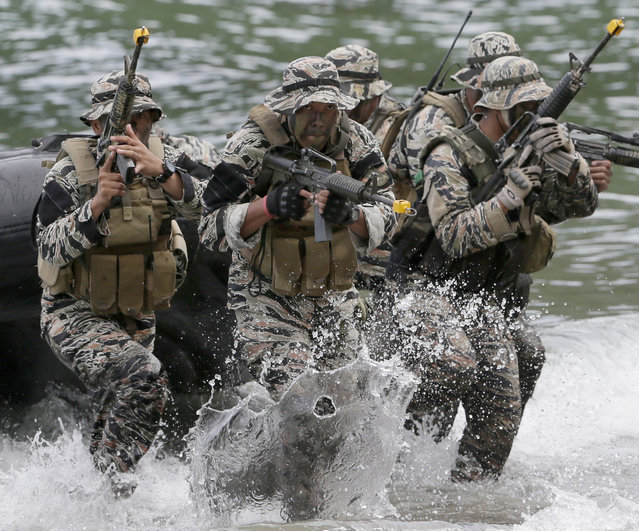
Philippine Marines from the Naval Special Operations Group (NAVSOG) storm the beach to simulate an “extraction” of a kidnapped victim as they kick off a five-day amphibious military exercise at the Philippine Marines training center in Ternate, Cavite province, about 50 miles (80kms) south of Manila, Philippines Thursday, September 24, 2015. (Photo by Bullit Marquez/AP Photo)

Philippine Marines from the Naval Special Operations Group (NAVSOG) storm the beach to simulate an “extraction” of a kidnapped victim as they kick off a five-day amphibious military exercise at the Philippine Marines training center in Ternate, Cavite province, about 50 miles (80kms) south of Manila, Philippines Thursday, September 24, 2015. The naval exercise dubbed PAGSISIKAP 2015 is aimed at enhancing capability of their fleet and forces as well as to strengthen interoperability of the Marines. (Photo by Bullit Marquez/AP Photo)
Details
26 Sep 2015 08:01:00