Loading...
Done
Passengers pose for a selfie as they wait for the Night Tube train service at Oxford Circus on the London underground system in London, Britain August 20, 2016. The London Underground is starting its first-ever overnight service, a move city leaders hope will make the British capital a truly 24-hour city and bolster the local economy. The new service will only run on weekends and initially be available on just the well-traveled Central and Victoria lines. But the initiative reflects London’s growing population and cosmopolitan mentality, marking a coming of age for a city that many in the Big Apple regard as quaint and sleepy. (Photo by Paul Hackett/Reuters)

Passengers pose for a selfie as they wait for the Night Tube train service at Oxford Circus on the London underground system in London, Britain August 20, 2016. The London Underground is starting its first-ever overnight service, a move city leaders hope will make the British capital a truly 24-hour city and bolster the local economy. (Photo by Paul Hackett/Reuters)
Details
21 Aug 2016 11:09:00
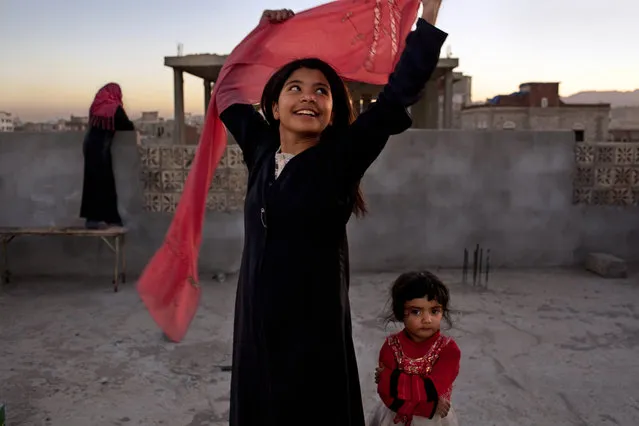
Some of the most powerful narratives of the past decade have been produced by a forward-thinking generation of women photojournalists as different as the places and the subjects they have covered. National Geographic's “Women of Vision” exhibit features the work of 11 photographers and is on display at the Fernbank Museum of Natural History in Atlanta until January 3, 2016. (Photo by Stephanie Sinclair/National Geographic)

Some of the most powerful narratives of the past decade have been produced by a forward-thinking generation of women photojournalists as different as the places and the subjects they have covered. National Geographic's “Women of Vision” exhibit features the work of 11 photographers and is on display at the Fernbank Museum of Natural History in Atlanta until January 3, 2016. Here: Nujood Ali stunned the world in 2008 by obtaining a divorce at age 10 in Yemen, striking a blow against forced marriage. (Photo by Stephanie Sinclair/National Geographic)
Details
11 Dec 2015 08:05:00
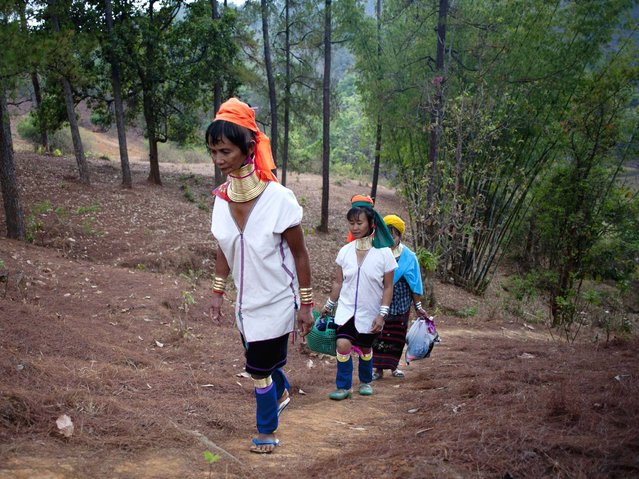
One of the theories says that the coils originate from the desire to look more attractive by exaggerating sexual dimorphism, as women have more slender necks than men. (Photo by Ye Aung Thu/AFP Photo)

This photo taken on April 16, 2014 shows ethnic Kayan women wearing traditional clothes and bronze rings around tbeir neck in Panpet village, Demoso township in Kayah state, eastern Myanmar. Some ethnic Kayan women, also known as Padaung, begin wearing the bronze rings on their neck and legs from a young age. Usually they start wearing six to ten rings when they are five to ten-years-old and then they put on one more ring a year for years after then. (Photo by Ye Aung Thu/AFP Photo)
Details
23 Apr 2014 08:56:00
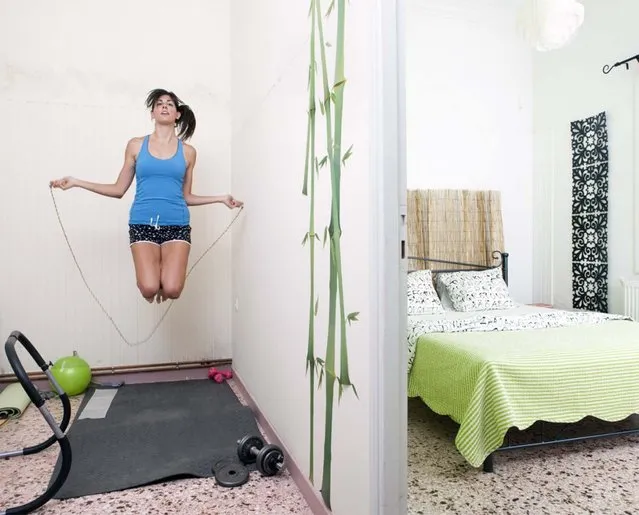
Katerinai, 27 – Athens, Greece. (Photo by Gabriele Galimberti/Riverboom Ltd)

“Getting to see girls’ bedrooms must have been a teenage obsession for the members of the all-male photographic collective Riverboom. Now that they have more or less grown up, they have decided to transform that dream into a reality. Riverboom’s Gabriele Galimberti and Edoardo Delille are traveling the five continents to see where girls, between the ages of 18 and 30, sleep. They have discovered that girls’ bedrooms are much more then just places where they lay down their heads – they are the places where girls read, love, dream, work and play”. – Gabriele Galimberti. Photo: Katerinai, 27 – Athens, Greece. (Photo by Gabriele Galimberti/Riverboom Ltd)
Details
17 Oct 2013 09:21:00
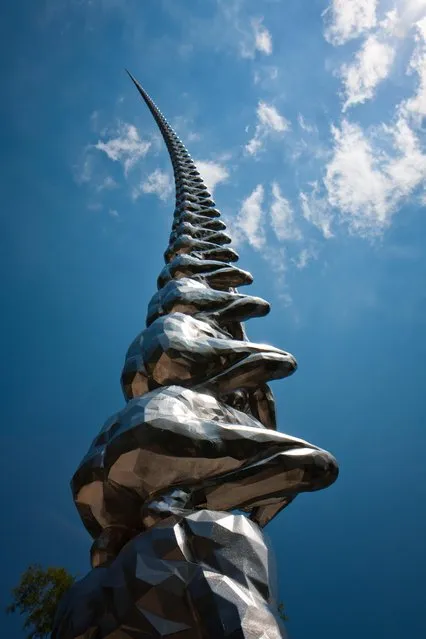
“Karma” by Do-Ho Suh. Sydney and Walda Besthoff Sculpture Garden, New Orleans Museum of Art, New Orleans, LA. (Photo by Alan Teo)

“Do-Ho Suh addresses issues of identity, memory, and relationships. Son of the famous Korean ink-painter Suh Se-Ok, Do-Ho Suh is a leading figure in the transnational avant-garde generation of Korean artists who came of age in the late 1990s, and his work eloquently represents a dual consciousness between East and West”.

Photo: “Karma” by Do-Ho Suh. Sydney and Walda Besthoff Sculpture Garden, New Orleans Museum of Art, New Orleans, LA. (Photo by Alan Teo)


Details
05 Mar 2013 09:37:00
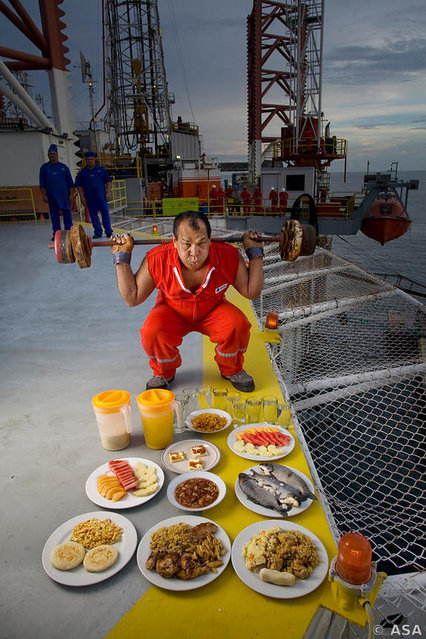
What the World Eats By Peter Menzel And Faith D'Aluisio Part 1

A stunning photographic collection featuring portraits of people from 30 countries and the food they eat in one day. In this fascinating study of people and their diets, 80 profiles are organized by the total number of calories each person puts away in a day. Featuring a Japanese sumo wrestler, a Massai herdswoman, world-renowned Spanish chef Ferran Adria, an American competitive eater, and more, these compulsively readable personal stories also include demographic particulars, including age, activity level, height, and weight. Essays from Harvard primatologist Richard Wrangham, journalist Michael Pollan, and others discuss the implications of our modern diets for our health and for the planet. This compelling blend of photography and investigative reportage expands our understanding of the complex relationships among individuals, culture, and food.
Details
23 Apr 2014 14:34:00
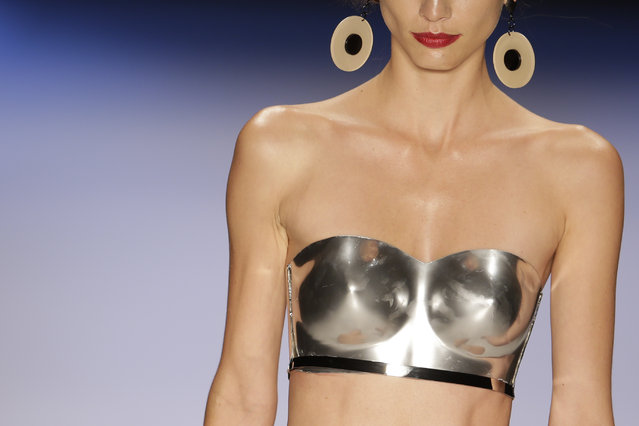
A model wears a creation from the Triya summer collection during Fashion Rio in Rio de Janeiro, Brazil, Friday, April 19, 2013. (Photo by Felipe Dana/AP Photo)

Felipe Dana discovered photography at age 15 when he started working as an assistant for event and commercial photographers. At the close of 2009, he decided to focus his career solely on photojournalism. Dana has focused his work on documenting the consequences of social changes in slums due to upcoming major sports events scheduled for 2014 and 2016 in Rio de Janeiro, where he currently lives and works as a staff photographer for The Associated Press. Photo: A model wears a creation from the Triya summer collection during Fashion Rio in Rio de Janeiro, Brazil, Friday, April 19, 2013. (Photo by Felipe Dana/AP Photo)
Details
15 May 2014 07:29:00
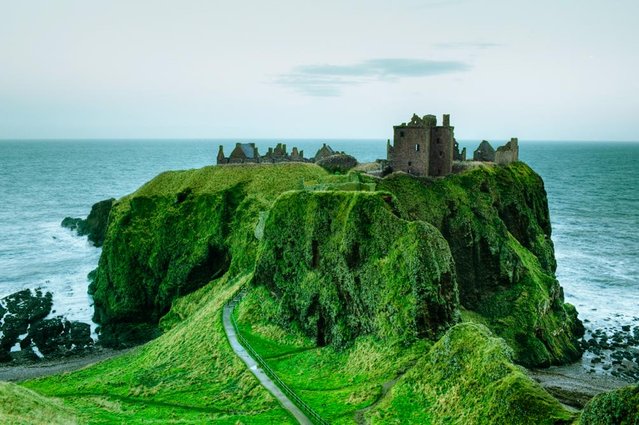
Dunnottar Castle In Scottish

Dunnottar Castleis a ruined medieval fortress located upon a rocky headland on the north-east coast of Scotland, about 3 kilometres (1.9 mi) south of Stonehaven. The surviving buildings are largely of the 15th and 16th centuries, but the site is believed to have been fortified in the Early Middle Ages. Dunnottar has played a prominent role in the history of Scotland through to the 18th-century Jacobite risings because of its strategic location and the strength of its situation. Dunnottar is best known as the place where the Honours of Scotland, the Scottish crown jewels, were hidden from Oliver Cromwell's invading army in the 17th century. The property of the Keiths from the 14th century, and the seat of the Earl Marischal, Dunnottar declined after the last Earl forfeited his titles by taking part in the Jacobite rebellion of 1715. The castle was restored in the 20th century and is now open to the public.
Details
13 Jan 2014 11:31:00