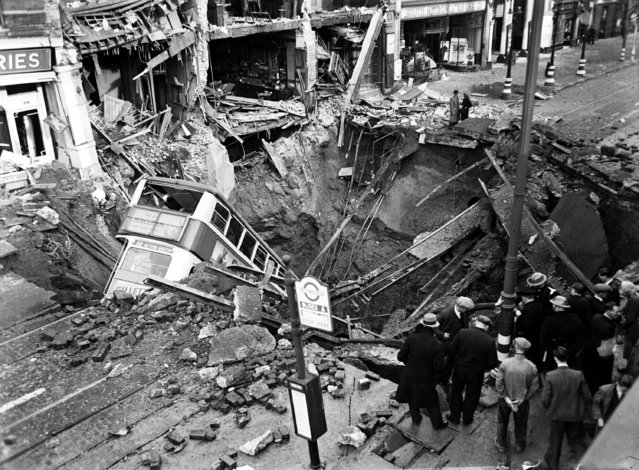
Following a large air raid by German bombers, local people, coming out of their air raid shelters found a bus standing on end in a large crater, in Balham, London, October 15, 1940. (Photo by AP Photo)
Rays of the misty sunrise swathe Christ Church in the village of Brockham in Surrey, UK on September 29, 2025. Colder temperatures are expected in the early part of the day with mist and fog clearing later in the south. (Photo by Peter Macdiarmid/The Times)
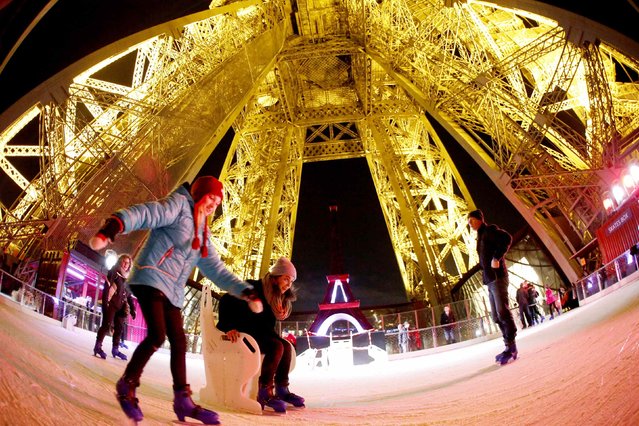
Tourists ice skate at night on the Eiffel Tower's skating rink in Paris December 9, 2014. The skating rink, located on the first level of the Eiffel Tower, opens to the public as part of the Christmas holiday season. (Photo by Charles Platiau/Reuters)
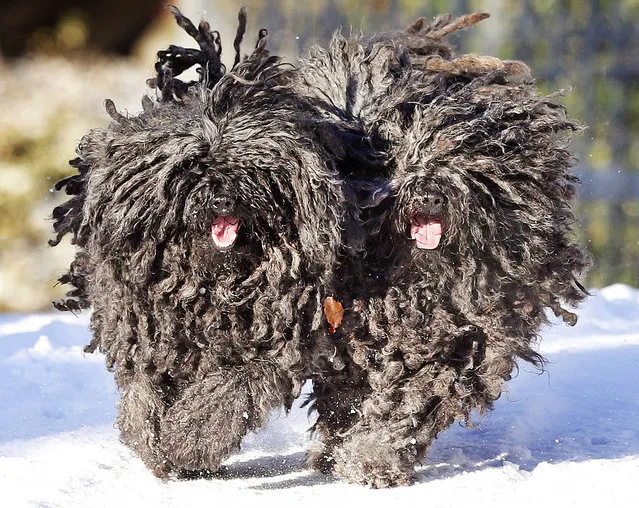
The two Pulis Quastie and Gin-Gin run in the snow in their garden in Lautertal, southern Germany, Thursday, January 5, 2017. (Photo by Michael Probst/AP Photo)
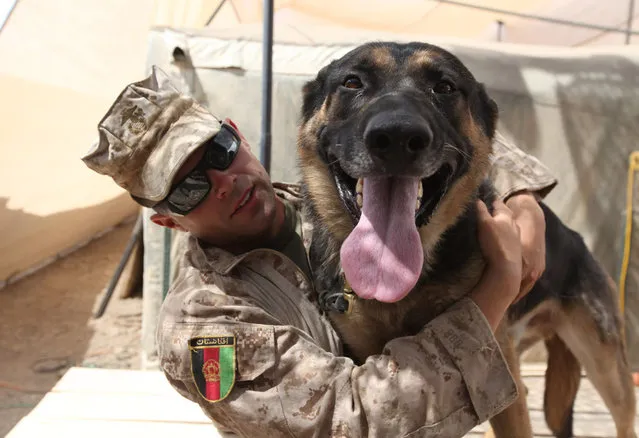
Throughout the course of the long war in Afghanistan, Coalition troops have relied on thousands of military working dogs to help keep them safe, and make their jobs easier. The dogs are trained to detect explosives, to find illegal drugs, to search for missing comrades, or target enemy combatants. Not only are they active on the front lines, but behind the lines they serve as therapy dogs, service dogs, and loyal companions. They also share the same risks as the ground troops, suffering injuries and sometimes death on the battlefields. Gathered here are images of these dogs and their handlers in Afghanistan and back home, from over the past several years, part of the ongoing series here on Afghanistan.
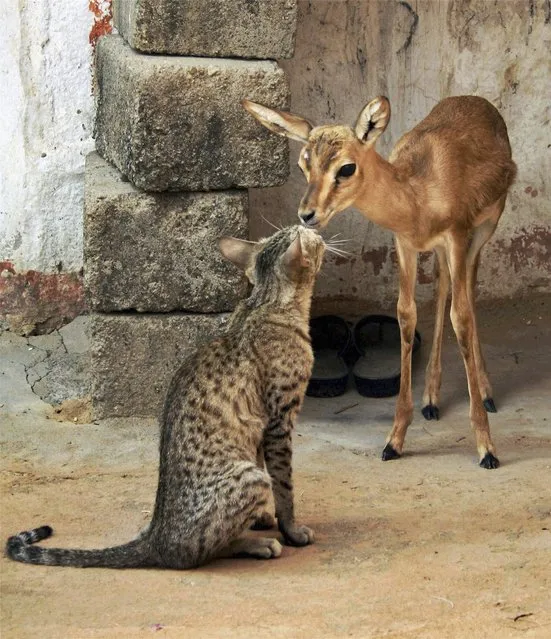
In this Wednesday, May 23, 2012 photograph, a young deer and a cat share a moment in Feench village near Jodhpur, Rajasthan state, India. (Photo by AP Photo)