Loading...
Done
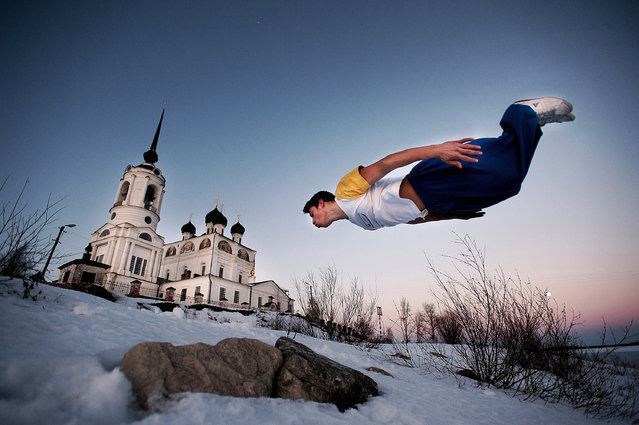
Anton Unitsyn, Russia. Shortlist, Professional , Daily Life. Parkour jumpers on their daily training. On the background – one of the main Solvychegodsk sights – Blagoveshchensky Cathedral. This church is among 3 churches, that survived soviet times. At the begining of 20th century there were 13 churches in Solvichegodsk. After breakdown of the communism, Solvichegodsk as many small towns in russia is stuck in it's past. Despite everything, people in Solvichegodsk still belive in their positive future, and wait for wind of change. (Photo by Anton Unitsyn/Sony World Photography Awards)

Anton Unitsyn, Russia. Shortlist, Professional , Daily Life. Parkour jumpers on their daily training. On the background – one of the main Solvychegodsk sights – Blagoveshchensky Cathedral. This church is among 3 churches, that survived soviet times. At the begining of 20th century there were 13 churches in Solvichegodsk. After breakdown of the communism, Solvichegodsk as many small towns in russia is stuck in it's past. Despite everything, people in Solvichegodsk still belive in their positive future, and wait for wind of change. (Photo by Anton Unitsyn/Sony World Photography Awards)
Details
25 Feb 2016 12:16:00
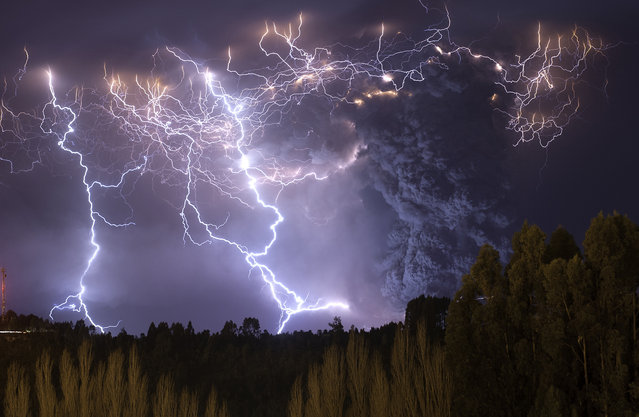
The eruption of Cordon Caulle began on June 4, 2011, located in the Region of Los Rios in Chile. For about 12 months, people and animals became accustomed to living with the daily fall of ash, which also caused problems in the air traffic in South America. The explosions and lightning during first days of the eruption could be seen from hundreds of miles around. This photograph was taken on the second night of eruption from the town of Lago Ranco. (Photo and caption by Francisco Negroni/National Geographic Traveler Photo Contest)

The eruption of Cordon Caulle began on June 4, 2011, located in the Region of Los Rios in Chile. For about 12 months, people and animals became accustomed to living with the daily fall of ash, which also caused problems in the air traffic in South America. The explosions and lightning during first days of the eruption could be seen from hundreds of miles around. This photograph was taken on the second night of eruption from the town of Lago Ranco. (Photo and caption by Francisco Negroni/National Geographic Traveler Photo Contest)

ATTENTION! All pictures are presented in high resolution. To see Hi-Res images – just TWICE click on any picture. In other words, click small picture – opens the BIG picture. Click BIG picture – opens VERY BIG picture.
Details
23 Jun 2013 11:24:00