Loading...
Done
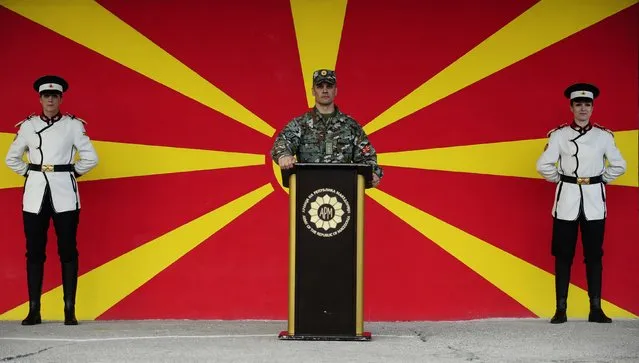
Corporals Verica Zlatevska (L) and Dragana Kitanovska (R) attend an honour guard training session at an army barracks in Skopje March 4, 2015. REUTERS/Ognen Teofilovski (MACEDONIA  - Tags: MILITARY SOCIETY)

Corporals Verica Zlatevska (L) and Dragana Kitanovska (R) attend an honour guard training session at an army barracks in Skopje March 4, 2015. Macedonia's honour army battalion, the ceremonial uniformed guard that receives every foreign president, dignitaries and delegations, but also sees off and welcomes the head of state every time he leaves the country, has a different glow. For the first time in the history of Macedonia's army, the honour guard has two women in its ranks. There has not been an event in which one of them is not in the first row. Zlatevska joined the army in 2003, Kitanovska in 2006. Picture taken March 4, 2015. REUTERS/Ognen Teofilovski (MACEDONIA - Tags: MILITARY SOCIETY)
Details
12 Mar 2015 11:05:00
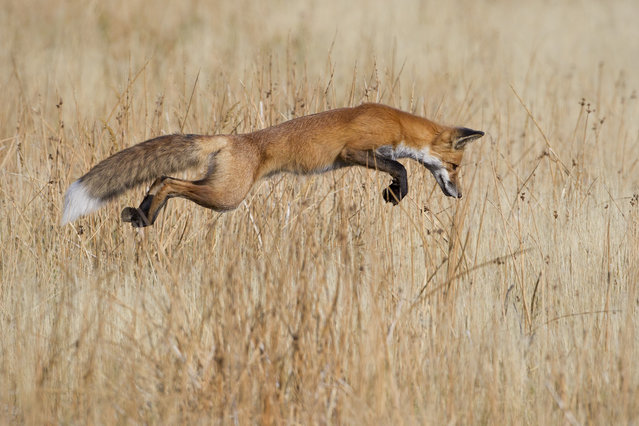
Canada: “Lucky pounce”. (Photo by Connor Stefanison/Wildlife Photographer of the Year 2013)

The winners of The London’s Natural History Museum's prestigious Wildlife Photographer of the Year for 2013 have finally been unveiled. Selected from almost 43,000 entries from 96 countries, the winners offer a glimpse of the stunning array of natural beauty on our planet. Photo: Canada: “Lucky pounce”. “Anticipating the pounce – that was the hardest part”, says Connor, who had come to Yellowstone National Park, Wyoming, USA, in search of wildlife as much as the spectacular landscape. He had found this fox, his first ever, on his last day in the park. It was so absorbed in hunting that Connor had plenty of time to get out of the car and settle behind a rock. It quartered the grassland, back and forth, and then started staring intently at a patch of ground, giving Connor just enough warning of the action to come. When it sprung up, Connor got his shot. And when it landed, the fox got his mouse. (Photo by Connor Stefanison/Wildlife Photographer of the Year 2013)
Details
17 Oct 2013 08:12:00


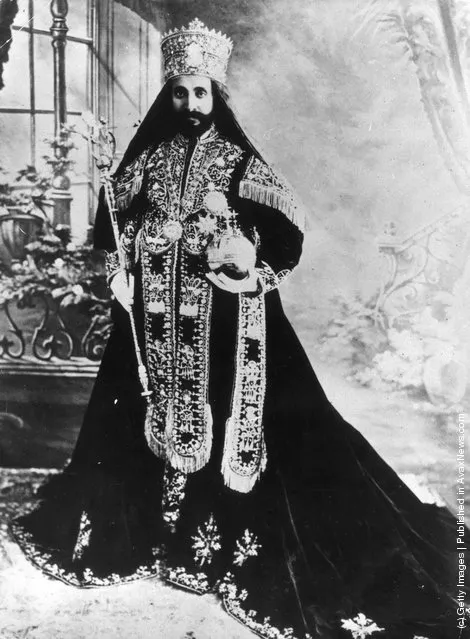
“Haile Selassie I (23 July 1892 – 27 August 1975), born Tafari Makonnen, was Ethiopia's regent from 1916 to 1930 and Emperor of Ethiopia from 1930 to 1974. The heir to a dynasty that traced its origins to the 13th century, and from there by tradition back to King Solomon and Queen Makeda, Empress of Axum, known in the Abrahamic tradition as the Queen of Sheba. Haile Selassie is a defining figure in both Ethiopian and African history.

Haile Selassie is revered as the returned Messiah of the Bible, God incarnate, among the Rastafari movement, the number of followers of which is estimated between 200,000 and 800,000. Begun in Jamaica in the 1930s, the Rastafari movement perceives Haile Selassie as a messianic figure who will lead a future golden age of eternal peace, righteousness, and prosperity. He himself remained an Ethiopian Orthodox Christian throughout his life”. – Wikipedia

Photo: Negusa Negasti, Emperor of Ethiopia Haile Selassie I, known as “Lord of Lords”, “The Conquering Lion of the tribe of Judah”, “Light of the world”, “Elect of God”, in full ceremonial regalia following his coronation. (Photo by Hulton Archive/Getty Images)
Details
21 Jun 2011 11:04:00
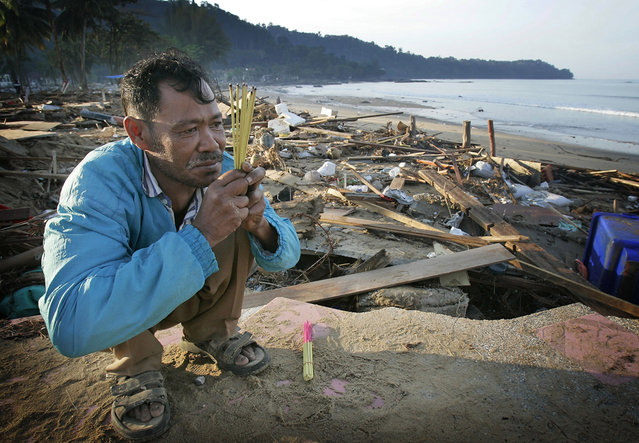
In this December 29, 2004 file photo, Kusol Wetchakul offers prayers for the soul of his sister, at dawn along the beach near Khao Lak, Thailand.  Wetchakul's sister was swept out to sea and believed drowned as she sold goods to tourists on the popular tourist beach just north of Phuket. (Photo by David Longstreath/AP Photo)

In this December 29, 2004 file photo, Kusol Wetchakul offers prayers for the soul of his sister, at dawn along the beach near Khao Lak, Thailand. Wetchakul's sister was swept out to sea and believed drowned as she sold goods to tourists on the popular tourist beach just north of Phuket. Friday marks the 10th anniversary of one of the deadliest natural disasters in world history: a tsunami, triggered by a massive earthquake off the Indonesian coast, leaving more than 230,000 people dead in 14 countries and causing about $10 billion in damage. (Photo by David Longstreath/AP Photo)
Details
26 Dec 2014 15:16:00
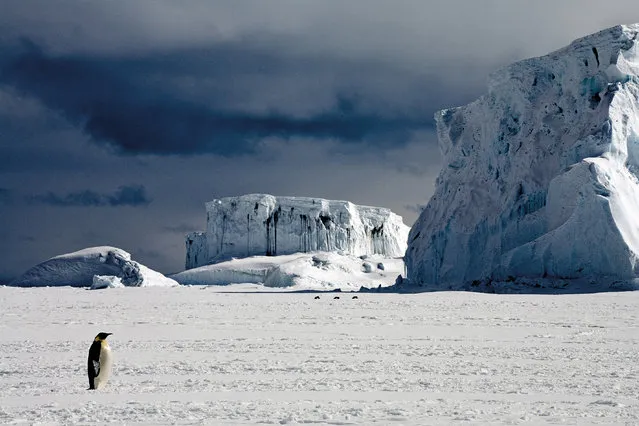
Image from Camille Seamans new book, “Melting Away”. (Photo by Camille Seaman/Barcroft Media)

Documenting the effects of climate change first hand over the past eight years, Camille Seaman fears we may be on the road to the last iceberg. Photographing the enormous frozen floats at both poles for the past eight years, the Californian adventurer has seen the receding ice shelves and experienced the changing warmer weather. Feeling that her intimate and emotional work documents a snapshot of history, Camille presents her series “The Last Iceberg” as a study of what she sees as the personality of each huge iceberg. Drawing parallels with the famous novel, “The Last of the Mohicans”, Camille, 42, wonders whether these unique, almost alien natural features will become a thing of the past or part of nature's renewal process. (Photo by Camille Seaman/Barcroft Media)
Details
02 Dec 2014 12:10:00
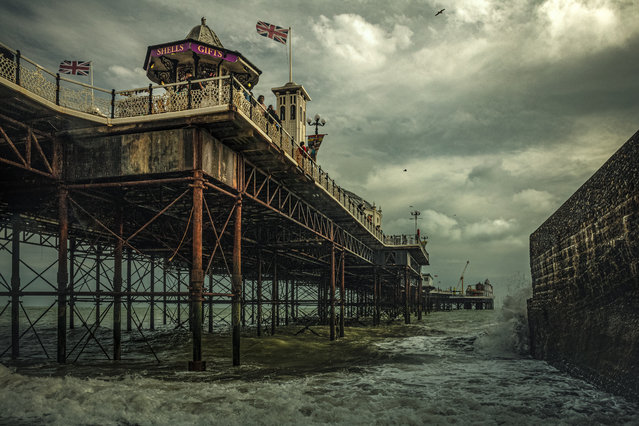
Overall Winner: The Brighton Palace Pier. “Standing in the full force of weather and time: the Brighton Palace Pier. My wife and I have been visiting Brighton for a few years now and I always strive to capture this lovely historic seaside town with a sense of the atmosphere and cinematic interpretation that it instills in me”. (Photo by Michael Marsh/Historic Photographer of the Year 2020)

The winners of the Historic Photographer of the Year Awards 2020 from triphistoric.com celebrate the places and cultural sites around the world that offer a window to the history that exists all around us. This year, restricted by Covid, photographers were called on to scour their photographic archive to share their imagery of those places that dominate our past. Here: The Brighton Palace Pier. (Photo by Michael Marsh/Historic Photographer of the Year 2020)
Details
27 Nov 2020 00:03:00


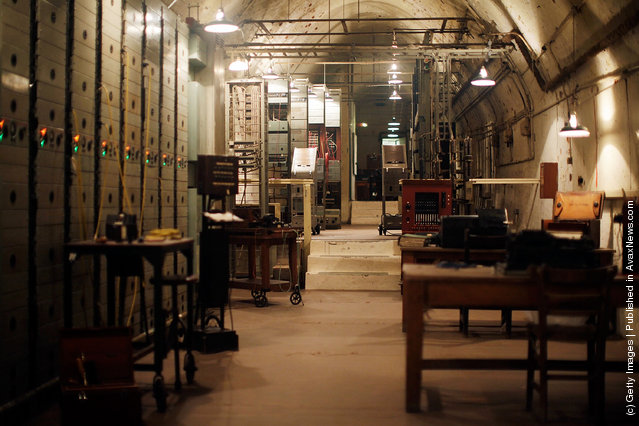
“Dover Castle is a medieval castle in the town of the same name in the English county of Kent. It was founded in the 12th century and has been described as the “Key to England” due to its defensive significance throughout history. It is the largest castle in England.

The outbreak of the Second World War in 1939 saw the tunnels converted first into an air-raid shelter and then later into a military command centre and underground hospital. In May 1940, Admiral Sir Bertram Ramsey directed the evacuation of French and British soldiers from Dunkirk, code-named Operation Dynamo, from his headquarters in the cliff tunnels”. – Wikipedia

Photo: The Repeater Station in the subterranean tunnels underneath Dover Castle, which has been restored by English Heritage for a public exhibition on June 3, 2011 in Dover, England. The evacuation of allied soldiers from Dunkirk was masterminded and co-ordinated from the secret command and control centre in the tunnels deep below the castle. (Photo by Matthew Lloyd/Getty Images)
Details
07 Jun 2011 09:26:00
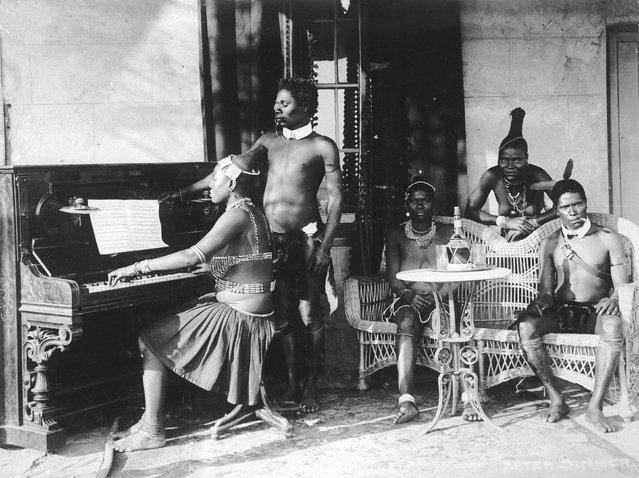
circa 1925:  A Zulu woman playing the piano while a group of others sit and listen.  (Photo by General Photographic Agency/Getty Images)

“The Zulu are the largest South African ethnic group, with an estimated 10–11 million people living mainly in the province of KwaZulu-Natal. Small numbers also live in Zimbabwe, Zambia, and Mozambique. Their language, Zulu, is a Bantu language; more specifically, part of the Nguni subgroup. The Zulu Kingdom played a major role in South African history during the 19th and 20th centuries. Under apartheid, Zulu people were classed as third-class citizens and suffered from state-sanctioned discrimination. They remain today the most numerous ethnic group in South Africa, and now have equal rights along with all other citizens”. – Wikipedia.

Photo: A Zulu woman playing the piano while a group of others sit and listen (to put it briefly, Englishmen scoff over Zulu). South Africa, circa 1925. (Photo by General Photographic Agency)

Details
03 Feb 2014 09:40:00