Loading...
Done
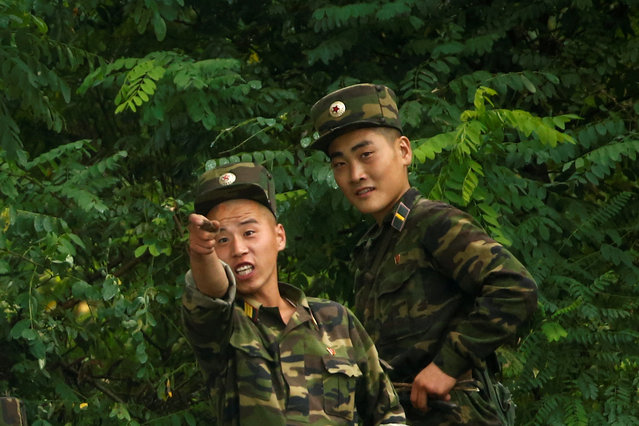
North Korean soldiers keep watch at the bank of the Yalu River, near the North Korean town of Sinuiju, opposite Dandong in China's Liaoning province, September 10, 2016. (Photo by Thomas Peter/Reuters)

North Korean soldiers keep watch at the bank of the Yalu River, near the North Korean town of Sinuiju, opposite Dandong in China's Liaoning province, September 10, 2016. (Photo by Thomas Peter/Reuters)
Details
23 Sep 2016 08:57:00
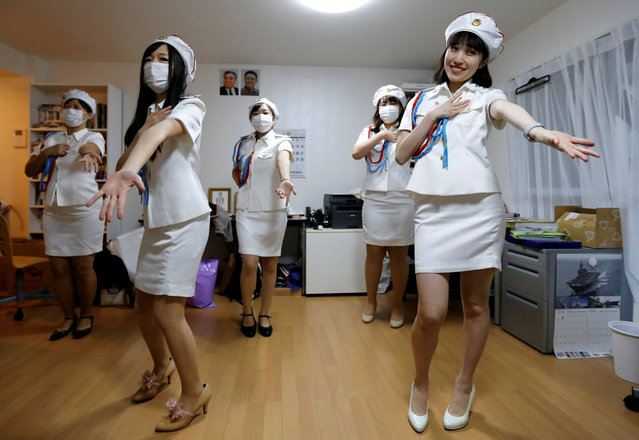
Chunhun (R), the leader of Japan's North Korea fan club called sengun-joshi, or military-first girls, and other members practice a Moranbong Band dance in Tokyo, Japan on November 2, 2017. (Photo by Toru Hanai/Reuters)

Chunhun (R), the leader of Japan's North Korea fan club called sengun-joshi, or military-first girls, and other members practice a Moranbong Band dance in Tokyo, Japan on November 2, 2017. (Photo by Toru Hanai/Reuters)
Details
03 Nov 2017 07:34:00
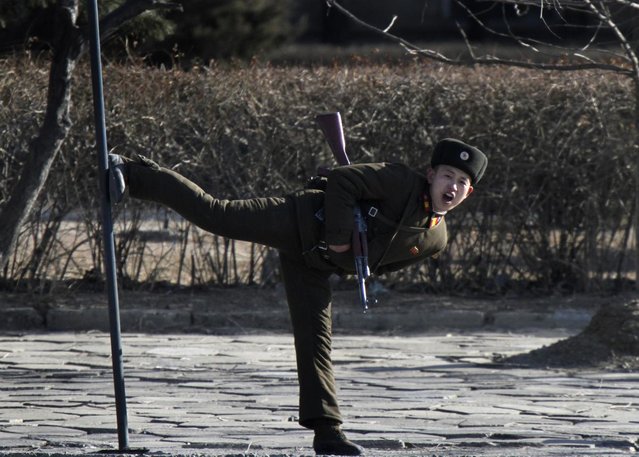
A North Korean soldier kicks a pole along the bank of Yalu River near the North Korean town of Sinuiju, opposite the Chinese border city of Dandong, February 4, 2014. (Photo by Jacky Chen/Reuters)

A North Korean soldier kicks a pole along the bank of Yalu River near the North Korean town of Sinuiju, opposite the Chinese border city of Dandong, February 4, 2014. (Photo by Jacky Chen/Reuters)
Details
14 Feb 2016 11:08:00


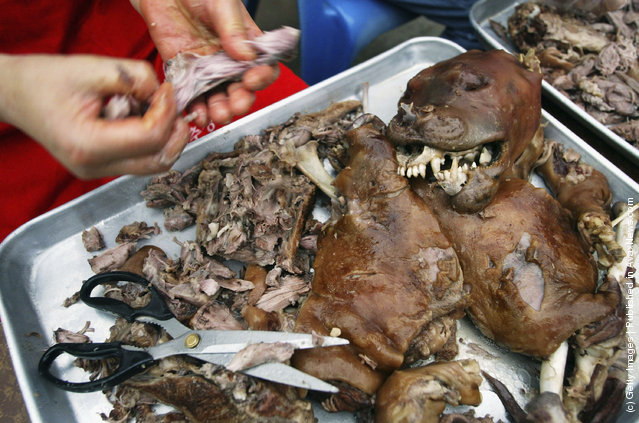
“Dog meat refers to edible parts and the flesh derived from (predominantly domestic) dogs. Human consumption of dog meat has been recorded in many parts of the world, including ancient China, ancient Mexico, and ancient Rome. According to contemporary reports, dog meat is consumed in a variety of countries such as Switzerland, China, Vietnam, the Philippines, and Korea. In addition, dog meat has also been used as survival food in times of war and/or other hardships”. – Wikipedia

Photo: A chef prepares dog meat at a restaurant on July 4, 2005 in Gwacheon, South Korea. Dog meat is a traditional dish in Korea dating back to the Samkuk period (period of the three kingdoms BC 57 – AD 668). Although many recipes existed historically for dog meat, now chefs only make soups, or dishes using boiled or roasted meat. Koreans traditionally eat dog meat on the hottest day of the summer, for it's reputed benefits of virility, invigoration and health. (Photo by Chung Sung-Jun/Getty Images)
Details
24 Jul 2011 13:21:00
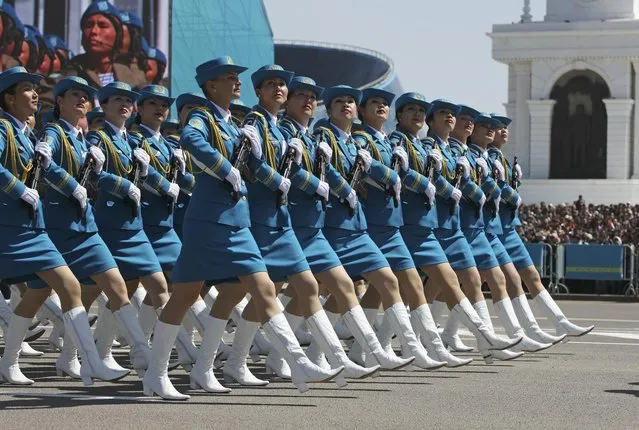
Kazakh troops march during a parade of the armed forces to mark the Defender of the Fatherland Day in Astana, May 7, 2014. (Photo by Mukhtar Kholdorbekov/Reuters)

Kazakh troops march during a parade of the armed forces to mark the Defender of the Fatherland Day in Astana, May 7, 2014. (Photo by Mukhtar Kholdorbekov/Reuters)
Details
24 Sep 2014 12:31:00
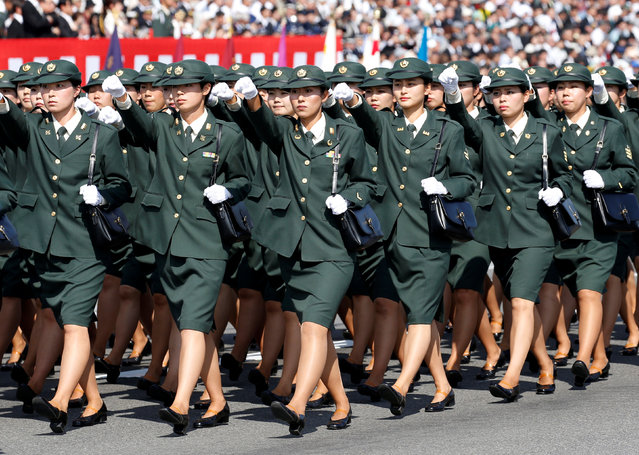
Japan's Self-Defence Forces' women's personnel march during the annual SDF ceremony at Asaka Base, Japan, October 23, 2016. (Photo by Kim Kyung-Hoon/Reuters)

Japan's Self-Defence Forces' women's personnel march during the annual SDF ceremony at Asaka Base, Japan, October 23, 2016. Some 40,00 troops, 280 military tanks and vehicles participated in the annual Japan's Self-Defense Forces parade. (Photo by Kim Kyung-Hoon/Reuters)
Details
24 Oct 2016 12:46:00
A man wearing a Guy Fawkes mask enjoys a ride on a 350-meter (1148 feet) long water slide during 2015 City Silde Festa in central Seoul, South Korea, July 19, 2015. (Photo by Kim Hong-Ji/Reuters)

A man wearing a Guy Fawkes mask enjoys a ride on a 350-meter (1148 feet) long water slide during 2015 City Silde Festa in central Seoul, South Korea, July 19, 2015. A 350 meter-long waterslide has been installed in downtown of Seoul, the longest waterslide to be recorded in Korea, according to local media. (Photo by Kim Hong-Ji/Reuters)
Details
20 Jul 2015 09:45:00
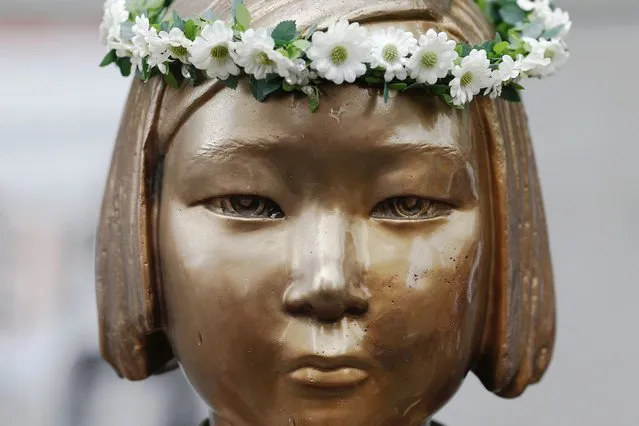
Flowers are placed on a “comfort woman” statue during the weekly Wednesday protest in front of Japanese embassy demanding for an apology and compensation from Japanese government in Seoul, South Korea, July 22, 2015. (Photo by Kim Kyung-Hoon/Reuters)

Flowers are placed on a “comfort woman” statue during the weekly Wednesday protest in front of Japanese embassy demanding for an apology and compensation from Japanese government in Seoul, South Korea, July 22, 2015. “Comfort women” is the Japanese euphemism for women who were forced into prostitution and sexually abused at Japanese military brothels before and during World War Two. (Photo by Kim Kyung-Hoon/Reuters)
Details
13 Aug 2015 11:06:00